
































Liberia DV Lottery Applicants Face Uncertainty Under New U.S. Visa Pause
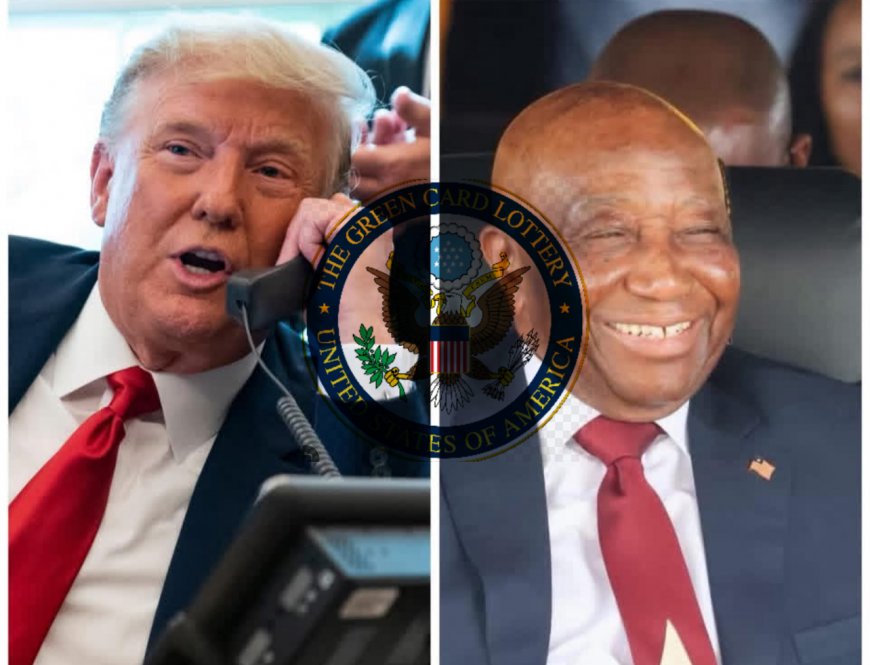
Breaking News: Liberia has been named among 75 countries affected by a new U.S. State Department decision to pause immigrant visa processing, a move that takes effect on January 21, 2026, and remains in place indefinitely pending further review.
According to multiple international media reports, the policy is part of a broader U.S. government effort to tighten immigration screening, particularly targeting applicants deemed likely to become a “public charge” a term used to describe individuals who may rely heavily on government assistance after entering the United States.
The affected countries span Africa, the Middle East, Europe, Asia, and Latin America, and include nations such as Somalia, Nigeria, Egypt, Afghanistan, Iran, Iraq, Russia, Brazil, Thailand, Yemen, and now Liberia.
What the Pause Means for Liberians
For Liberian nationals seeking immigrant visas including family-based and employment-based green cards the policy could result in delays or temporary suspension of processing at U.S. embassies and consulates. Applications already in progress may also be subject to reassessment under the revised screening standards.
However, U.S. officials and international reports clarify that the pause does not automatically apply to non-immigrant visas, such as:
Tourist visaa
Student visas
Exchange or temporary work visas
Each visa category will be handled according to specific guidance issued by the State Department.
The State Department has not provided a fixed timeline for lifting the pause, stating instead that visa processing will resume only after a comprehensive reassessment of country-specific and applicant-level risk factors.
For many Liberian families and professionals hoping to reunite with relatives or pursue long-term opportunities in the United States, the announcement has raised concerns and uncertainty, particularly for those with pending cases.
Immigration experts advise affected applicants to closely monitor official U.S. government updates and, where possible, seek guidance from qualified immigration attorneys to understand how the policy may affect their individual cases.
As the situation evolves, further clarification from U.S. authorities is expected regarding implementation details and potential exemptions.
What's Your Reaction?
 Like
0
Like
0
 Dislike
0
Dislike
0
 Love
0
Love
0
 Funny
0
Funny
0
 Angry
0
Angry
0
 Sad
0
Sad
0
 Wow
0
Wow
0