

















Dock Workers Union Urges President to Veto Port Autonomy Bill, Citing Risks to Development and Governance
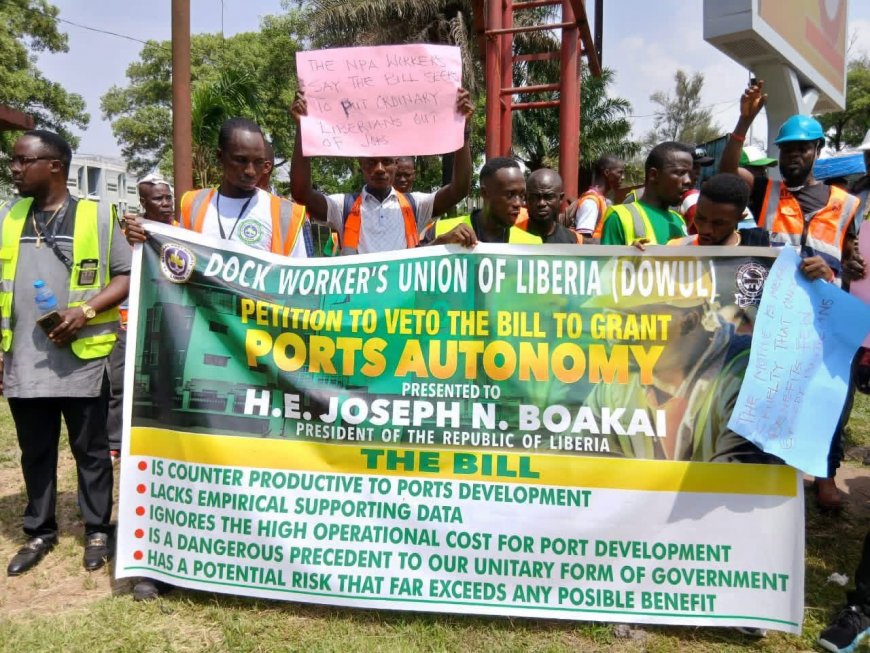
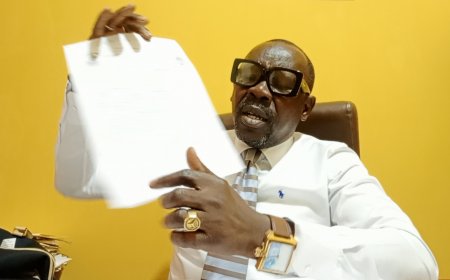
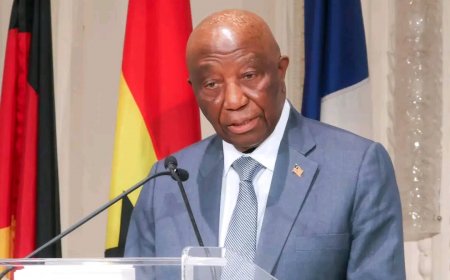
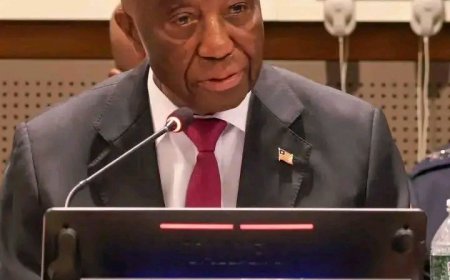
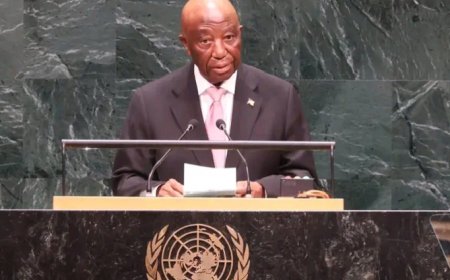
Monrovia, Liberia: The Dock Workers Union of Liberia (DWUL) has formally petitioned President Joseph Boakai to veto the recently passed bill that seeks to grant autonomy to Liberia’s ports. The Union warns that the legislation could undermine port development and create long-term operational and governance challenges.
In its petition, the DWUL argues that the bill is “counterproductive” and lacks empirical evidence to justify its implementation. The Union further highlights that the proposed law does not account for the high operational costs inherent in port management, including maintenance, staffing, and modernization initiatives critical for keeping Liberia competitive in regional trade.
“The potential risks of this bill far outweigh any possible benefits,” the Union said in its statement, cautioning that the legislation could disrupt port operations, threaten jobs, and limit the government’s ability to maintain a coordinated national strategy for maritime development.
The Union also expressed concern over the bill’s implications for Liberia’s unitary system of government. By granting significant autonomy to the ports, the legislation, according to DWUL, could set a precedent that erodes centralized oversight and accountability, potentially weakening broader public governance.
The push for port autonomy in Liberia has been framed by some lawmakers as a means to streamline operations, reduce bureaucratic delays, and attract private investment. Proponents argue that autonomous management could allow ports to operate more efficiently and generate additional revenue for the country.
However, critics like the DWUL caution that without proper planning, data-driven decision-making, and adequate funding, autonomy could lead to mismanagement and inefficiencies. They point to high operational costs and the technical demands of modern port management, suggesting that partial independence without full capacity and safeguards may do more harm than good.
Next Steps:
The petition has been officially submitted to President Boakai, who now faces the decision to sign the bill into law or exercise his veto power. Observers say the president’s choice could set the tone for Liberia’s maritime sector for years to come and may influence ongoing debates about decentralization and institutional autonomy in the country.
The DWUL has called for continued dialogue with lawmakers and other stakeholders to ensure that any legislation affecting Liberia’s ports prioritizes development, job security, and national interests over political expediency.
What's Your Reaction?
 Like
0
Like
0
 Dislike
0
Dislike
0
 Love
0
Love
0
 Funny
0
Funny
0
 Angry
0
Angry
0
 Sad
0
Sad
0
 Wow
0
Wow
0