


Government, Stakeholders Renew Commitment to Protect Women and Girls at National Policy Dialogue

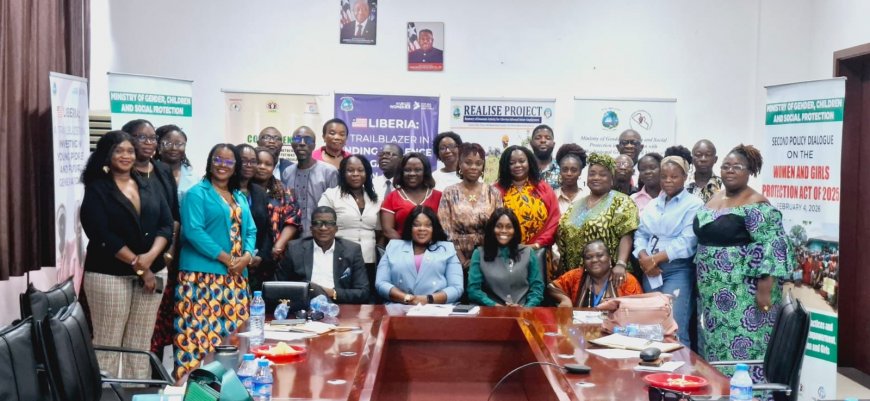
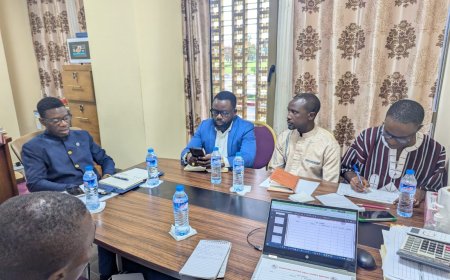
Monrovia, Liberia: The Government of Liberia has renewed its commitment to strengthening protection systems for women and girls following a one-day National Policy Dialogue on the Women and Girls’ Protection Bill, convened by the Ministry of Gender, Children and Social Protection (MGCSP).
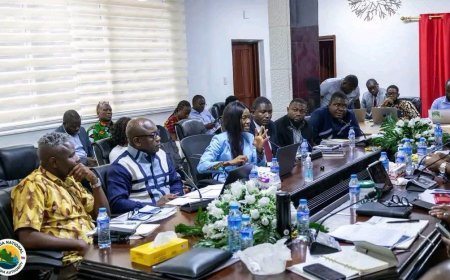
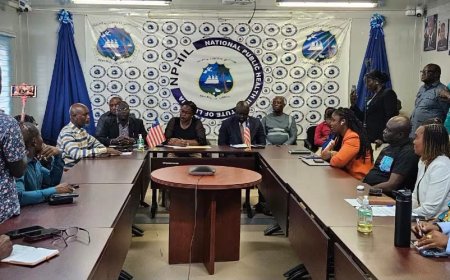
The dialogue, second in a series, brought together senior government officials, lawmakers, civil society organizations, development partners, and community advocates to assess progress and build national consensus on ending harmful practices, addressing Sexual and Gender-based Violence (SGBV), and dismantling barriers to women’s empowerment.
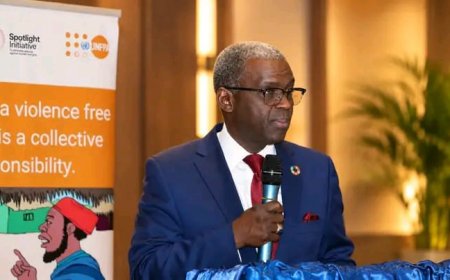
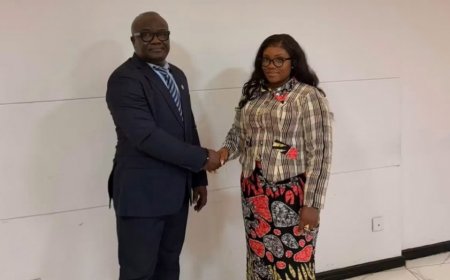
Speaking during high-level dialogue on Wednesday, February 4, 2026, on behalf of the Minister of Gender, Children and Social Protection, Deputy Minister for Research, Policy, and Planning, Curtis V. Dorley, described the forum as a decisive moment rather than a routine consultation.
“This dialogue is more than a meeting; it is a collective call to action,” Dorley said. “It provides an opportunity for government, civil society, development partners, and communities to unite in shaping policies that will strengthen protection systems and ensure that no woman or girl is left behind.”
He urged participants to engage candidly and responsibly, noting that discussions are expected to produce three to four concrete objectives to guide the development of stronger, more coordinated, and sustainable national solutions.
Deputy Minister Dorley emphasized that issues such as harmful traditional practices, sexual and gender-based violence, and women’s empowerment must remain national priorities. “These issues must stay on the front lines of our collective fight,” he stressed.
He also called for actionable recommendations to reinforce the leadership and coordination role of the Ministry of Gender, particularly in removing legal and policy barriers that continue to impede the advancement of women and girls nationwide.
Meanwhile, participating in the dialogue, Bong County District #6 Representative, Moima Briggs-Mensah, used the platform to reaffirm her unwavering commitment to working with the relevant institutions on ending female genital mutilation (FGM) in Liberia.
She stressed that sustained advocacy and political will are essential to permanently outlaw the practice.
“I see many of us deeply involved in the fight against FGM—through programs, awareness campaigns, and advocacy. This shows that there is collective determination to ensure that FGM is stopped,” she said.
“FGM cannot be passed again. I do not believe it will ever be passed in this country. When I say now, I mean now. By 2027, many of us will be focused on elections. If we act now, the space for resistance becomes much smaller,” she noted.
Representative Briggs-Mensah disclosed that her advocacy has come at personal cost, including backlash within her constituency, but emphasized that her stance is rooted in lived experience.
“My passion for ending FGM is not political. I am a survivor,” she said. “While I may be able to protect my own children, there are many marginalized women and girls who cannot protect themselves. They deserve a law that gives them hope and protection", the Bong County Lawmaker noted.
Speaking on behalf of the United Nations Women Country Representative, Ms. Racheal Boma, Program Specialist on Ending Violence Against Women and Girls, acknowledged that Liberia continues to record high rates of FGM, but said the country has reached a decisive turning point.
“While national data reflects a high prevalence of FGM, we are also seeing strong political commitment—starting with the President—alongside regional commitments under ECOWAS and international obligations,” she said.
Ms. Boma praised the Ministry of Gender and the Liberian Legislature for advancing what she described as a timely and robust bill, while commending civil society organizations for sustained community mobilization.
She warned that failure to act swiftly would continue to place women and girls at grave risk.
“Unless action is taken urgently, women and girls in Liberia will continue to suffer. Many will face complications during childbirth, and some will lose their lives due to the use of unsterilized instruments,” she cautioned.
The UN Program Specialist reaffirmed UN Women’s commitment to supporting Liberia’s efforts to promote gender equality and safeguard the rights of women and girls.
However, civil society voices echoed urgent calls for action, with Ms. Esther Yango Wongosol, Executive Director of WONGOSOL, describing Female Genital Mutilation as a national emergency.
“Imagine girls in rural communities being taken out of school while classes are in session, only to be forcefully initiated into the Sande society,” she said
What's Your Reaction?
 Like
0
Like
0
 Dislike
0
Dislike
0
 Love
0
Love
0
 Funny
0
Funny
0
 Angry
0
Angry
0
 Sad
0
Sad
0
 Wow
0
Wow
0