



































Justice Minister Warns Revised Port Authority Law Threatens Constitutional Order

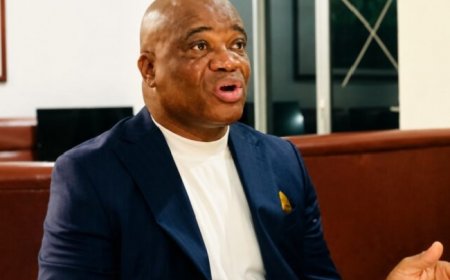
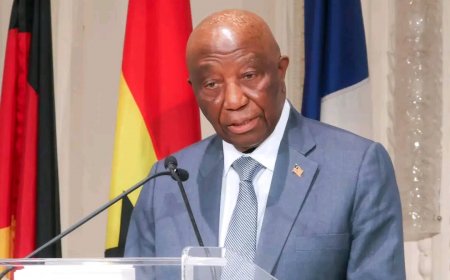
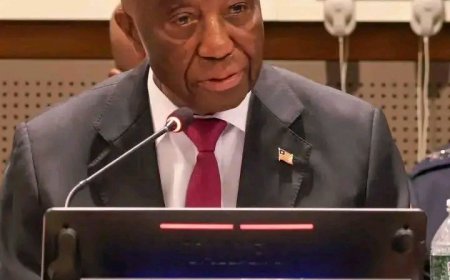
Monrovia, Liberia: Liberia’s Justice Minister and Attorney General, Cllr. Natu Oswald Tweh Sr., has issued a sharp legal warning against the Legislature’s passage of a revised Port Authority Act, cautioning that the law ignores key objections raised by President Joseph Nyuma Boakai Sr. and risks upsetting the country’s constitutional balance of power.
In a formal legal opinion submitted to the Executive, the Justice Minister said the amended legislation fails to resolve the fundamental legal, institutional, and fiscal concerns that led President Boakai to veto the original Act. Instead, he warned, the revised version introduces deeper governance risks that could strain relations between the Executive and Legislature.
According to Cllr. Tweh, the law weakens existing maritime governance structures and sets a troubling precedent by allowing far-reaching institutional reforms to be enacted without meaningful consultation with the Executive branch.
The Justice Minister criticized lawmakers for advancing sweeping changes to Liberia’s port and maritime governance framework without coordinated engagement with the Executive, describing the approach as a departure from collaborative governance.
He warned that unilateral legislative action on reforms with national economic and security implications could fuel institutional rivalry rather than cooperation.
“Liberians expect governance built on coordination and mutual respect among the branches of government, not public conflict,” Tweh noted, warning that sustained disputes over major reforms could undermine public confidence in state institutions.
Beyond process concerns, the Attorney General raised red flags over the structural design of the revised Act. He described it as a hybrid framework that draws selectively from multiple international port management models without clearly adopting any tested or successful system.
While acknowledging that innovation in public administration can be beneficial, Tweh stressed that such experimentation requires strong legal justification, detailed implementation planning, and clear accountability mechanisms elements he said are largely absent from the revised law.
He further noted that the proposed structure has no clear precedent among successful maritime administrations globally, raising serious doubts about its long-term effectiveness and sustainability.
President Boakai had earlier vetoed the original Port Authority Act, citing constitutional, policy, and institutional concerns. However, the Justice Minister concluded that the revised version leaves those objections largely intact.
One major issue is the continued weakening of the Liberia Maritime Authority (LiMA). The President had warned that transferring core regulatory responsibilities to a newly created agency would undermine LiMA’s mandate. Tweh said Section 720(1) of the revised Act still reallocates critical regulatory functions, effectively disregarding that concern.
Similarly, provisions granting the new agency enforcement powers including inspection and supervision of seacraft remain unchanged. The Attorney General pointed to Section 506 of the revised Act as evidence that the Legislature failed to address objections related to overlapping authority and regulatory confusion.
The Justice Minister also flagged ongoing financial concerns, particularly Section 406 of the revised Act, which allocates 10 percent of all port revenues to fund the new agency.
President Boakai had previously objected to the breadth and fiscal implications of this provision, warning it could constrain national revenue management. According to Tweh, the clause remains untouched in the revised law, raising continued concerns about financial oversight and sustainability.
Taken together, the Attorney General’s assessment suggests that the revised Port Authority Act remains burdened by constitutional, institutional, and fiscal deficiencies. He urged lawmakers to reconsider the legislation with greater respect for the separation of powers, administrative efficiency, and executive authority.
As debate over port sector reform intensifies, the dispute has emerged as a broader test of Liberia’s commitment to the rule of law, coordinated governance, and democratic accountability.
What's Your Reaction?
 Like
0
Like
0
 Dislike
0
Dislike
0
 Love
0
Love
0
 Funny
0
Funny
0
 Angry
0
Angry
0
 Sad
0
Sad
0
 Wow
0
Wow
0