














EU–Liberia Holds Talks on Driving Fiscal Reforms

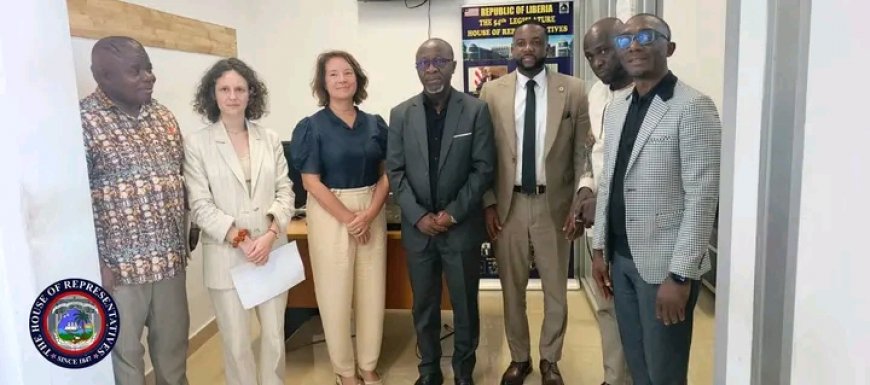
MONROVIA, LIBERIA: A high-power European Union (EU) Delegation to Liberia has concluded a crucial engagement with the Liberian government, placing key emphasis on domestic revenue generation as a means of sustaining national budget growth.
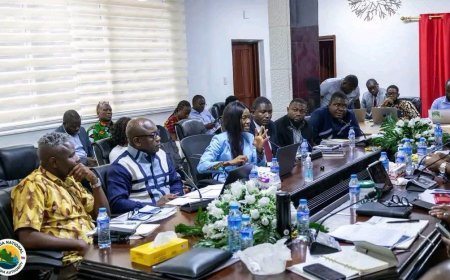
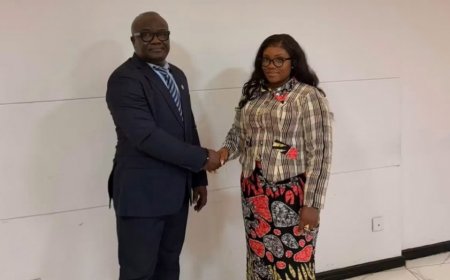
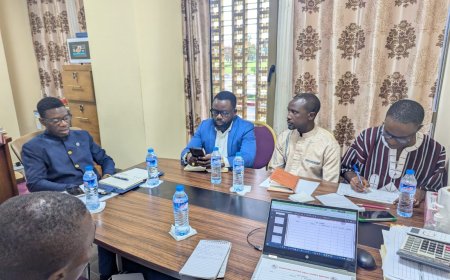
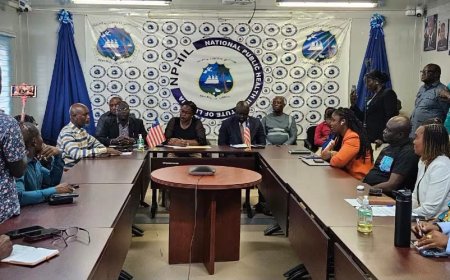
The meeting held on Wednesday, January 28, 2026, brought together the chairpersons and members of the Joint Committee on Ways Means and Finance of the national Legislature in strategic conversations with the EU delegation.
The engagement explored strategies to maximize EU-supported budget programs in Liberia to enhance national budget preference and growth.
The government of Liberia recently approved a landmark US$1.2 billion national budget for the 2026 Fiscal year, a figure recording the highest national budget passage.
The EU delegation high-level discussions with the Liberian government comes at the time when many are expressing uncertainty over sustainability of the sharp increase in Liberia's national budget.
The Delegation assured the EU's cooperation with Liberia to develop programs and design strategy for revenue mobilization that would boost fiscal entities capacity to maintain track on revenue generation.
This, the EU delegation said would help address the growing demands for increased budgetary allocation to key sectors to support national development.
The team at the same time commended the Joint Committee and the Legislative Budget Office for their openness to reform and policy dialogue, stating that strong legislative oversight is crucial to keep relevant institutions effective.
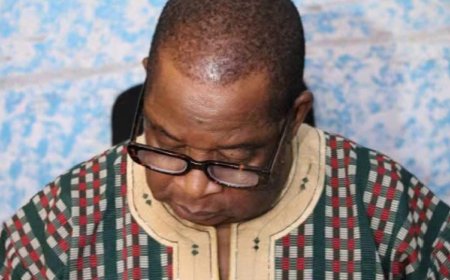
Speaking on behalf of both Houses Joint Committee on Ways, Means and Finance, Representative Mike Jurry, praised the EU for its sustained partnership and frank engagement. “Since assuming leadership, this Committee has embarked on deliberate institutional reforms to transform how we operate,” he said.
“Our focus is transparency, accountability, and effective oversight that guarantees every dollar in the national budget works for the Liberian people.”
Representative Jurry of Maryland County District #1 further assured the EU Delegation that the Legislature remains committed to aligning budgetary decisions with national development priorities.
“We are determined to ensure that the budget is not just a document, but a tool for real impact—one that delivers services, creates opportunities, and strengthens trust in governance,” he added.
What's Your Reaction?
 Like
0
Like
0
 Dislike
0
Dislike
0
 Love
0
Love
0
 Funny
0
Funny
0
 Angry
0
Angry
0
 Sad
0
Sad
0
 Wow
0
Wow
0