








Liberian Youth Activist Takes Liberia’s Mining Injustice to Global Spotlight at Alternative Mining Indaba Indaba Conference

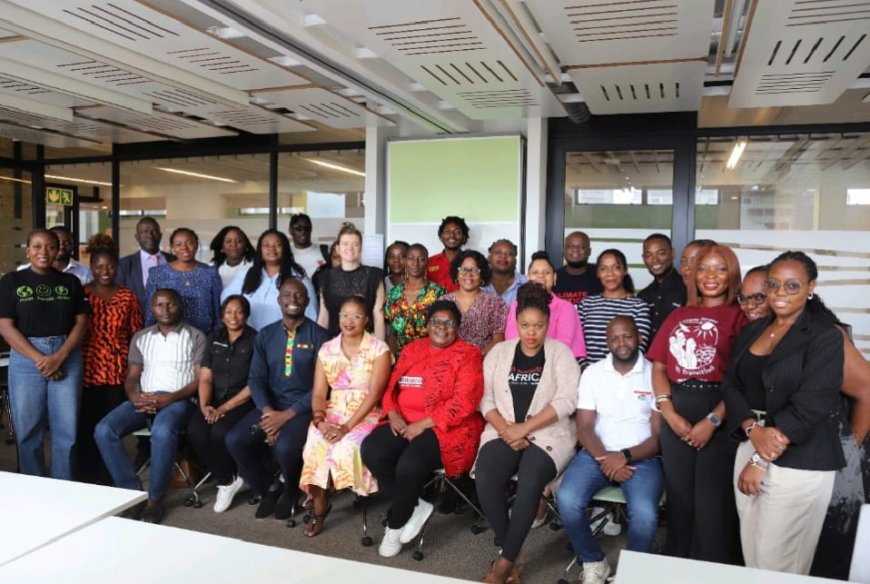
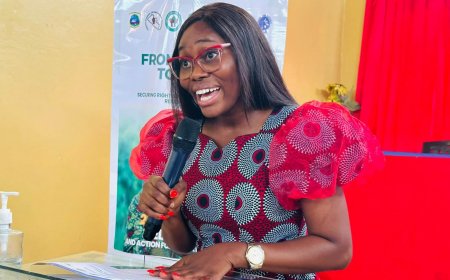
As Africa’s mineral wealth continues to enrich corporations while leaving host communities in deep poverty, ActionAid Liberia youth and climate justice activist Norwu Kolu Harris has taken that uncomfortable reality to the international stage, joining campaigners from across the continent at the 2026 Alternative Mining Indaba (AMI) in Cape Town, South Africa.
Harris, who works with ActionAid Liberia’s youth and climate justice programs, is part of a gathering of mining-affected communities, civil society groups, faith leaders and labor activists meeting at the Cathedral Church of St. George the Martyr to confront what they describe as the destructive human and environmental costs of Africa’s extractive economy.
Held under the theme “Alternative Stories of Mining,” the Indaba is deliberately designed to counter the polished narratives often promoted by governments and multinational mining companies, instead centering the lived experiences of communities bearing the brunt of mining operations.
Speaking during the forum, Harris said the platform allows voices from mining communities — including those ActionAid works with in Liberia — to be heard on a global stage. “For many African communities, mining has meant displacement, polluted water and broken livelihoods, not prosperity,” she said. “These stories rarely make it into official reports, but they are the reality on the ground.”
She pointed to Liberia as a striking example of how resource wealth fails to benefit ordinary citizens. “The extractive sector accounts for more than half of Liberia’s GDP, yet it brings in only about 16 percent of national revenue,” Harris noted. “That means huge profits are being made, while communities around the mines remain poor and neglected.”
A major focus of the 2026 Indaba is the growing global rush for critical minerals needed for the energy transition, and what that means for Africa. Harris said youth activists linked to networks such as ActionAid are demanding that climate solutions do not create new layers of exploitation.
“Africa should not be turned into a sacrifice zone for the world’s green economy,” she warned. “Any transition must respect community rights and ensure real benefits for local people.”
The forum is also examining regional mining policies under the Southern African Development Community (SADC), with civil society groups calling for reforms that would allow African countries to retain more value from their mineral wealth. “We keep exporting raw materials and importing poverty,” Harris added. “That system must change if Africa is serious about development.”
For more than a decade, the Alternative Mining Indaba has served as a counter-space to corporate-driven mining conferences, exposing how extractive industries have deepened inequality across the continent.
From land grabs to environmental damage and unpaid royalties, the testimonies shared in Cape Town underline a common theme: Africa’s vast mineral wealth has too often become a curse rather than a blessing for the people who live where the resources are taken.
What's Your Reaction?
 Like
0
Like
0
 Dislike
0
Dislike
0
 Love
0
Love
0
 Funny
0
Funny
0
 Angry
0
Angry
0
 Sad
0
Sad
0
 Wow
0
Wow
0