





















Gov't Strips Transport Ministry of Licensing Powers, Grants 25-Year Control to LTMI Amid Public Outcry

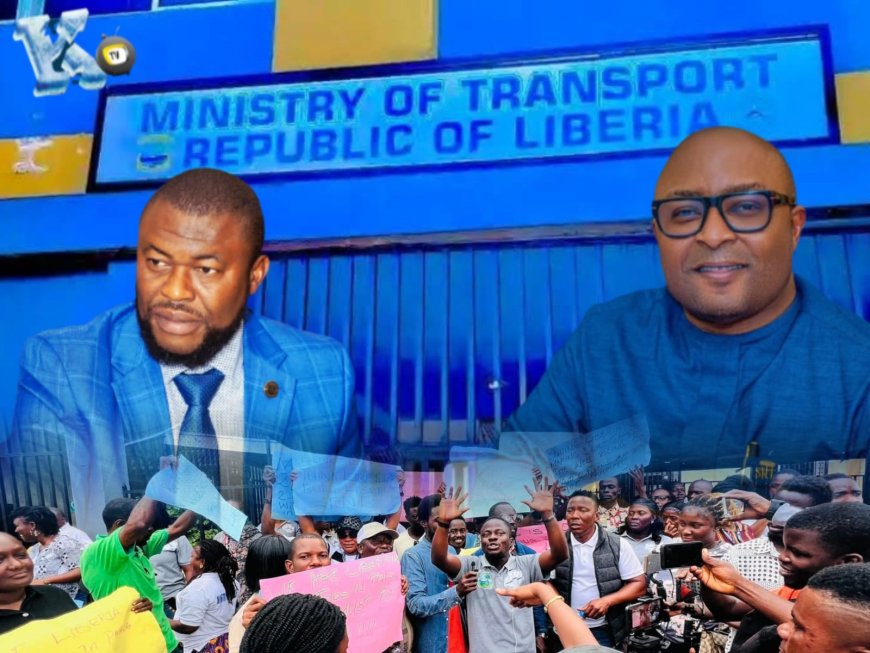
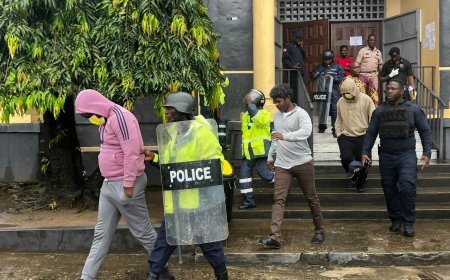
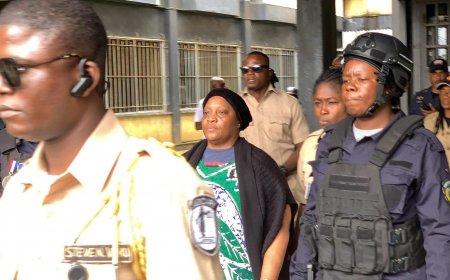
MONROVIA, LIBERIA: The Government of Liberia has officially transferred all driver’s licensing and vehicle registration responsibilities from the Ministry of Transport to Liberia Traffic Management, Inc. (LTMI) under a 25-year concession agreement, a move that has sparked ongoing protests by more than two hundred aggrieved civil servants in Monrovia.
The transfer, effective March 1, 2026, forms part of a broader reform initiative designed to strengthen technological integration, improve service efficiency, and separate regulatory oversight from operational functions, while the Ministry retains authority over policy, compliance monitoring, and enforcement.
In a joint press statement issued Tuesday, March 3, following the protests, Transport Minister Sirleaf R. Tyler and Civil Service Agency Director-General Josiah F. Joekai, Jr. affirmed that “the transition to LTMI is a strategic restructuring intended to modernize Liberia’s transport sector, enhance service delivery standards, and establish clear accountability between operational management and regulatory supervision.”
The communication added, “Civil servants previously assigned to impacted divisions will be absorbed into newly created divisions in accordance with their qualifications, competencies, and the legal framework governing the civil service. This is not a displacement of employment but a repositioning of functions to ensure efficiency and oversight.”
The Ministry of Transport has reconfigured three of its divisions to align with its strengthened regulatory mandate. The former Division of Motor Vehicle has become the Division of Motor Vehicle Policy and Regulation, tasked with developing regulatory standards, compliance guidelines, safety benchmarks, and quality control measures for licensing and registration operations.
The former Division of Drivers’ License has been restructured as the Division of Axle Load Management, focusing on vehicle weight compliance, highway preservation, and enforcement coordination for commercial transport, while the former Division of Tricycles and Motorcycles is now the Division of Traffic Monitoring and Enforcement, overseeing urban traffic surveillance, compliance monitoring, and collaboration with security authorities.
The Civil Service Agency confirmed that it has conducted competency assessments of personnel within these divisions to facilitate a smooth transition and ensure that staff are reclassified and redeployed in line with Human Resource policies.
Director-General Joekai emphasized, “No individual within the affected divisions shall forfeit their position as a consequence of this transition. All civil servants will continue to receive direct compensation from the Government of Liberia and remain accountable solely to the Ministry of Transport and the Civil Service Agency.”
Despite these assurances, employees continued protest actions consistently at the Ministry’s headquarters and at the Capitol Building, petitioning House Speaker Richard Koon to halt the transition.
Workers argue that the complete outsourcing of licensing and registration to a foreign-led private entity has left over two hundred staff without clear roles, effectively creating redundancy. They also contend that suspending the Ministry’s existing digital registration platforms to accommodate LTMI’s takeover poses risks to operational continuity and public service delivery.
Protesters further claim that the concession is economically disadvantageous, arguing that the Ministry could generate US$225 million over 25 years if it retained control, compared to LTMI’s projected contribution of US$40 million.
National security concerns have also been raised, with officials warning that transferring sensitive biometric and vehicle data to a private foreign entity could compromise government oversight.
In response to these concerns, the joint statement stressed that “all operational data will remain under regulatory supervision of the Ministry, and oversight mechanisms have been enhanced to protect national interest and public trust.”
As part of the reform, the Ministry of Transport announced the installation of twenty-five traffic monitoring systems, including CCTV and modern traffic light infrastructure, across major streets and intersections in Monrovia.
According to Minister Tyler, “These systems will support enforcement operations, improve traffic flow management, and strengthen road safety standards while introducing advanced technological oversight in Liberia’s land transport sector.”
What's Your Reaction?
 Like
0
Like
0
 Dislike
0
Dislike
0
 Love
0
Love
0
 Funny
0
Funny
0
 Angry
0
Angry
0
 Sad
0
Sad
0
 Wow
0
Wow
0