















“Liberia’s Democracy Is Bleeding”: Citizens Demand Urgent Political Reforms as ActionAid Launches Mobile Learning Campaign
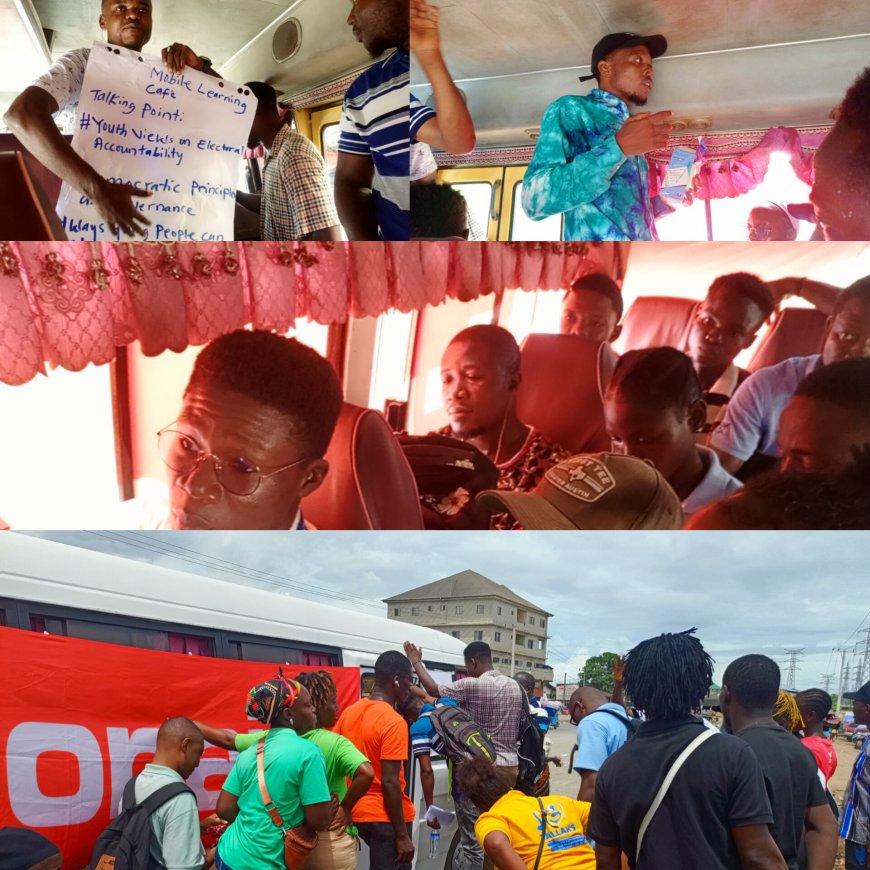
Monrovia, Liberia:As concerns continue to mount over electoral violence, weak accountability, and growing public distrust in Liberia’s democratic system, citizens are now openly calling for urgent reforms to rescue the country’s governance structure. On Friday, May 22, citizens in Montserrado County used a unique mobile learning platform organized by ActionAid Liberia to deliver painful but powerful messages about the state of the nation, warning that the continued erosion of democratic principles could deepen instability and silence the voices of ordinary Liberians.
The initiative, launched under ActionAid Liberia’s “AHEAD Project,” brought together ordinary citizens aboard a free public transport bus ride while engaging them in conversations about governance, the rule of law, electoral violence, vote trucking, corruption, and political manipulation. The moving dialogue transformed public transportation into what many described as a “mobile civic classroom,” allowing citizens to openly discuss the country’s democratic failures and the future they want for Liberia.
Participants did not hold back in expressing frustration over what they believe is the weakening of democratic institutions and the growing marginalization of young people. One participant, Mikel Johnson, described Liberia’s justice and governance systems as deeply unfair to ordinary citizens, especially the youth population.
“The rule of law is not respected in Liberia. The government, whether past or present, continues to override the youth. I have not seen this in other countries,” Johnson said.
Johnson further lamented the growing unemployment crisis among educated young people, noting that many qualified youths continue to remain jobless despite successfully completing recruitment processes and examinations. According to him, Liberia risks losing an entire generation of talented young people if opportunities continue to be denied based on politics and influence rather than merit.
“The youths are not given the opportunity to do the work that will benefit the country. I know so many youths who have gone for examinations and came out successful, but today they are sitting in communities without jobs,” he added.
Another participant raised concerns about what he described as excessive control by the executive branch over other state institutions, warning that Liberia’s democracy cannot survive if the separation of powers continues to weaken. According to the participant, the legislative and judicial branches are increasingly unable to function independently because of political pressure and influence from the executive.
“The other two branches of government are being controlled by the executive to operate according to its will and pleasure, making them powerless,” the participant stated.
Citizens also used the forum to challenge the culture of vote-selling and electoral manipulation, stressing that sustainable democratic reforms must begin with civic education and mindset transformation among voters. One speaker argued that many young people continue to trade their votes because of poverty, hopelessness, and a lack of political awareness, something he believes is destroying the future of Liberia’s democracy.
“To get rid of the idea of young people selling their votes for little or nothing, we need to change minds and characters,” the citizen emphasized.
Another participant called for nationwide political sensitization programs before elections, stating that many politicians seek public office without understanding the constitutional responsibilities attached to their positions. According to the participant, Liberia’s political structure has become dangerously distorted, with elected officials frequently operating outside of their assigned mandates.
“The entire political system in Liberia is being misplaced. You will find the legislative doing the work of the executive because our politicians do not know what they are supposed to do after being elected,” the participant noted.
The discussions emerging from ActionAid Liberia’s mobile learning exercise reflect growing national anxiety over governance, accountability, and democratic survival in Liberia at a time when public confidence in state institutions continues to face serious tests. For many observers, the concerns raised by ordinary citizens during the initiative mirror broader fears across the country that without stronger institutions, civic education, youth empowerment, and respect for the rule of law, Liberia’s democratic future could remain vulnerable to political instability and electoral unrest.
What's Your Reaction?
 Like
0
Like
0
 Dislike
0
Dislike
0
 Love
1
Love
1
 Funny
0
Funny
0
 Angry
0
Angry
0
 Sad
0
Sad
0
 Wow
0
Wow
0