

























Breaking Menstrual Myths: Young Women Lead Menstrual Hygiene Campaign in Kakata

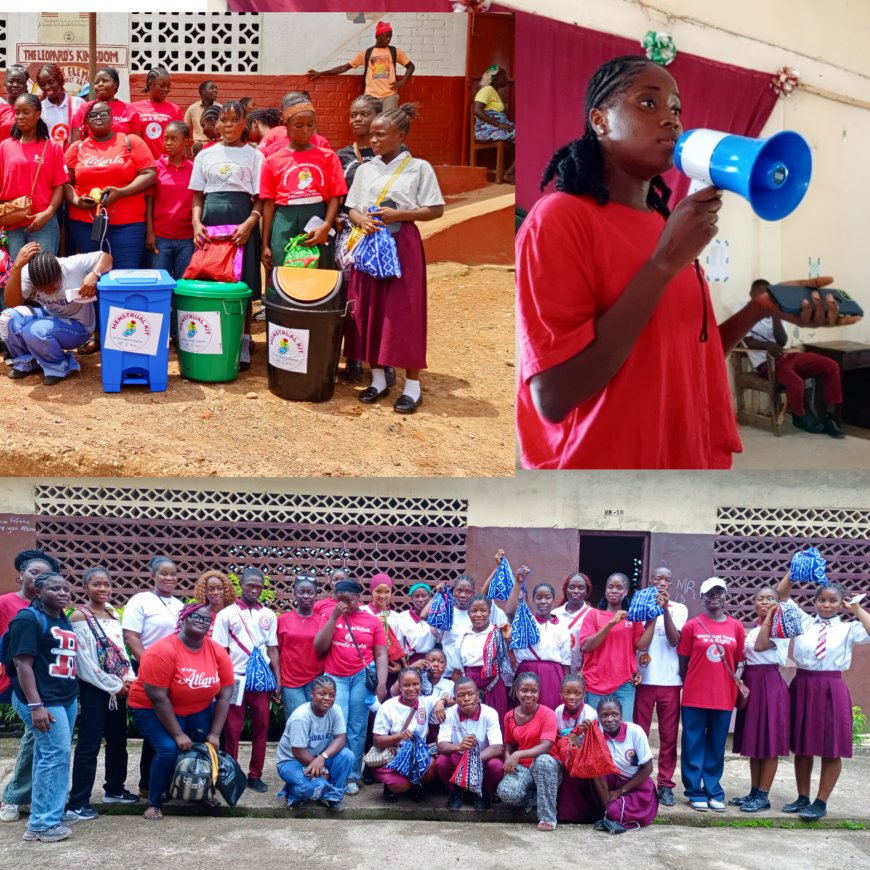
Kakata,Margibi County:As part of activities marking World Menstrual Hygiene Day, celebrated globally on May 28, young women over the weekend carried out an awareness campaign in Kakata, Margibi County, aimed at tackling menstrual stigma, promoting proper hygiene practices, and increasing public understanding of menstrual health.
The initiative, organized under ActionAid Liberia's "Bus Ride" campaign, brought together energetic young women who visited schools and public places across the city to educate students, market women, and community members on the importance of menstrual hygiene. World Menstrual Hygiene Day is observed annually to raise awareness about the challenges women and girls face during menstruation and to advocate for access to menstrual products, education, and safe sanitation facilities.
At the E.J. Yancy and Lango Lippaye High Schools, students participated in discussions and demonstrations highlighting the importance of managing menstruation safely and with dignity. School administrators and teachers observed as students shared their knowledge and experiences regarding menstrual health and hygiene.
Facilitators demonstrated the proper use of sanitary pads, menstrual cups, and clean cloth alternatives, emphasizing that maintaining good menstrual hygiene helps prevent infections, promotes overall health, and enables girls and women to continue their daily activities confidently during their menstrual periods.
The discussions also focused on debunking harmful myths that continue to surround menstruation in many communities. Participants challenged misconceptions that menstruation is shameful and addressed false beliefs that girls can become pregnant if touched by a boy while menstruating.
A female senior student at Lango Lippaye High School shared how misinformation influenced her understanding of menstruation while growing up. “When I was small my ma used to say when any boy touches me while I'm on my period I will get pregnant and she will put me out of the house and the boy people will treat me bad,” she said.
The campaign later moved to the Kakata market, where women and girls openly discussed the social challenges they encounter during menstruation. One participant described how menstruating women are sometimes judged unfairly, saying, “People can put mouth on us when we're on our period.”
To encourage participation and reinforce the health messages being shared, the team traveled with more than one hundred bags containing toothpaste, toothbrushes, Dettol antiseptic, and sanitary pads. The items were distributed to individuals who correctly answered questions related to menstrual hygiene and the discussions conducted during the outreach.
Welcoming the initiative, E.J. Yancy High School instructor Prince Martor said the program would strengthen students' health knowledge and complement existing health education efforts within the school. “We have a health club here already and this has come to help add to our students' knowledge health wise,” he said.
Organizers noted that improving menstrual hygiene awareness is critical to protecting the health, dignity, education, and confidence of girls and women, while helping to build communities free from stigma and discrimination.
What's Your Reaction?
 Like
0
Like
0
 Dislike
0
Dislike
0
 Love
0
Love
0
 Funny
0
Funny
0
 Angry
0
Angry
0
 Sad
0
Sad
0
 Wow
0
Wow
0