






























Liberia Better Positioned Than Ever to Detect and Respond to Ebola, NPHIL Says

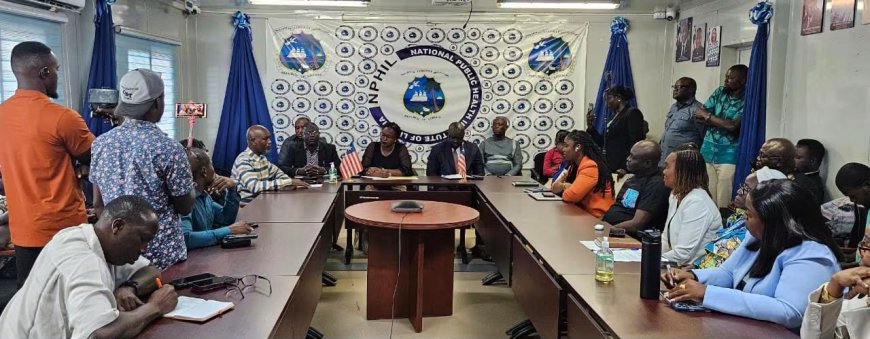
MONRIVIA, LIBERIA-The National Public Health Institute of Liberia (NPHIL), under the leadership of Interim Director General Dr. Sia Wata Camanor, has completed a nationwide Ebola Virus Disease (EVD) preparedness assessment, with findings showing the country is better positioned to detect, respond to, and contain any potential Ebola outbreak.
Speaking to reporters on Monday, July 13, 2026, Dr. Camanor said the assessment, which was conducted over several weeks, covered all 15 counties. The exercise included visits to major points of entry, referral hospitals, isolation facilities, laboratories, county health teams, surveillance units, and emergency response structures.
She explained that the assessment forms part of Liberia’s proactive preparedness efforts following the resurgence of Ebola cases in parts of the region and reflects the government’s continued commitment to protecting the health of its citizens.
“Our objective is not to wait for an outbreak before taking action, but to ensure that every county has the capacity to detect, report, investigate, and respond rapidly to any suspected Ebola case,” Dr. Camanor said. “Preparedness saves lives, and every investment we make today strengthens Liberia’s public health security.”
During the nationwide tour, the NPHIL team met with County Health Teams, hospital administrators, healthcare workers, laboratory personnel, local authorities, community leaders, security agencies, airport and seaport officials, and development partners. The discussions focused on identifying existing strengths, addressing operational gaps, and improving coordination across the country’s health system.
According to the assessment, Liberia has made significant progress in strengthening its public health emergency preparedness since previous Ebola outbreaks. Surveillance systems are now operational in all 15 counties, with trained surveillance officers actively monitoring and reporting priority diseases.
The report also found that Rapid Response Teams have been established in every county and continue to receive refresher training to maintain operational readiness.
In addition, the assessment confirmed that the National Public Health Emergency Operations Center remains fully functional and capable of coordinating emergency responses nationwide. Laboratory diagnostic capacity has also improved, supported by enhanced specimen transportation systems that allow for timely testing and confirmation of suspected Ebola cases.
Despite these achievements, Dr. Camanor said the assessment identified several areas requiring immediate attention, including replenishing essential personal protective equipment (PPE), improving maintenance of isolation facilities, conducting more simulation exercises, and providing continuous training for newly deployed healthcare workers.
She added that visits to border communities highlighted the need for stronger cross-border collaboration with neighboring countries to improve disease surveillance, information sharing, and coordinated emergency response efforts.
Dr. Camanor thanked the Ministry of Health, County Health Teams, healthcare workers, local government authorities, airport and port authorities, security institutions, traditional leaders, and international partners, including the World Health Organization (WHO), Africa CDC, the U.S. Centers for Disease Control and Prevention (US CDC), the World Bank, and other partners for their continued support in strengthening Liberia’s emergency preparedness.
“We want to assure the public that Liberia currently has no Ebola outbreak, but heightened preparedness remains essential due to ongoing regional public health risks,” she said.
She urged Liberians to continue practicing good hygiene, promptly report any unusual illness to the nearest health facility, cooperate with health authorities during surveillance activities, and rely only on verified information issued by NPHIL and the Ministry of Health.
NPHIL says it remains committed to protecting the health of the Liberian people through evidence-based surveillance, rapid disease detection, effective emergency response, and strong partnerships.
What's Your Reaction?
 Like
0
Like
0
 Dislike
0
Dislike
0
 Love
0
Love
0
 Funny
0
Funny
0
 Angry
0
Angry
0
 Sad
0
Sad
0
 Wow
0
Wow
0