























"Bring Back the Death Penalty for Drug Traffickers" - Former Speaker Bhofal Chambers

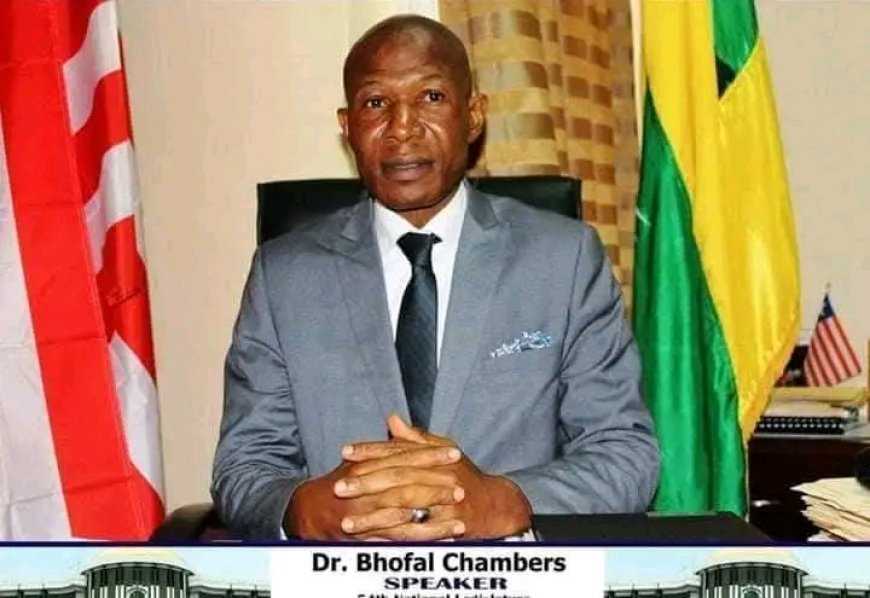
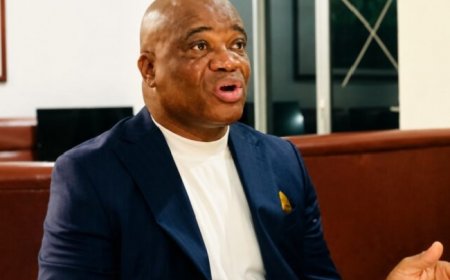
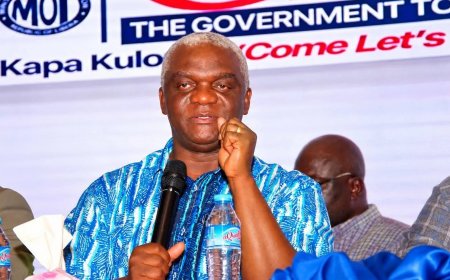
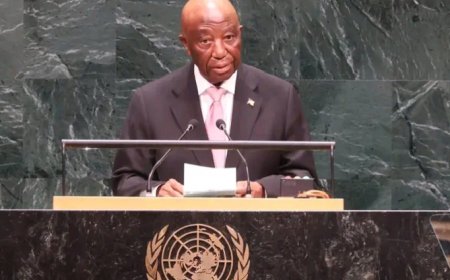
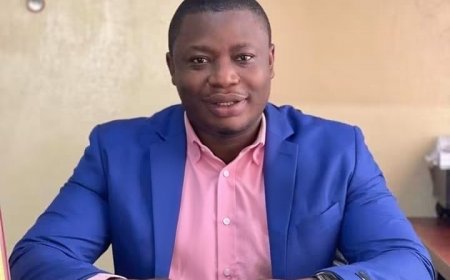
Pleebo, Maryland County – Former House Speaker Dr. Bhofal Chambers has ignited fresh national debate by calling on the Liberian Government to enforce the country's dormant death penalty law against convicted drug traffickers and other serious criminals, arguing that harsher punishment is necessary to confront Liberia's growing narcotics crisis.
Speaking during a public engagement in Pleebo, Maryland County, Chambers said Liberia's current justice system has failed to adequately deter organized crime, insisting that those convicted by the courts of major drug trafficking offenses should face the toughest punishment permitted under Liberian law.
"The government must begin enforcing the death penalty against convicted drug traffickers and other serious criminals," Chambers declared, maintaining that stronger penalties are needed to protect the country from the devastating impact of illegal drugs.
His comments come as Liberia continues to grapple with a wave of high-profile cocaine seizures that have intensified concerns about the country's role in the international drug trade. Authorities have intercepted nearly four metric tons of cocaine in Duazon and an additional 237.6 kilograms at Roberts International Airport, with the combined value estimated at nearly US$390 million.
The massive seizures have fueled public concern that Liberia is increasingly being used as a transit corridor by international drug trafficking networks, prompting renewed calls for stronger law enforcement measures and tougher criminal penalties.
Chambers argued that without severe consequences for those convicted of major drug trafficking offenses, criminal syndicates will continue exploiting Liberia's borders and institutions, while the country's youth remain vulnerable to the spread of narcotics.
"We must send a strong message that Liberia will not tolerate drug trafficking and other serious crimes," he stressed, calling on policymakers to take decisive action against organized criminal networks.
His remarks have also reignited a wider national conversation over whether Liberia should revive capital punishment as a tool to combat organized crime or continue honoring its international human rights commitments, which oppose the use of the death penalty.
The Liberian Government has not publicly responded to Chambers' proposal. While the country retains death penalty provisions in parts of its legal framework, Liberia has international obligations that have effectively halted executions, making any move toward enforcing capital punishment likely to generate significant legal, political, and human rights debate.
What's Your Reaction?
 Like
3
Like
3
 Dislike
0
Dislike
0
 Love
0
Love
0
 Funny
0
Funny
0
 Angry
0
Angry
0
 Sad
0
Sad
0
 Wow
2
Wow
2