



What If President Boakai Appoints A Woman To Head The Liberia Drug Enforcement Agency?
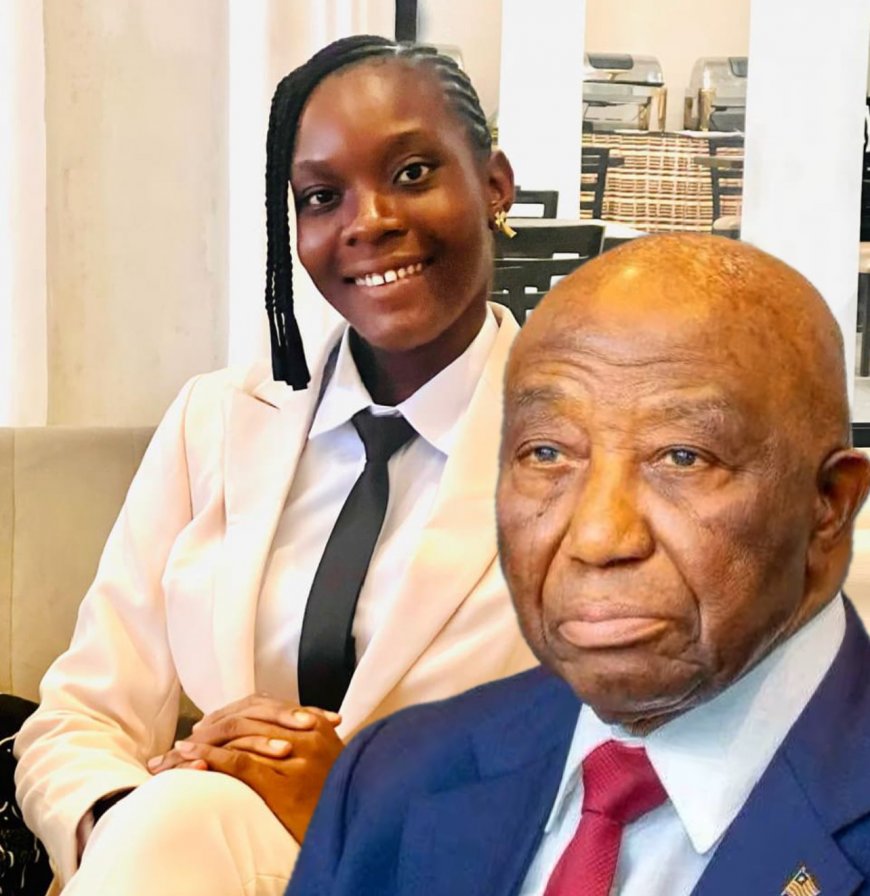
By: Laurina B. Lormia: Liberia’s fight against illicit drugs deserves serious national reflection. As the country confronts drug trafficking, substance abuse, and allegations of compromise within security institutions, an important question is worth considering: Why if President Joseph Nyuma Boakai, Sr., appoints a woman to lead the Liberia Drug Enforcement Agency (LDEA)?
For at least two decades, the publicly documented leadership of the LDEA has been overwhelmingly and, in the records examined, exclusively male namely: Col. James B. Jaddah in 2006; James Jelah in 2009; Henry Shaw in 2011; Anthony K. Souh from 2012 into the latter part of Former Persident Ellen Johnson Sirleaf administration; Marcus Soko from 2018-2020; Marcus D. Zehyoue from 2020-January 2024; Abraham K. Kromah in 2024; Christopher S. Peters, Sr., as Officer-in-Charge in 2024; Anthony K. Souh again from October 2024-August 2025; and DCP Fitzgerald T. M. Biago as Officer-in-Charge from August 2025 to August 2026.
This history does not mean that these men were all corrupt, nor does it prove that male leadership caused the LDEA’s problems. Such a conclusion would be unfair and unsupported. However, the LDEA itself has acknowledged internal corruption challenges, and recent drug cases has intensified public concern about the integrity of Liberia’s drug-enforcement architecture.
The LDEA traces its institutional history to the National Drug Committee, established in 1993, and became a drug-enforcement agency on December 23, 1998. Operating under the supervision of the Ministry of Justice, the agency is charged with combating illicit drug trafficking, investigating and arresting traffickers and dealers, strengthening interdiction efforts, and helping prevent Liberia from becoming a safe haven or transit route for narcotics.
This is not a demand that the President appoint a woman simply because of her gender. Nor is it an argument that women are inherently more honest than men. It is an invitation to think beyond the traditional leadership pattern of an institution that plays a critical role in Liberia’s national security.
Gender does not guarantee integrity, competence, and immunize anyone against corruption. Such an appointment could potentially introduce a different leadership dynamic, broaden the pool from which Liberia selects its security chiefs, and send a powerful message that leadership of the war against drugs is open to the most qualified Liberians.
Qualified and accomplished women already occupy important positions across Liberia’s national leadership. Their records demonstrate something important: Liberian women can manage complex institutions, exercise authority, pursue reforms, and represent the Republic at the highest levels.
Brigadier General Geraldine Janet George (Ret.), Liberia’s first female Minister of National Defense, came to the position with an extraordinary military résumé. She rose through the Armed Forces of Liberia to become its first female Deputy Chief of Staff. Her career included service as Provost Marshal, Military Police Company Commander, Assistant Chief of Staff for Operations, and Acting Commander of the 23rd Infantry Brigade. Her tenure at Defense has continued emphasizing professional development, international security cooperation, institutional capacity, and military health infrastructure.
H.E. Sara Beysolow Nyanti, Liberia’s Minister of Foreign Affairs, has led the country’s diplomatic engagement with bilateral and multilateral partners and represented Liberia across regional and international platforms, including ECOWAS, the African Union, the United Nations, and other diplomatic forums.
Dr. Jarso Maley Jallah, Minister of Education, has overseen significant initiatives in the education sector. These include efforts to transition qualified volunteer teachers onto the government payroll, remove irregular names from payroll, strengthen school monitoring through technology, expand school-feeding interventions, and advance the EXCEL Project, a major investment designed to improve literacy, numeracy, teacher development, and learning outcomes.
At the Ministry of Health Dr. Louise Mapleh Kpoto has emphasized healthcare access, community health, workforce development, essential health services, and maternal, newborn, and child health. Her ministry has also pursued standardized obstetric ultrasound services, including the introduction of Liberia’s national Ultrasound Reference Guide Manual in 2026.
Atty. Kula B. N. Fofana, Presidential Press Secretary at the Executive Mansion, has worked to strengthen presidential communications, media engagement, professional development, and internship opportunities for emerging communicators.
Minister Atty. Cornelia Wonkerleh Kruah, who assumed leadership of the Ministry of Youth and Sports in February 2026, represents another generation of women entering senior national leadership. Her ministry has moved forward with youth development, vocational training, employment, and sports initiatives, including work involving the Monrovia Vocational Training Center and Tumutu Agricultural Training Center.
These women have different backgrounds, responsibilities, strengths, and political histories. They should be judged individually on their records. But collectively, their presence in the Boakai’s administration raises an undeniable point: Liberia does not lack women capable of exercising serious national leadership.
So, why not someday at the LDEA? Imagine a female Director General of the LDEA who is not selected as a symbolic appointment, not chosen to satisfy a gender quota, and certainly not appointed merely because she is a woman. Instead, a woman with decades of law enforcement, military, intelligence, investigative, or security-sector experience; someone with demonstrated command ability, financial integrity, courage, independence, and no compromising relationships with drug traffickers or political interests.
Appointing a woman simply because previous directors were men would not constitute reform, whoever eventually leads the LDEA, whether it is a woman or man, should undergo a comprehensive background investigation, asset and lifestyle verification, integrity screening, conflict-of-interest checks, professional-record examination, and rigorous assessment of investigative and command competence.
The person must also have the courage and institutional protection to follow drug investigations wherever the evidence leads, and even when that evidence points toward powerful businesspeople, politicians, law enforcement personnel, or other state officials.
Why if, for the first time in Liberia’s post-war history, the person chosen to lead the Liberia Drug Enforcement Agency (LDEA) is a well-grounded, experienced, and competent woman of demonstrated character. Could that appointment help write a new chapter in Liberia’s fight against drugs? Yes indeed, but also it is a question worth our national reflection.
What's Your Reaction?
 Like
2
Like
2
 Dislike
0
Dislike
0
 Love
0
Love
0
 Funny
0
Funny
0
 Angry
0
Angry
0
 Sad
0
Sad
0
 Wow
0
Wow
0