




















Health Workers’ Associations Call For Urgent Reforms In Liberia’S Health Sector

MONROVIA, Liberia – Health workers’ associations in Liberia are calling on the government to urgently address persistent challenges affecting the country’s healthcare workforce, including unpaid volunteer services, inadequate salaries, limited employee benefits, and shortages of specialized healthcare professionals.
The concerns were raised Friday by representatives of the Liberia National Physician Assistant Association, the Liberia Association of Nurses and Anaesthetists, and the National Health Workers Union of Liberia, who say the challenges continue to undermine the welfare of health professionals and healthcare delivery across the country.
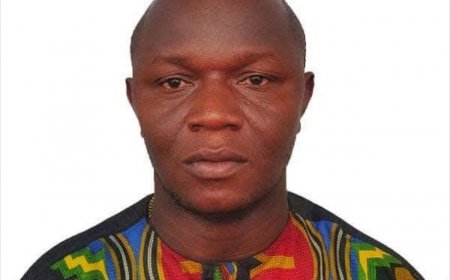
The President of the Liberia National Physician Assistant Association, Theophilus Tamba Fayiah, said physician assistants working across the counties continue to struggle with poor compensation, unpaid benefits, and limited opportunities for professional development.
Fayiah criticized the treatment of physician assistants, arguing that their compensation does not adequately reflect their professional responsibilities and contributions to the health sector.
“They are being paid at the mercy of the health authorities,” he said, while calling for greater attention to the welfare of physician assistants.
He disclosed that the association has repeatedly raised the concerns with relevant government institutions, including the Civil Service Agency, Ministry of Finance, and Ministry of Health.
Meanwhile, Menpen Sayee Dolo, President of the Liberia Association of Nurses and Anaesthetists, highlighted the shortage of specialized healthcare personnel, particularly nurse anaesthetists, who play a critical role in surgical procedures.
Dolo estimated that Liberia has fewer than 130 anaesthesia providers nationwide, describing the situation as a serious challenge to healthcare delivery.
He explained that nurse anaesthetists work alongside doctors to ensure patients receive appropriate anaesthesia and pain management during surgical procedures.
According to him, the limited workforce has resulted in some professionals working extended shifts, with individuals sometimes covering operating theatres for up to 24 hours.
Emphasizing the importance of their responsibilities, Dolo said, “Your life is going to be in people’s hands on a day-to-day basis.”
He also complained about inadequate salaries, limited scholarship opportunities, and the absence of clear career advancement pathways for specialized healthcare workers.
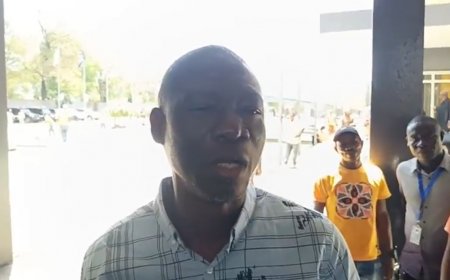
For his part, Simeon Morris, Vice President for Operations of the National Health Workers Union of Liberia, disclosed that more than 3,000 volunteer health workers remain outside the government’s payroll.
Morris said the union conducted a nationwide survey, visiting hospitals, health centres, and clinics to document the identities, professions, and length of service of volunteers.
He said some of the workers have reportedly served between eight and fourteen years without being formally absorbed into the government payroll.
Morris further claimed that although the government had previously assured health workers that volunteers would be absorbed, the commitment has been repeatedly delayed, moving from 2024 to 2025 and subsequently 2026.
Explaining the situation facing the volunteers, Morris said, “It means that you are working. You are not taking pay.”
He also alleged that some volunteers currently receive monthly compensation of approximately L$3,000 from revenue generated through services at health facilities, an amount he described as inadequate considering their responsibilities.
The union official questioned the process through which some health workers were reportedly absorbed into the payroll, saying the union’s records do not account for several individuals it found working in government facilities.
Morris has given the government until December 2026 to absorb the outstanding volunteer health workers, warning that the union could consider further action if the commitment is not fulfilled.
He cautioned that any withdrawal of volunteer workers from health facilities could significantly affect healthcare services, particularly in communities already experiencing shortages of trained personnel.
“If you don’t show up to work, that means there will be a gap,” Morris warned, adding that such a situation would affect the population greatly.
The associations are urging the Civil Service Agency, Ministries of Health and Finance, and the Legislature to work together to address the concerns through improved compensation, payroll absorption, better working conditions, and increased investment in the health workforce.
Their concerns highlight the need for broader reforms in Liberia’s health sector, ensuring that investments in healthcare infrastructure are matched by adequate staffing, professional development, and improved welfare for the workers responsible for providing essential services to the population.
What's Your Reaction?
 Like
0
 Dislike
0
 Love
0
 Funny
0
 Angry
0
 Sad
0
 Wow
0