







































Local Advocate Group Warns Against Restricting 'Misoprostol' Sale in Liberia
A local civil society group, Amplifying Rights Network (ARN), has urged health authorities to relax ongoing efforts to restrict the sale of Misoprostol in Liberia, saying such measure could worsen maternal deaths. Misoprostol is a medication primarily used for medical abortions, post- abortion care, and treating severe bleeding after childbirth

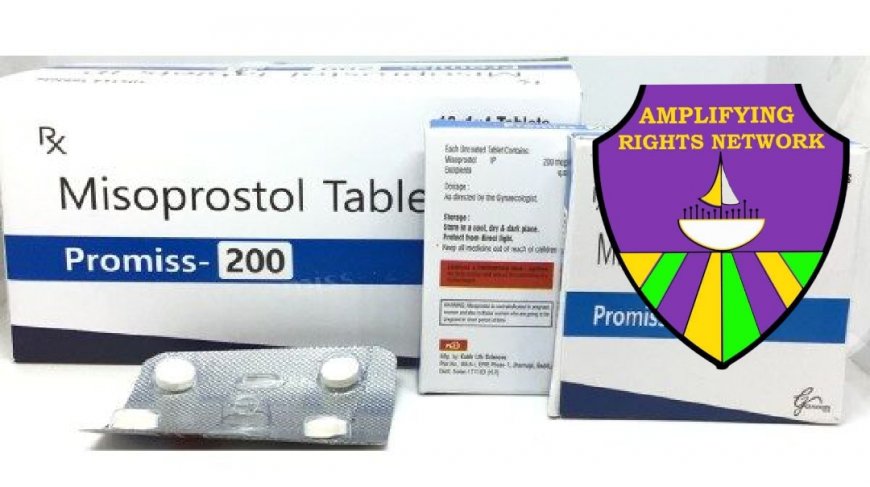
Monrovia, Liberia: A local civil society group, Amplifying Rights Network (ARN), has urged health authorities to relax ongoing efforts to restrict the sale of Misoprostol in Liberia, saying such measures could worsen maternal deaths.
Misoprostol, know as Cytotec, is a medication primarily used for medical abortions, post- abortion care, and treating severe bleeding after childbirth.
On April 3, 2026, the Ministry of Health announced a new regulation requiring the drug to be sold only with a valid prescription from a licensed physician and dispensed solely within authorized health facilities.
The Health Ministry attributed its decision to what it described as the widespread unregulated use of the drug. The measures include increased pharmacy inspections, scrutiny of the supply chain, and a ban on over- the- counter sales, with penalties such as license revocation for violations.
In a recent statement, the Amplifying Rights Network noted that tightening sales, would limit access to the drug and give rise to unsafe practices, especially among vulnerable populations.
The group pointed out that Liberia records over 1, 000 maternal deaths per 100, 100,000 live births—one of the highest rates globally—making access to life-saving drugs urgent.
ARN furthered that introducing stricter controls could delay care, particularly in rural areas where access to doctors and equipped health facilities is already limited.
The group highlighted that restrictive reproductive health policies have not reduced abortions in Liberia, but have instead pushed many women toward unsafe methods.
Estimates in Liberia suggest about 38, 000 abortions occur each year, with unsafe procedures accounting for up to 15 percent of maternal deaths.
“Restriction does not stop need—it only makes outcomes more dangerous,” the Network emphasizes.
The Amplifying Rights Network is now urging the government, through the Health Ministry, to ease restrictions and adopt policies that expand access to reproductive health services.
Among its recommendations, the group is calling on authorities to improve public education about proper use of the drug and empower midwives and community health workers to provide essential care.
The Network stresses that Liberia's goal to reduce maternal mortality cannot be achieved by tightening control over life-saving medicines.
What's Your Reaction?
 Like
0
Like
0
 Dislike
0
Dislike
0
 Love
0
Love
0
 Funny
0
Funny
0
 Angry
0
Angry
0
 Sad
0
Sad
0
 Wow
0
Wow
0