






















Liberia's Health Sector Receives Medical Boost to Manage Rape Cases
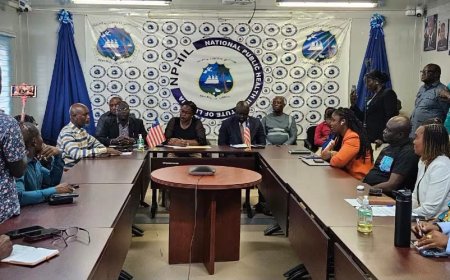
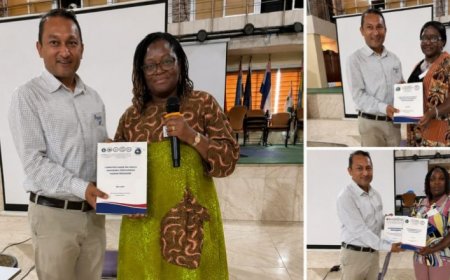
Liberia has received a huge consignment of essential medical supplies from the United Nations Population Fund (UNFPA), intended to strengthen its response to clinical management of rape and sexual abuse cases nationwide. The supplies were handed over to the Liberian Ministry of Health, along with the Ministry of Gender, Children, and Social Protection, including four-thousand pregnancy tests and fifteen-thousand doses of Hepatitis B, among others.

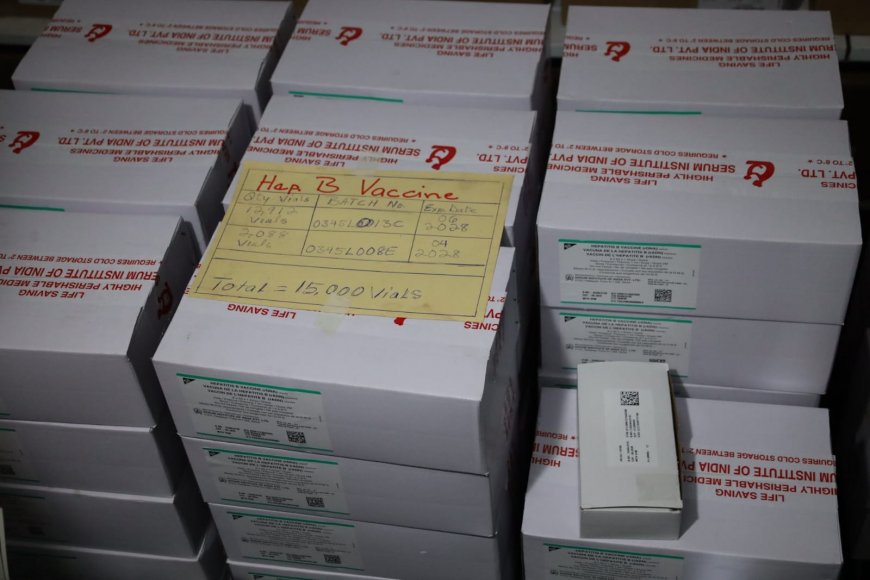
Monrovia, Liberia: Liberia has received a huge consignment of essential medical supplies from the United Nations Population Fund (UNFPA), intended to strengthen its response to clinical management of rape and sexual abuse cases nationwide.
The supplies were handed over to the Liberian Ministry of Health, along with the Ministry of Gender, Children, and Social Protection, including four-thousand pregnancy tests and fifteen thousand doses of Hepatitis B, among others.
The initiative is funded by the European Union and implemented through the UNFPA under the Spotlight Initiative Phase II.
Officials say medical supplies will be distributed to 34 health facilities across eight counties, serving about 4,000 survivors of gender-based violence.
Speaking during the ceremony, Assistant Health Minister for Prevention Services, Dr. Cuallau Jabbeh-Howe, described the move as essential to preventing further health complications of sexual abuse survivors in Liberia.
He emphasized that the medication will improve service delivery through coordinated systems, including “one-stop centers” for survivors.
“They provide medical care, psychosocial support, and legal assistance in a single location,” he explained.
Also speaking at the occasion, Assistant Minister for Gender, Laura Golokeh, emphasized that the supply will provide significant relief to the workings of relevant institutions.
She noted that although health facilities are present across the country, there are operational gaps that hinder effective care for survivors of sexual abuse.
Golokeh highlighted that the supplies will enable a prompt response and ensure further medical control of rape cases.
“While health facilities exist across the country, there are still capacity gaps in responding effectively to survivors of violence,” Golokeh stated.
“Consultations conducted nationwide revealed that many facilities have infrastructure but lack the full capacity to meet survivors’ needs in a timely manner."
“Survivors must access care within 72 hours,” she added, noting that addressing gender-based violence requires a coordinated, multi-sectoral response involving several key sectors.
“It requires a strong multi-sectoral approach involving the Ministry of Health, the justice system, and other key institutions, as well as community involvement," Assistant Minister Golokeh stressed.
Additionally, she pledged the government's unwavering commitment to reducing gender-based violence as part of its national development agenda.
She explained that the government is working to ensure the continuity of Gender-Based Violence services beyond donor-supported initiatives like the Spotlight Initiative.
“The government remains committed to reducing gender-based violence by 50 percent under its national development agenda,” she said, emphasizing that strengthening response systems is essential for reaching this target.
International partners, including the United Nations (UN) and the European Union (EU), stated that the donation reaffirms the long-standing partnership with Liberia to achieve its national priorities.
The EU mentioned that the supplies, valued at over 70,000 US dollars, will considerably strengthen response services at health facilities across the country.
“The intervention reflects a strong partnership between the European Union, the United Nations, and the Government of Liberia under the Spotlight Initiative Phase Two."
“The supplies are expected to benefit approximately 4,000 survivors and will help reduce both the physical and psychological consequences of sexual and gender-based violence,” an EU representative added.
Meanwhile, the United Nations emphasized that survivor care must remain a central priority alongside prevention efforts.
In a statement delivered on behalf of UN Resident Coordinator, Christine Umutoni, the body reaffirmed its stance to ending violence against women and girls.
“Ending violence against women and girls remains a national and global priority".
“While prevention is critical, equal attention must be given to ensuring survivors have access to quality healthcare, protection, and justice,” the statement reads.
As Liberia advances into the second phase of the Spotlight Initiative, stakeholders say the focus will remain on building resilient systems beyond medical measures, to ensure survivors are treated promptly, supported holistically, and given access to justice and dignity.
What's Your Reaction?
 Like
0
Like
0
 Dislike
0
Dislike
0
 Love
0
Love
0
 Funny
0
Funny
0
 Angry
0
Angry
0
 Sad
0
Sad
0
 Wow
0
Wow
0