









Prosecutors Ask Judge to Disband Jury in Capitol Arson Trial
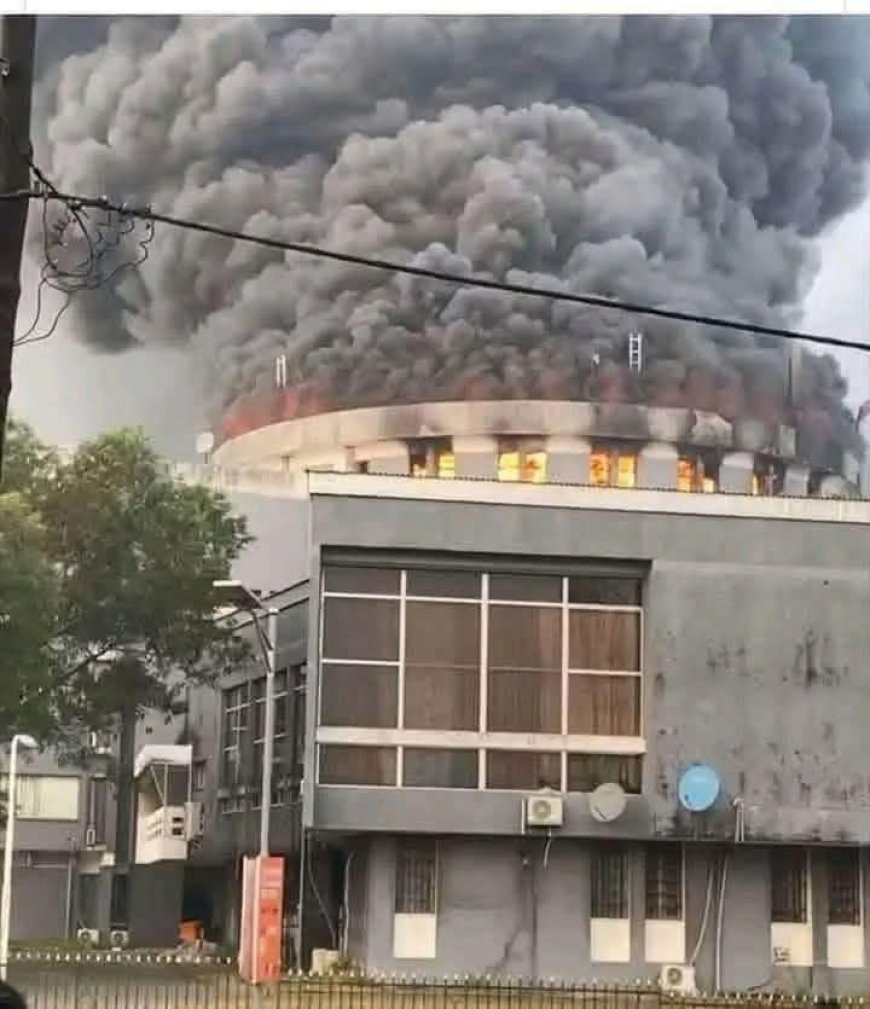
Monrovia, Liberia: The Capitol Building arson case has been in court for over four weeks. Prosecutors are trying to prove their case mainly using videos, photos, call logs, and statements. The defense has consistently questioned the reliability of this evidence, claiming parts of it were unclear, incomplete, or obtained improperly. As the trial progressed, jurors were allowed by the judge to ask questions to better understand the evidence presented.
Prosecutors in the Capitol Building arson case have asked the court to dissolve the current jury. They claim that some jurors went beyond their legal role by questioning a key prosecution witness in an improper way. According to the prosecutors, this behavior raises concerns about possible juror misconduct. The defense strongly disagrees and says the request is unfounded and threatens the fairness of the justice system.
The request is now being considered by Criminal Court ‘C’ Judge Roosevelt Z. Willie. It is based on an incident that occurred on December 22, when a juror asked for a replay of a video recorded on November 10, 2024. After watching the video again, the juror questioned the prosecution’s first witness, investigator Refael Wilson, asking whether a person shown in the footage was the defendant, Thomas Etheridge.
Prosecutors claim the juror went further by saying the person in the video appeared to be a Chinese man and asking whether that person and Etheridge were the same. They argue that this comment, along with other juror questions during Wilson’s testimony, suggests jurors may have been talking among themselves or forming opinions too early. Prosecutors say this justifies the extreme step of disbanding the jury.
Defense attorneys strongly opposed this claim during arguments held on Monday, December 29, 2025. They urged Judge Willie to reject the motion, saying it is unsupported and should be dismissed.
The defense argued that prosecutors did not present any real evidence of juror misconduct. They said no juror violated the law or disobeyed the court’s instructions. Defense lawyers emphasized that jurors are allowed to ask questions to clarify evidence and that doing so shows they are paying attention, not behaving improperly.
Defense counsel described the prosecution’s claims as false, misleading, and lacking proof. They stressed that simply being unhappy with juror questions does not meet the strict legal standard required to dissolve a properly selected jury.
They also warned that the motion unfairly attacks the credibility of the jury and indirectly undermines the authority of the court. The defense stated there is no evidence that any juror was influenced, pressured, or interfered with during the trial.
This disagreement comes after more than four weeks of testimony in a case that has closely examined the strength of the prosecution’s evidence.
After the defense finished cross-examining Investigator Wilson, Judge Willie allowed jurors to ask questions. Many of those questions focused on whether the prosecution’s evidence was clear, reliable, and sufficient.
Jurors repeatedly asked whether audio recordings, videos, and photographs were the main evidence in the case. Wilson testified that investigators also relied on voluntary statements, call records, and other materials. The defense has challenged these claims, saying some statements were unreliable, forced, or not signed.
Juror questions also highlighted possible weaknesses in the investigation. One juror asked whether security officers assigned to the Capitol on the day of the fire had been questioned. Wilson said investigators found several problems, including officers who were never told about their assignments, did not show up for duty, or reported being sick.
Another juror asked how investigators obtained images shown earlier in a PowerPoint presentation after Wilson said there were no CCTV cameras on the Capitol grounds. Wilson explained that the images came from photographs taken during the investigation, pictures of the Joint Chambers after the fire, and photos taken from Etheridge’s mobile phone.
Defense lawyers also renewed objections to several prosecution exhibits. They questioned whether key documents were authentic and legally admissible and raised concerns about where they came from, whether they were properly signed, and how they were handled. They also argued that medical evidence presented by the prosecution supported claims of coercion rather than strengthening the state’s case.
Judge Willie has not yet ruled on the prosecution’s request. He is expected to make a decision on Friday, January 2, 2026, on whether the trial will continue with the current jury or whether the rare step of dissolving the jury will be taken.
What's Your Reaction?
 Like
0
Like
0
 Dislike
0
Dislike
0
 Love
0
Love
0
 Funny
0
Funny
0
 Angry
0
Angry
0
 Sad
0
Sad
0
 Wow
0
Wow
0