




























“Our Complaint Was About Integrity, Not Targeting Anyone,” UL Law Students Say

Representatives of the graduating class at the University of Liberia Louis Arthur Grimes School of Law say their formal complaint against Izetta Jones-Howe was not a personal attack but an effort to protect the integrity of the academic process.
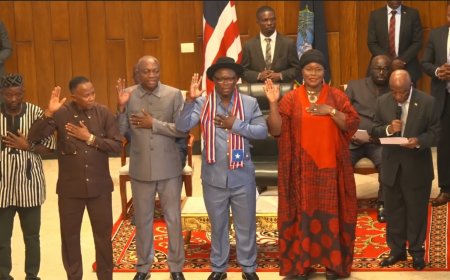
The students, who recently appeared before the University’s Board of Trustees, clarified that their concerns centered on due process, fairness, and the credibility of the Dux selection not on discrediting any individual.
They explained that their intervention was aimed at ensuring transparency in determining the top-performing student and upholding the academic standards expected at the institution.
According to the representatives, the Board’s decision to suspend the Dux announcement pending an investigation validates the issues they raised and shows why a thorough review is necessary.
They added that their group remains committed to integrity, fairness, and the continued progress of the law school community, stressing that their advocacy is about strengthening the institution as a whole.
Meanwhile, the dux of the Louis Arthur Grimes School of Law at the University of Liberia has filed a US$4 million defamation lawsuit against political activist Martin K.N. Kollie.
The civil action was submitted during the March Term, A.D. 2026, before the Sixth Judicial Circuit Civil Law Court for Montserrado County, and has been assigned to Resident Circuit Judge J. Kennedy Peabody.
The plaintiff, Ezetta Jones-Howe, alleges that Kollie published defamatory statements about her on Facebook, accusing her of criminal fraud and academic falsification claims she insists are false and damaging to her reputation.
Jones-Howe is seeking US$3.5 million in general damages and US$500,000 in punitive damages. Her filing argues that the statements in question amount to defamation per se under established Liberian common law.
The complaint further states that while Article 15 of the Constitution protects free speech, that protection does not extend to false and malicious accusations.
The court has ordered the issuance of a writ of summons, requiring Kollie to formally respond within the statutory period.
What's Your Reaction?
 Like
0
Like
0
 Dislike
0
Dislike
0
 Love
0
Love
0
 Funny
0
Funny
0
 Angry
0
Angry
0
 Sad
0
Sad
0
 Wow
0
Wow
0