






Weah Says U.S. China Tensions Delayed Overpass Bridges as Project Proceeds Under Boakai
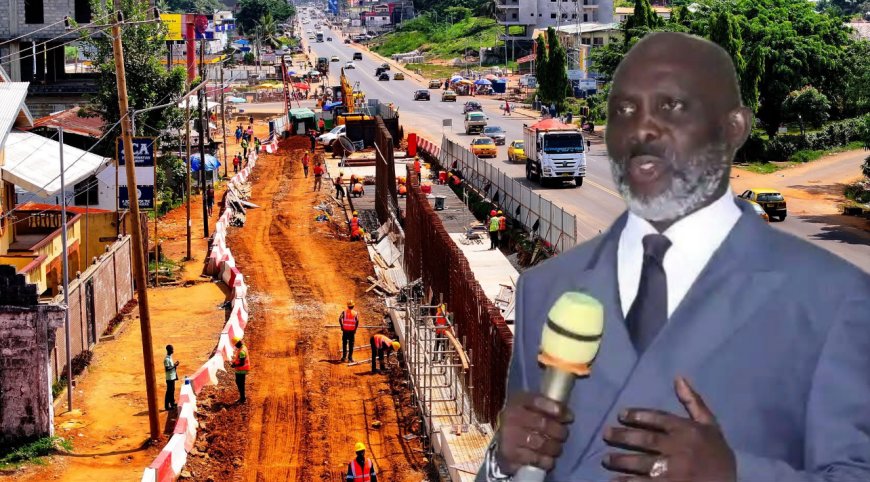
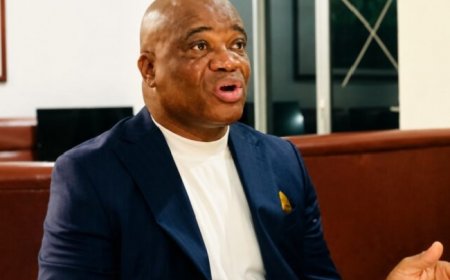
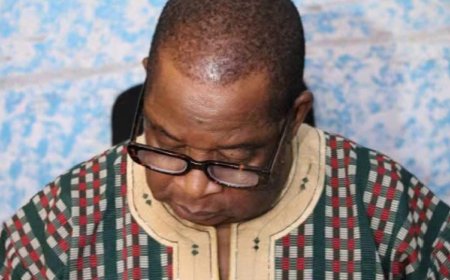
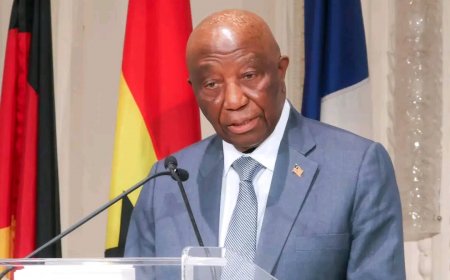
Paynesville, Liberia: Former President George Manneh Weah has offered his explanation for why the Government of the People’s Republic of China suspended the construction of two overhead overpass bridges during his administration, attributing the delay to geopolitical tensions between China and the United States.
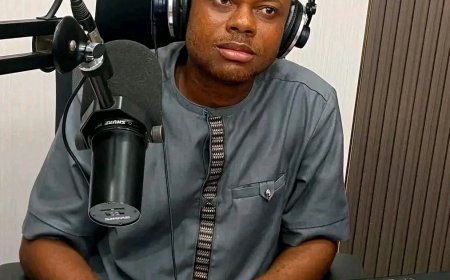
Speaking to congregants at the Forky Jlaleh Family Fellowship Church along the Roberts International Airport (RIA) Highway, the former Liberian leader said his administration had completed all required documentation for the bridge projects but declined to involve Liberia in international political disputes.
According to Weah, Chinese officials allegedly sought Liberia’s participation in broader political disagreements with the United States, a request he said he firmly rejected.
“Even the bridge near the Ministerial Complex that people are working on now is something we put together,” Weah told the congregation. “But because they were giving us something, they believed we had to get involved in other people’s politics. I was the President, and I said no.”
The former President emphasized Liberia’s long-standing policy of neutrality, noting that the country maintains diplomatic relations with both the United States and China.
“Liberia is a partner to America, and Liberia is a partner to China. Since the two of you are fighting, you should talk it out,” Weah said. “But they said while those discussions were ongoing, they would suspend what they planned to do for us and that ‘later on’ came after we were no longer there.”
During the early years of the Weah administration, China pledged continued support to Liberia’s Pro-Poor Agenda for Prosperity and Development (PAPD). At the time, Chinese Foreign Minister Wang Yi reaffirmed Beijing’s commitment to cooperation based on sincerity, real results, and mutual benefit.
That commitment was later reinforced following bilateral discussions between then Foreign Minister Gbehzohngar Milton Findley and Chinese State Councilor and Foreign Minister Wang Yi on the margins of the Forum on China-Africa Cooperation (FOCAC) Coordinators’ Meeting.
Subsequently, Liberia’s Embassy near Beijing disclosed that China agreed to provide a gratuitous assistance package of 200 million Chinese Yuan, approximately US$29.5 million, as the first tranche for projects agreed upon during President Weah’s meeting with Chinese President Xi Jinping at the 2018 FOCAC Summit in Beijing.
The funds were deposited into a joint account at the China Development Bank to be jointly administered by both governments for the implementation of agreed projects, including two overhead bridges intended to ease traffic congestion around the Ministerial Complex and along the SKD Boulevard corridor.
Despite these arrangements, the overpass bridge projects remained suspended throughout the Weah administration.
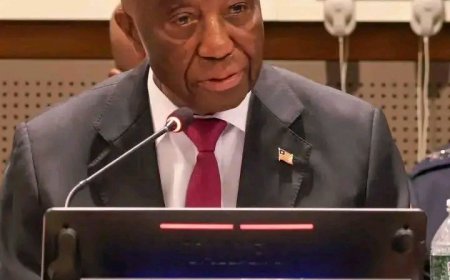
The long-delayed projects were revived under the administration of President Joseph Nyuma Boakai. On September 2, 2025, President Boakai and Chinese Ambassador to Liberia Yin Chengwu officially broke ground for the construction of the two overhead overpass bridges in Monrovia.
Construction work is currently in progress at both sites, marking the first physical advancement of the projects since their initial approval.
Speaking at the groundbreaking ceremony last year, President Boakai expressed appreciation to the Government of the People’s Republic of China, describing the bridges as critical infrastructure that will ease traffic congestion and improve urban mobility in the capital.
Ambassador Yin Chengwu described the project as a symbol of the deepening strategic partnership between Liberia and China, anchored on sincerity, real results, affinity, and good faith. He noted that the bridges are a direct outcome of renewed high-level engagement between President Boakai and President Xi Jinping at the 2024 FOCAC Summit in Beijing.
The two overpass bridges one near the Ministerial Complex and the other at SKD Boulevard along Tubman Boulevard are part of a China-aided infrastructure initiative expected to be completed in 2027.
What's Your Reaction?
 Like
0
Like
0
 Dislike
0
Dislike
0
 Love
0
Love
0
 Funny
0
Funny
0
 Angry
0
Angry
0
 Sad
0
Sad
0
 Wow
0
Wow
0