






























To Resumes January 12, 2026: House of Representatives Adjourns for Annual Constituency Break

MONROVIA, LIBERIA: In keeping with Article 40 of the 1986 Constitution of Liberia which grants lawmakers a period of recess from regular legislative activities to engage with their constituents the House of Representatives has officially adjourned for its annual constituency break, ,
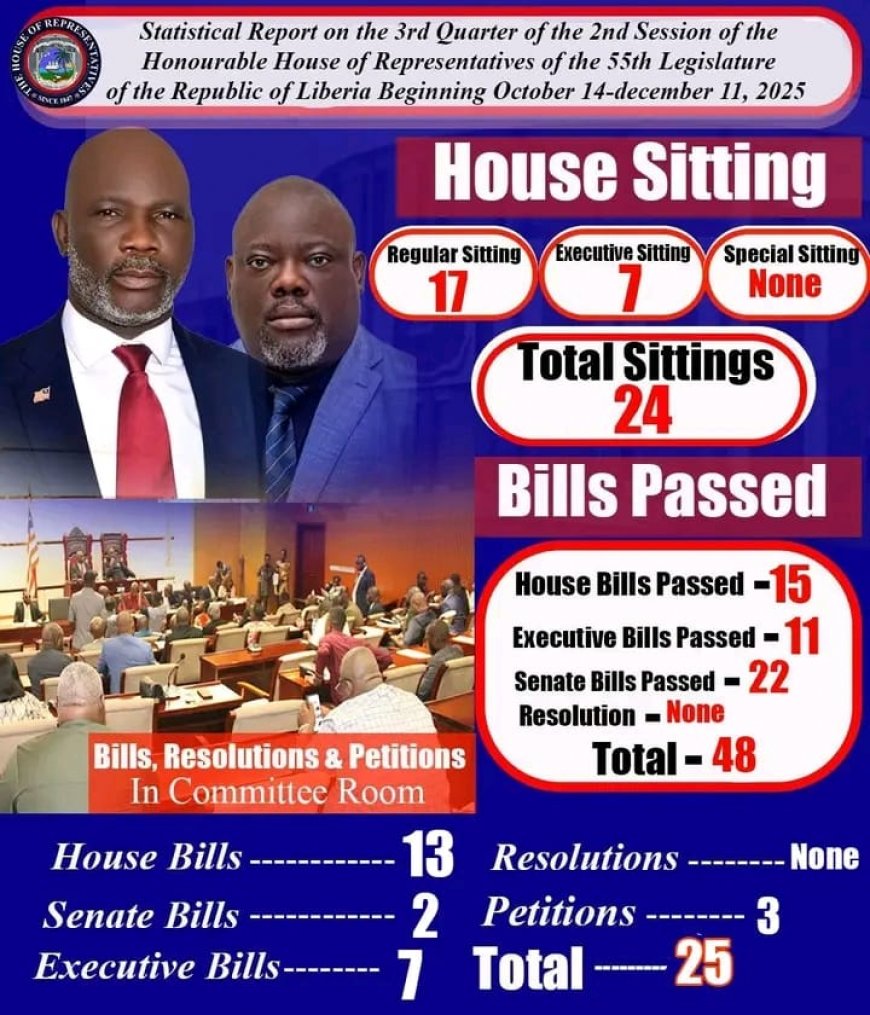
The adjournment occurred on Thursday, December 11, 2025, marking the 17th day sitting of the 3rd Quarter of the 2nd Legislative Session.
In his closing remarks, House Speaker Richard Nagbe Koon presented a summary of the chamber’s legislative performance for the period under review.
According to the Speaker, a total of 70 bills were introduced, out of which: 48 bills were passed, 11 originated from the Executive Branch, 22 were concurrence bills forwarded by the Liberian Senate, and 15 were originally crafted in the House of Representatives.
Speaker Koon described the session as “highly productive,” emphasizing that the House remained consistent in fulfilling its constitutional mandates of lawmaking, oversight, and representation.
He extended heartfelt gratitude to his colleagues for their cooperation, dedication, and teamwork throughout the session. He also praised the constructive working relationship among the three branches of government.
Speaker Koon also commended President Joseph Nyuma Boakai, members of the Executive Branch, and the Chief Justice and Associate Justices of the Supreme Court, along with the broader Judiciary, for maintaining a spirit of coordination and respect.
He expressed optimism that this level of collaboration will continue when the Legislature reconvenes.
The House of Representatives is expected to resume full legislative duties on the second working Monday of January, which falls on January 12, 2026.
During the constituency break, lawmakers are expected to return to their respective districts to engage with citizens, assess local challenges, and gather feedback that will help inform future legislative priorities.
What's Your Reaction?
 Like
0
Like
0
 Dislike
0
Dislike
0
 Love
0
Love
0
 Funny
0
Funny
0
 Angry
0
Angry
0
 Sad
0
Sad
0
 Wow
0
Wow
0