


Gbarpolu Opens First Traditional Arts School as Community Alternative to FGM

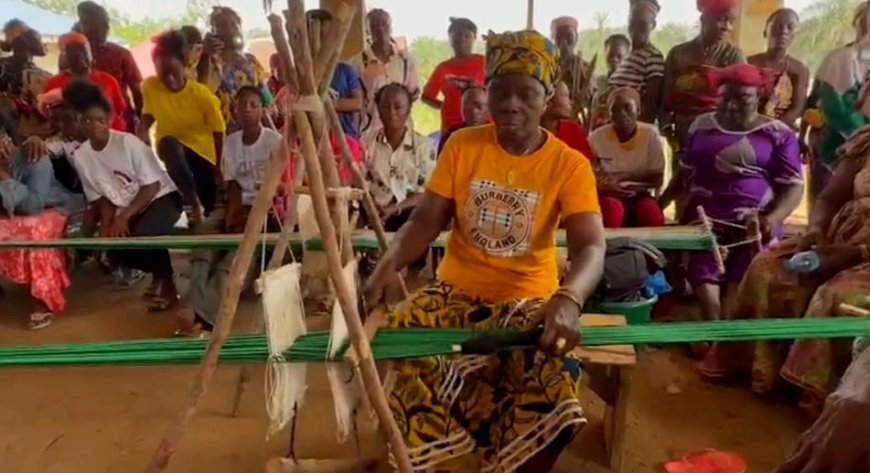
Gbarpolu, Liberia: A new Traditional Arts School has opened in Gbama District, marking a major shift away from Female Genital Mutilation (FGM) in one of Liberia’s most tradition-bound regions. The school, launched by ActionAid Liberia in partnership with the local group DOMAFEIGN, is designed to provide women and girls with skills, income opportunities, and cultural identity without subjecting them to harmful practices.
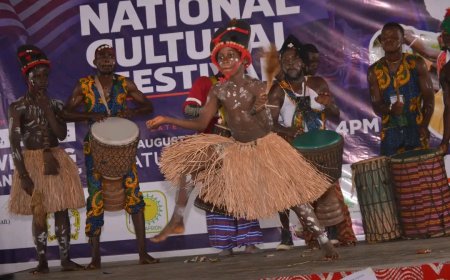
The center, created under the Just and Equal Community (JEC) Project, now serves as a community empowerment hub offering training in tailoring, country-cloth weaving, traditional dance, and moral education. The initiative replaces the role that FGM once played in preparing girls for womanhood, giving families a non-violent and sustainable alternative.
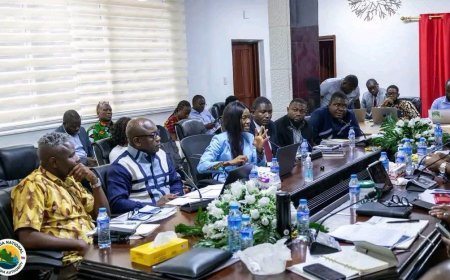
At the heart of the project is Jartu B. Johnson, a former FGM practitioner who now leads anti-FGM advocacy in Gbarma. The school was officially opened on January 24 in Parker Town as part of activities marking Liberia’s Zero Tolerance for FGM campaign. The event brought together traditional leaders, lawmakers, women’s groups, former practitioners, and hundreds of rural residents.
Johnson, now recognized as a “Change Champion,” told the gathering that the future of the school must be owned by the county itself. She said years of engagement by ActionAid and DOMAFEIGN had helped women abandon FGM, but warned that donor support alone cannot sustain the transformation.
“I am not begging you — I am demanding you to advocate for this center to get support so we can train the girls and women of Gbarma, since we have laid down arms,” Johnson told Senator Botoe Kanneh and District 3 Representative Mustapha Wority.
Senator Kanneh welcomed the initiative and praised the fact that the change was coming from a deeply traditional community. She committed LD$40,000 to the center, while Representative Wority added LD$30,000 and pledged 25 bags of cement. Additional support included sewing machines from ActionAid Liberia’s Country Director Elizabeth Gbah Johnson, as well as from community supporters Aisha Kamara and Chris Weyon.
Elizabeth Gbah Johnson said the project represents a new model of sustainability, driven by women who once depended on harmful practices but now control their own futures.
“This is not about ActionAid. It is about the women who made the decision and are leading what is happening here,” she told the audience.
When asked about the project on Tuesday February 10, 2026, Jartu B. Johnson said the goal is to expand the model across Gbarpolu County so that no community will have to rely on FGM to preserve tradition or support women’s livelihoods.
The Traditional Arts School is part of the Just and Equal Community Project, which ActionAid Liberia is implementing in Bong, Gbarpolu, Grand Gedeh, and Montserrado counties with funding from the Embassy of Sweden through SIDA. The program supports FGM survivors, former practitioners, women-led organizations, traditional leaders, and young people.
According to ActionAid Liberia, more than 38,800 women and young people have been empowered through the project to claim their sexual and reproductive health and rights, while over 300 former FGM practitioners have transitioned into alternative livelihoods and now serve as community advocates.
For Gbarma District, the new arts school represents more than a building it marks a historic break from a cycle that harmed generations of girls, replacing it with skills, dignity, and a future shaped by choice rather than fear.
What's Your Reaction?
 Like
0
Like
0
 Dislike
0
Dislike
0
 Love
0
Love
0
 Funny
0
Funny
0
 Angry
0
Angry
0
 Sad
0
Sad
0
 Wow
0
Wow
0