




















Ngafuan vs Tweah: Harmonization ‘Reversal’ Challenged as Tweah States Legal Impossibility

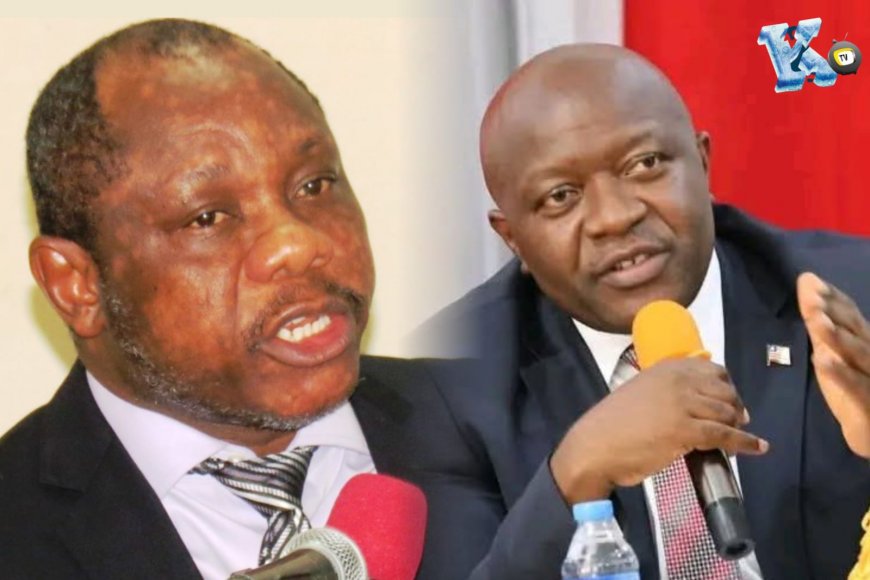
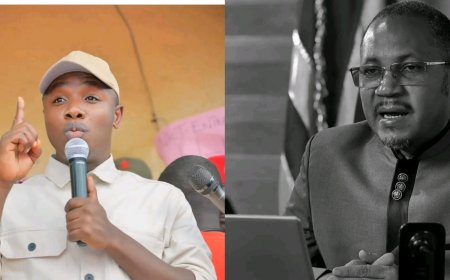
MONROVIA, LIBERIA: Former Finance Minister Samuel Tweah has sharply challenged claims by his successor, Augustine Kpehe Ngafuan, that the Liberian government has “reversed harmonization” for some state-institutions, describing the assertion as technically and legally untenable.
In a post on Tuesday, February 3, 2026, Ex-Minister Tweah underscored that institutions such as the Liberia Anti-Corruption Commission (LACC) and the General Auditing Commission (GAC) were never subject any harmonization process, noting that previous reforms had simply instituted a standardized, rule-based pay system across central government entities while maintaining the independence of specialized integrity institutions.
“LACC and GAC were never harmonized. You cannot reverse what was never broken.” He added with precision, “Reversing harmonization is not giving a pay raise—it’s undoing a system. That system cannot simply be undone.”
According to Tweah, the conflation of targeted salary increases with a structural reversal of harmonization misrepresents both law and practice.
To illustrate the practical implications of harmonization, the Liberian former Finance Chief used a hypothetical worker, John Peter, whose pre-harmonization gross monthly salary of L$18,750, supplemented by a US$150 General Allowance, resulted in lower annual tax obligations.
Under harmonization, John’s Basic Salary and General Allowance were combined into a single income, subjecting him to a unified Personal Income Tax calculation that raised his annual tax from US$199 to US$325, effectively reducing take-home pay by approximately US$11 per month.
“Before harmonization, John paid US$199 in tax. After harmonization, US$325. That’s $11 less in his pocket each month. That is the combined tax effect—irreversible without going back to the old system,” the Former Finance Minister asserted.
Tweah stressed that this “combined tax effect” is inherent to harmonization and cannot be undone without returning to the dual pay structure, a step both legally and administratively infeasible, making Ngafuan’s reversal claim largely symbolic.
Earlier to Tweah’s critique, Minister Ngafuan asserted that the government has implemented a formal reversal of harmonization for high-priority institutions, specifically the Supreme Court bench, LACC, and GAC, under the FY2025 and proposed FY2026 budgets.
“We have reversed harmonization at LACC, GAC, and the Supreme Court bench,” he said.
Highlighting targeted increases, he added, “DEA workers, nurses, and doctors will see raises this year. We are moving gingerly, but deliberately.”
Speaking during a public discourse on the Closing Argument, Minister Ngafuan highlighted that employees of the Drug Enforcement Agency (DEA) would receive pay increases within the current fiscal cycle, while nurses, physician assistants, and specialist doctors were earmarked for enhancements ranging from $50 to more than $200 monthly.
He further emphasized structural shifts in Liberia’s economic rhythm, declaring a move from a “12-hour economy” to an “over 18-hour economy,” with energy sector investments absorbing the full allocation of Millennium Challenge Corporation (MCC) funding for the year.
The Minister portrayed these measures as part of a broader strategy to boost productivity, incentivize performance, and ensure the operational sustainability of critical government functions, while asserting that the adjustments would strengthen institutional capacity without destabilizing fiscal planning.
Despite the government’s framing, Tweah and other critics maintain that true reversal of harmonization is not achievable without reinstating the Basic Salary and General Allowance system, effectively dismantling the rule-based equity model that harmonization enshrined.
What's Your Reaction?
 Like
0
Like
0
 Dislike
0
Dislike
0
 Love
0
Love
0
 Funny
0
Funny
0
 Angry
0
Angry
0
 Sad
0
Sad
0
 Wow
0
Wow
0