



























House Summons UL Leadership Over $380 Graduation Fees, Cites Harsh Financial Burden On Students

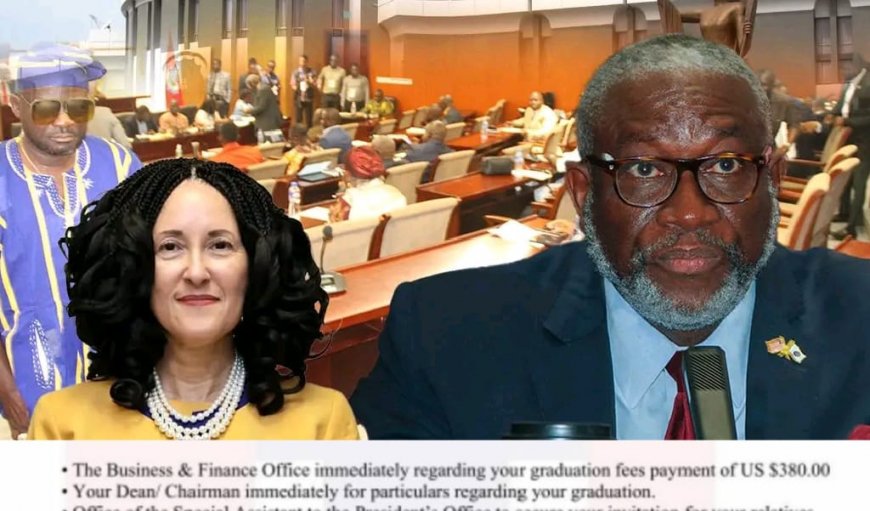
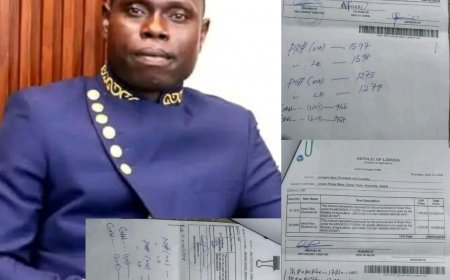
MONROVIA, LIBERIA: The House of Representatives has officially summoned the leadership of the University of Liberia headed by Dr. Layli Maparyan, to justify the confirmed amount of $380 graduation fee imposed on the 105th graduating class, amid growing concerns that students are being priced out of their commencement exercises.
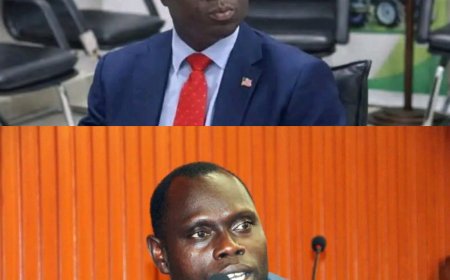
The action follows a formal complaint from Montserrado County District #12 Representative Jerry K. Yogboh, who warned that the fees are placing “serious and unacceptable financial pressure” on students and their families.
Representative Yogboh insisted that the university’s mandate to serve the people must translate into accessibility, fairness, and respect for students’ dignity.
“Students who have struggled through years of hardship should not be denied the dignity of graduation because of excessive fees,” he declared, stressing that such practices erode the fundamental purpose of public education in Liberia.
According to report, the current $380 fee structure comprises a $175 academic processing fee and a $140 souvenir package, alongside social and administrative charges, while graduates are required to retain permanent ownership of their gowns, a policy that differs from previous years, when gowns were sometimes returned after ceremonies.
Lawmakers emphasized that while stabilization of fees may suggest administrative order, it does not absolve the university from ensuring affordability and equity.
A review of historical fees underscores the volatility students have faced over the last decade. Prior to 2012, under the administration of Ellen Johnson Sirleaf, graduation fees averaged approximately $360, including specific charges for facilities like the Recreation (REC) and BLR centers.
In 2016, the base university fee of $150 was supplemented by $130 for souvenirs and events, totaling $280. Under former President George Weah, fees ranged from $280 to $330 between 2018 and 2021, prompting protests from students who challenged the affordability of commencement requirements.
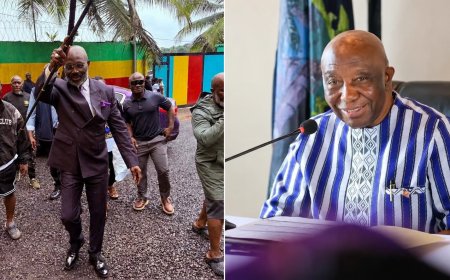
Notably, in 2022, Weah personally covered $55,800 in graduation fees for 124 Master’s students, effectively relieving them of a $450 individual financial burden.
Despite the current administration of Joseph Nyumah Boakai maintaining fees at $380, lawmakers are questioning whether the charges reflect proper governance and whether the University’s Board of Trustees approved the structure.
“This institution was established to serve the people, not to burden them at the final stage of their academic journey,” Representative Yogboh emphasized, framing the issue as one not merely of finance but of principle.
The UL Officials are expected to provide a complete breakdown of all charges, clarify the legal basis for mandatory fees, and outline steps to ensure transparency, accountability, and affordability.
What's Your Reaction?
 Like
0
Like
0
 Dislike
0
Dislike
0
 Love
0
Love
0
 Funny
0
Funny
0
 Angry
0
Angry
0
 Sad
0
Sad
0
 Wow
0
Wow
0