

























LRA, MOE, WAEC Tighten Oversight on Private Schools' Tax and Regulatory Compliance
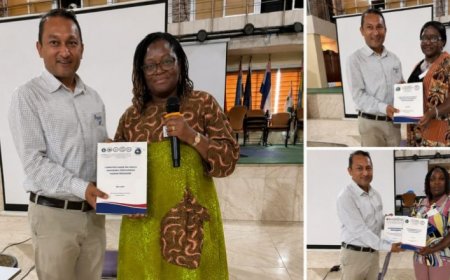
Private and faith-based schools across Montserrado and parts of Margibi County are under renewed scrutiny as the Liberia Revenue Authority (LRA), the Ministry of Education (MOE), and WAEC-Liberia roll out a coordinated verification exercise aimed regulating operational licenses and compliance to tax obligation in the education sector. The joint operation, which spans all 26 educational districts in Montserrado and the Marshall and Farmington districts in Margibi County, is targeting school permits, payroll tax obligations, and rental withholding tax compliance dating from 2022 to 2026


Monrovia, Liberia: Private and faith-based schools across Montserrado and parts of Margibi County, are under renewed scrutiny, as the Liberia Revenue Authority (LRA), the Ministry of Education (MOE), and WAEC-Liberia roll out a coordinated verification exercise aimed at regulating operational licenses and compliance with tax obligations in the Education sector.
The joint operation, which spans all 26 educational districts in Montserrado and the Marshall and Farmington districts in Margibi County, is targeting school permits, payroll tax obligations, and rental withholding tax compliance dating from 2022 to 2026.
Unlike routine inspections, officials describe the exercise as a sector-wide accountability drive designed to verify whether schools are not only operating with valid licenses but are also meeting their fiscal responsibilities under national tax laws.
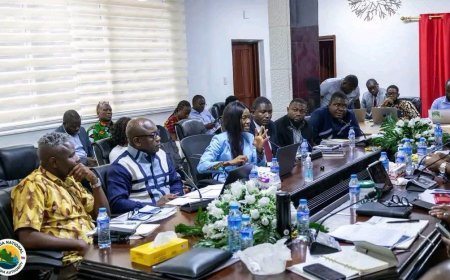
At the center of the exercise is a joint inspection team moving school-to-school to cross-check financial records, confirm permit validity, and assess compliance with statutory deductions for employees and property rentals.
Daniel Hayes, Enforcement Supervisor of the LRA’s Government and Non-For-Profit Division, who is leading the operation, said the initiative reflects a shift toward tighter enforcement within institutions that have traditionally operated with minimal fiscal oversight.
He noted that while the exercise carries an enforcement mandate, it also serves as a corrective mechanism for institutions that may have fallen behind on regulatory requirements.
“We are strengthening compliance while also giving schools the opportunity to regularize their status. The goal is not disruption, but accountability and alignment with the law,” Hayes explained.
Education officials say the move is part of broader efforts to improve governance in the private education sector, where concerns have persisted over inconsistent permit renewals, undocumented staff payrolls, and delayed tax remittances.
WAEC-Liberia’s involvement adds an additional layer of oversight, particularly as schools prepare candidates for regional examinations. This makes the institutional compliance increasingly tied to academic credibility and operational approval.
The exercise is expected to continue across targeted districts in the coming weeks, with authorities indicating that follow-up actions may include enforcement measures for institutions found in persistent violation of regulatory and tax obligations.
What's Your Reaction?
 Like
0
Like
0
 Dislike
0
Dislike
0
 Love
0
Love
0
 Funny
0
Funny
0
 Angry
0
Angry
0
 Sad
0
Sad
0
 Wow
0
Wow
0