






































Liberia Set to Hit US$1 Billion Domestic Revenue Mark

Liberia is on course to cross the US$1 billion mark in domestic revenue collection by September, a milestone government officials say could significantly strengthen the country’s ability to finance its development priorities.
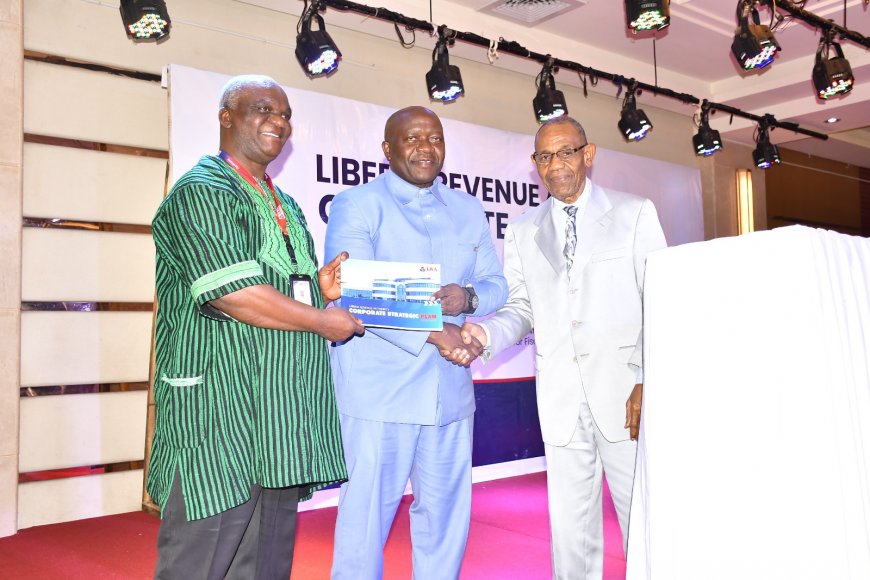
Finance and Development Planning Minister Augustine Kpehe Ngafuan made the projection Thursday during the launch of the Liberia Revenue Authority’s Corporate Strategic Plan 2025–2029 in Monrovia.
“Today, we are knocking on heaven’s door. Because by September 2026, we will hit the $1 billion mark in domestic revenue. This is an achievement of the Liberian people,” Ngafuan declared.
The projection comes as revenue collection continues to rise, with the Liberia Revenue Authority reporting US$904.7 million in domestic revenue as of August 18.
LRA Commissioner General James Dorbor Jallah said collections increased from US$699 million in 2024 to US$848 million in 2025, surpassing the 2025 target of US$804.6 million by more than US$44 million.
Jallah said the projected billion-dollar milestone should not be treated as an end in itself.
“Reaching the billion-dollar milestone should not be viewed as an end in itself, but as an opportunity to expand Liberia’s capacity to finance schools, healthcare facilities, roads, and other essential public services,” he said.
The LRA is now seeking to sustain the growth through its new five-year Corporate Strategic Plan, which focuses on improving tax compliance, digitalizing revenue administration, strengthening taxpayer services and facilitating legitimate trade.
According to Jallah, the strategy will move the Authority away from traditional and fragmented systems toward a more modern, integrated and intelligence-led revenue administration.
He said the LRA will also work to make tax compliance easier by simplifying procedures, improving access to information and reducing the time and complexity associated with meeting tax obligations.
Jallah disclosed that the Automated System for Customs Data, ASYCUDA, has been deployed at 11 of the Authority’s 17 Customs Business Offices, while the Liberia Integrated Tax Administration System, LITAS, has been introduced at five of 18 Tax Business Offices.
The Authority is also targeting a major reduction in cargo clearance time at the Freeport of Monrovia—from the current 12 days and 19 hours to three days.
Jallah said solar power, internet connectivity and improved operational facilities are being introduced at locations outside Monrovia to strengthen tax and customs operations across the country.
Meanwhile, Minister Ngafuan challenged the LRA and other government institutions to ensure that the projected US$1 billion collection is sustained beyond 2026.
He pledged continued government support to revenue-generating institutions and said the government would review incentive and bonus arrangements for such institutions, including state-owned enterprises.
The LRA Commissioner General also called on businesses to register and file their taxes, while urging importers and customs brokers to accurately declare the value of goods.
He further appealed to local authorities and development partners to support efforts to strengthen revenue mobilization across Liberia.
The LRA’s Corporate Strategic Plan runs through 2029 and is built around five strategic priorities, including effective and transparent administration of revenue laws, voluntary compliance, institutional strengthening, technology and data, and strategic partnerships.
The launch brought together senior government officials, development partners, business representatives and other stakeholders, with officials stressing that sustaining Liberia’s revenue growth will require cooperation across the public and private sectors.
What's Your Reaction?
 Like
0
Like
0
 Dislike
0
Dislike
0
 Love
0
Love
0
 Funny
0
Funny
0
 Angry
0
Angry
0
 Sad
0
Sad
0
 Wow
0
Wow
0