
























Land Reform Makes Progress, But Funding Gaps Threaten Gains
Civil Society Groups Cite Funding, Coordination and Slow Formalization as Key Challenges


MONROVIA — Liberia’s efforts to implement the Land Rights Act are making progress, with about 70 customary land communities completing the process required to secure legal recognition of their land rights.
The development is expected to provide land tenure security for an estimated 380,000 citizens, most of them living in rural communities, according to the Civil Society Working Group on Land Rights Reform and the MAP Liberia Land Platform.
However, the groups say significant challenges, including inadequate funding, slow formalization, limited institutional capacity and overlapping mandates among government agencies, continue to threaten the full implementation of the law.
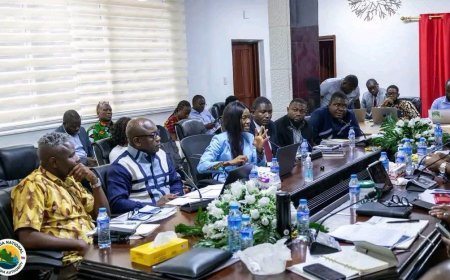
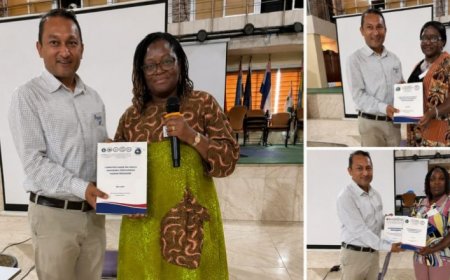
The concerns were highlighted Wednesday, September 30, 2026, during a press conference at the LANDESA Conference Room in Sinkor, Monrovia, where the groups presented findings from a 2026 civil society advocacy and engagement policy brief titled “Defending Land, Protecting Rights.”
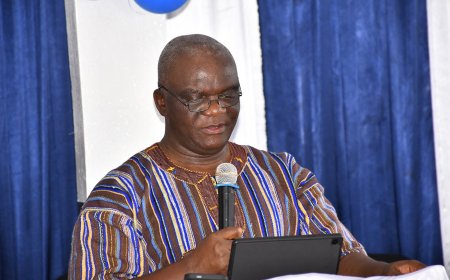
The statement was read by Daniel Wehyee, Land Program Coordinator at the Sustainable Development Institute and spokesman for the MAP Liberia Land Platform.
Wehyee said about 150 additional customary land communities are currently going through the formalization process, representing approximately 800,000 people.
He said the progress demonstrates that the Land Rights Act can provide communities with greater security over their customary lands when the law is properly implemented.
“About 70 customary land communities have completed the process to qualify under the Land Rights Law, covering an estimated 380,000 citizens, mostly rural, who for the first time have security to their land and the opportunity to obtain deeds,” Wehyee said.
The policy brief, produced by the Liberian consultancy Ducor Institute for Social and Economic Research, was commissioned by the CSO Working Group on Land Rights Reform, represented by the Sustainable Development Institute and the MAP Liberia Land Platform, with support from the International Land Coalition.
FROM LAND DISPOSSESSION TO REFORM
The civil society groups say Liberia’s land question has deep historical roots, tracing the country’s land system to a history of dispossession and marginalization in which land ownership was concentrated among a relatively small number of private owners, while other lands were classified as state or public land.
According to the policy brief, the situation contributed to rural poverty, neglect and land-related tensions that became part of the broader conditions surrounding Liberia’s 14-year civil war.
The groups also pointed to Liberia’s concession history, including the 1926 Firestone Agreement, under which approximately one million acres of land were leased for 99 years at six cents per acre.
They said the concession model, characterized by large-scale land concessions and long-term leases, continued through the civil war and into the post-war period.
Following the war, land reform became part of Liberia’s broader peacebuilding and governance agenda.
The Governance Commission under former President Ellen Johnson Sirleaf identified land conflict as an issue requiring attention if Liberia was to achieve lasting peace and development.
After years of reform efforts, the Land Rights Act was signed into law by former President George Weah in September 2018 and subsequently printed into a handbill in October of that year.
The reform process also followed the establishment of the Liberia Land Authority in 2016, intended to serve as a one-stop institution for land-related matters.
NEW SYSTEMS TO STRENGTHEN LAND ADMINISTRATION
Wehyee said several policies, legal instruments and regulations have either been developed or are being developed to support implementation of the law.
He said authorities are also introducing Participatory Land Use Planning, which is intended to involve communities in decisions concerning the use and management of their land.
Another development is a Parcel Verification System, which will digitally verify and validate land parcels.
According to Wehyee, the system could help address problems such as multiple sales of the same land, duplication of parcels and boundary disputes.
“The Parcel Verification System is being introduced to digitally verify and validate parcels, with the potential to reduce double sales, duplication and boundary disputes,” he said.
The land reform process is also being supported by a Digital Scanning Center, which is intended to preserve and digitize land records, provide secure storage and make records easier to access.
A new standardized deed form with enhanced security features is also being introduced to strengthen the integrity and traceability of land documents and help curb forgery.
The groups further noted the use of modern surveying and mapping technologies, including drones, mobile mapping and geographic information systems.
Wehyee said collaboration is also ongoing between the Liberia Land Authority and the Liberia Revenue Authority on property valuation and mapping, with support from the World Bank and the government’s Public Sector Investment Program.
IMPLEMENTATION STILL FACES MAJOR CHALLENGES
Despite the progress, the civil society groups say Liberia’s land reform program continues to face serious implementation challenges.
One of the major concerns is inadequate budgetary support for the Liberia Land Authority.
The groups say implementation of land reform remains heavily dependent on donor funding, a situation they say has created uncertainty following the dissolution of the United States Agency for International Development, which they described as a major donor in Liberia’s land sector.
The groups also warned about the slow pace of formalization.
They said only a relatively small portion of customary communities have so far completed the process and obtained titled deeds, while Liberia has an estimated 600 to 700 clans and traditional establishments.
At the current pace, they said, it could take many years before customary landholders across the country fully realize the ownership rights provided under the Land Rights Act.
Wehyee said the problem is not with the law itself, but with the capacity and institutional support required to implement it.
“The implementation challenges are institutional, not legal. Liberia does not need to weaken the Land Rights Act; what is needed is stronger coordination and support for its implementation,” he said.
OVERLAPPING MANDATES
The groups also raised concerns about overlapping responsibilities among institutions involved in land and natural resource management.
They pointed to tensions and overlapping mandates involving the Liberia Land Authority, Forestry Development Authority, Environmental Protection Agency, Ministry of Mines and Energy, and the newly established Liberia Carbon Marketing Authority.
According to the policy brief, such overlaps can create uncertainty over the formalization of customary land, community ownership, benefit-sharing arrangements and the management of natural resources located on community lands.
Limited technical capacity, inadequate resources and insufficient institutional support were also identified as obstacles.
The groups further cited gaps in public awareness and enforcement, saying understanding and application of the Land Rights Act remain uneven across institutions and communities.
CALL FOR STRONGER GOVERNMENT SUPPORT
The civil society groups are calling for increased government and donor support for land reform.
They want more resources directed toward community awareness and popularization of the Land Rights Act, faster formalization and issuance of deeds, improved land data and administration systems, and stronger land services at the county level.
They also argue that secure land rights can help create greater confidence for investors while protecting the rights of communities.
According to the groups, the Land Rights Act does not prevent investment but provides a legal framework for investment to take place under clearer and more stable conditions.
Wehyee said secure land rights can also contribute to peace and rural stability by reducing land disputes.
“Clear land rights are a foundation for peace, stability and accountable governance,” he said.
The groups further linked land ownership to Liberia’s climate and environmental agenda, particularly as the country develops its carbon market.
They argue that communities with legally recognized ownership of their land will be better positioned to participate in decisions involving climate projects, carbon markets and the protection of natural resources.
“Secure community land tenure puts communities in the driving seat in climate change and carbon marketing because they own the land and can protect and defend it,” Wehyee said.
The civil society organizations are therefore urging stronger political leadership and institutional coordination to ensure that the Land Rights Act moves beyond legislation and becomes fully operational across the country.
They say effective implementation could make the law one of Liberia’s most important governance reforms by strengthening rural land security, reducing conflict and giving customary communities greater control over land and natural resources.
What's Your Reaction?
 Like
0
Like
0
 Dislike
0
Dislike
0
 Love
0
Love
0
 Funny
0
Funny
0
 Angry
0
Angry
0
 Sad
0
Sad
0
 Wow
0
Wow
0