







U.S. Conducts Airstrikes on ISIS Positions in Northwestern Nigeria
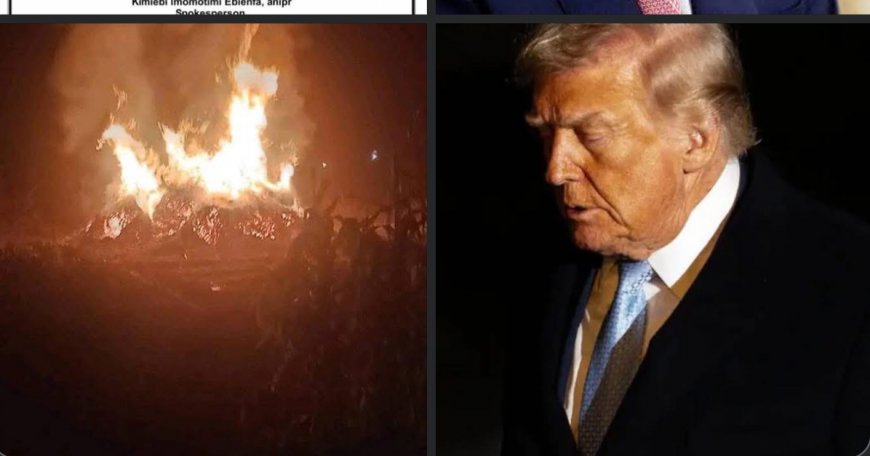
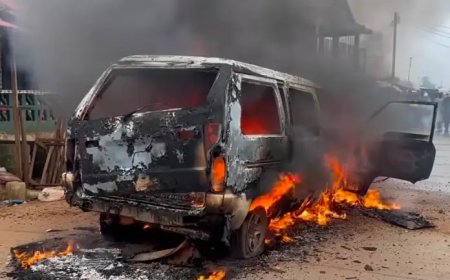
The United States carried out airstrikes against ISIS-linked targets in northwestern Nigeria on Thursday, according to a statement from President Donald Trump. The strikes mark a significant escalation of U.S. military involvement in the region amid rising concerns about terrorist violence.
In a post on his social media platform, Truth Social, Mr. Trump said the operation was ordered directly by him in his role as Commander in Chief. He described the targets as ISIS militants who, according to his claims, have been responsible for widespread killings, particularly of Christian civilians.
“Tonight, at my direction as Commander in Chief, the United States launched a powerful and deadly strike against ISIS terrorist scum in Northwest Nigeria,” Mr. Trump wrote. He alleged that these groups had been “targeting and viciously killing, primarily, innocent Christians” at levels not seen for decades, and possibly even centuries.
Mr. Trump said he had previously issued warnings to the militants, stating that continued violence against Christians would result in severe consequences. “If they did not stop the slaughtering of Christians, there would be hell to pay,” he wrote, adding that the strikes carried out Thursday night fulfilled that warning.
However, the president did not disclose operational specifics. He did not say how many militants were killed, which facilities or individuals were targeted, or how many strikes were conducted. He only characterized the operation as involving “numerous perfect strikes.”
Defense Secretary Confirms Operation and Nigerian Cooperation
Shortly after the president’s announcement, Defense Secretary Pete Hegseth posted a statement on X confirming the operation and reiterating the administration’s stance on religiously motivated violence.
“The President was clear last month: the killing of innocent Christians in Nigeria (and elsewhere) must end,” Hegseth wrote. He added that the Department of Defense referred to by the Trump administration as the “Department of War” was prepared to act, and that ISIS militants “found out tonight on Christmas.”
Hegseth also emphasized that the strikes were conducted with the cooperation of the Nigerian government. “Grateful for Nigerian government support & cooperation,” he wrote, signaling coordination rather than unilateral action.
The Defense Department later shared an unclassified, nine-second video on its official X account that appeared to show a missile launch from a military vessel, though no additional operational details were provided.
Nigeria’s Ministry of Foreign Affairs confirmed that the airstrikes took place and indicated that Nigerian authorities were notified in advance. In an official statement, the ministry said Nigeria remains actively engaged in structured security cooperation with international partners, including the United States.
The ministry noted that this cooperation has led to “precision hits on terrorist targets in Nigeria by air strikes in the North West,” framing the operation as part of an ongoing joint effort to counter terrorism and violent extremism.
The strikes follow statements made by Mr. Trump in early November, when he said he had instructed the Pentagon to prepare for possible military action in Nigeria. At the time, he accused the Nigerian government of failing to adequately protect Christians from persecution and violence.
“If we attack, it will be fast, vicious and sweet,” Mr. Trump wrote on Nov. 1, comparing potential U.S. action to the brutality he attributed to terrorist groups. He also issued a warning to Nigeria’s government, saying it “better move fast.”
In response to those comments, Hegseth stated publicly that the Department of War was already “preparing for action,” signaling that military options were under active consideration well before Thursday’s strikes.
The Nigeria operation comes roughly a week after U.S. forces carried out a separate series of airstrikes against ISIS targets in Syria. Those strikes were conducted in response to the killing of two U.S. soldiers and an interpreter, highlighting a broader U.S. campaign against ISIS across multiple regions.
In November, Trump also said he intended to designate Nigeria as a “country of particular concern” under the 1998 International Religious Freedom Act. This designation is an executive action typically based on recommendations from the U.S. Commission on International Religious Freedom and the State Department.
Such a designation authorizes the U.S. government to impose penalties, though it does not automatically result in sanctions. These determinations can be made at any time and are not strictly tied to the State Department’s annual Report on International Religious Freedom, which is usually released in the spring and has not yet been published this year.
The Nigerian government has consistently rejected Mr. Trump’s claims that it is failing to protect Christians. Officials and analysts have noted that while Christians are among those targeted by armed groups, the majority of victims in Nigeria’s conflict zones are Muslims, particularly in the country’s predominantly Muslim northern regions where most attacks occur.
President Bola Ahmed Tinubu has previously addressed the issue directly, disputing the portrayal of Nigeria as a religiously intolerant nation.
“Religious freedom and tolerance have been a core tenet of our collective identity and shall always remain so,” Tinubu said in a social media post. He added that Nigeria does not support religious persecution and maintains constitutional protections for citizens of all faiths.
Nigeria was first placed on the U.S. “country of particular concern” list in 2020, after the State Department cited what it described as systematic violations of religious freedom. That designation did not specifically single out violence against Christians.
The designation was lifted in 2023, a move widely interpreted as an effort to improve diplomatic relations between Washington and Abuja ahead of a visit by then Secretary of State Antony Blinken.
What's Your Reaction?
 Like
1
Like
1
 Dislike
0
Dislike
0
 Love
0
Love
0
 Funny
0
Funny
0
 Angry
0
Angry
0
 Sad
0
Sad
0
 Wow
0
Wow
0