






















Sorlumba Border Tension Exposes Liberia’s Border Security Gap?
Fresh concerns are rising over the protection of border entry points across Liberia following recent tension that sparked at the Sorlumba Border in Foya District, Lofa County, when armed Guinean soldiers entered Liberia's territory and reportedly opened gunfire. According to reports from the border region, the Guinean soldiers crossed the Makona River commonly linking both countries, and claim their move was promoted by illicit sand mining along the river banks, by a company, BK Enterprise Incorporated.

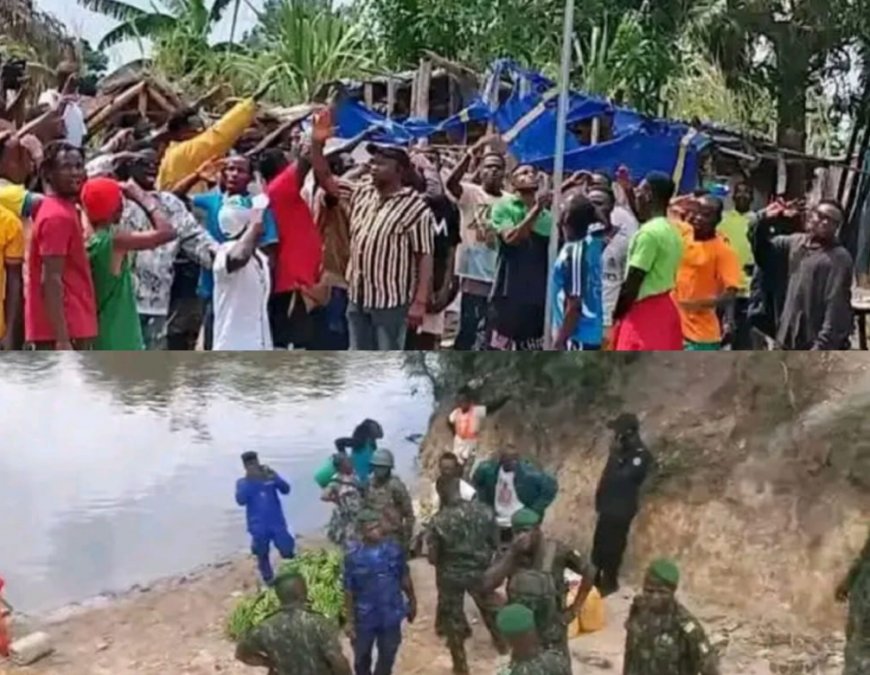
Lofa County, Liberia: Fresh concerns are rising over the protection of border entry points across Liberia following recent tensions that sparked at the Sorlumba Border in Foya District, Lofa County, when armed Guinean soldiers entered Liberia's territory and reportedly opened gunfire.
According to reports from the border region, the Guinean soldiers crossed the Makona River commonly linking both countries, and claim their move was promoted by illicit sand mining along the river banks, by a company, BK Enterprise Incorporated.
Local sources say the soldiers hoisted their national flag at the Sorlumba Border point of entry, under Liberia's territorial jurisdiction. Reports indicate that the Guinean soldiers were resisted by Liberian civilians, and later departed the scene.
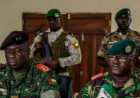
Tensions escalated at the border on early Wednesday, during the week, when local residents attempted to resist another cross-over of the Guinean soldiers. Reports gathered indicated that a Liberian citizen was shot in the leg, allegedly by gunfire opened by Guinean soldiers.
Latest reports say the armed Guinean military personnel have returned to their country, but fear remains largely among residents in northern Liberia.
Many local residents are wondering how the armed Guinean soldiers entered Liberia's territory without caution being taken by border security at the port of entry to their mission in Liberia.
Security experts say that, though Liberian joint security later moved in, the recent incident flags a gap in Liberia's border security protection. Experts argued that "logistics and manpower" remain major challenges facing Liberia's security forces.
Liberia’s military capacity remains extremely limited, with roughly 2,000 to 3,000 active troops, making it one of the smallest standing armies not only in the West Africa region, but at the global level.
Following the country’s civil wars, the force was rebuilt with support from the United States Department of Defense, designed primarily as a professional defensive force rather than a large conventional army.
Recent recruitment efforts have added only 600 to 800 new soldiers, a figure security observers argue is far from sufficient for a country facing evolving regional challenges and border disputes.
Neighboring Guinea maintains an armed force estimated at 12,000 to 13,000 active personnel, supported by thousands of paramilitary forces.
The stark difference in troop strength has become part of the national conversation following the Makona River incident.
Analysts warn that while Liberia does not seek conflict with its neighbors, maintaining a credible military presence is essential to safeguarding territorial integrity and deterring potential incursions.
Liberia shares long and often remote borders with several countries, including Guinea, where dense forests, rivers, and mountainous terrain make monitoring difficult without adequate manpower.
Beyond numbers, experts argue that recruitment must be matched by "training, logistics, and equipment if the military is to effectively protect national sovereignty".
A modest annual intake of a few hundred soldiers, they say, may help sustain the force but does little to significantly strengthen it.
For many observers, the incident is a reminder that while diplomacy preserves peace, a nation’s defense capability ultimately underpins its sovereignty.
What's Your Reaction?
 Like
0
Like
0
 Dislike
0
Dislike
0
 Love
0
Love
0
 Funny
0
Funny
0
 Angry
0
Angry
0
 Sad
0
Sad
0
 Wow
0
Wow
0