


































Liberia’s Groundbreaking US$1.2b 2026 Draft Budget Faces Scrutiny as Senate Launches Revenue Investigation
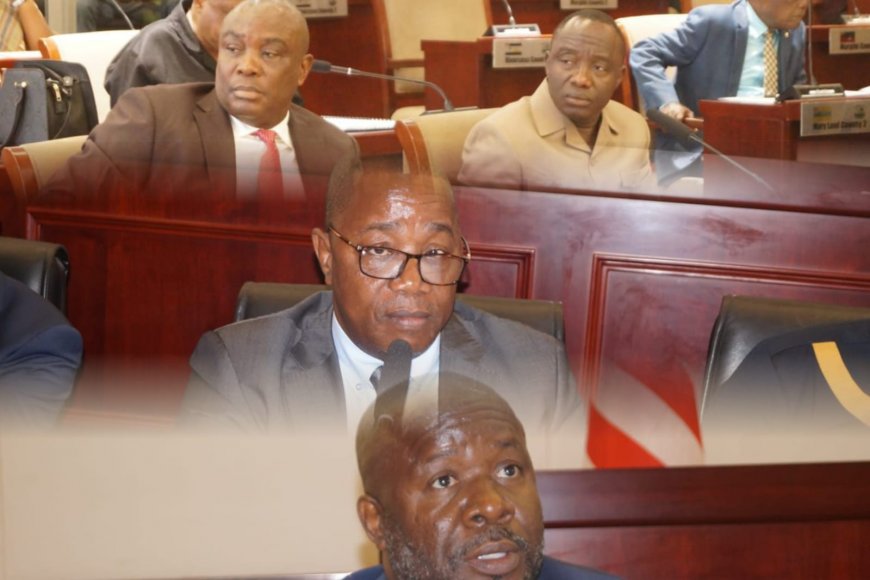
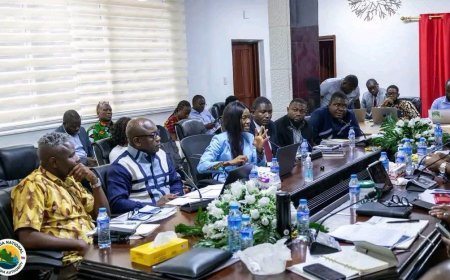
MONROVIA, LIBERIA: In a move that appears to signal a rigorous stance in its fiscal oversight responsibility, the Senate's Committee on Ways, Means, Finance, and Budget, chaired by Bong County Senator Prince K. Moye, has formally, commenced a five-day investigation into the revenue framework of the Draft Fiscal Year 2026 National Budget on Monday, November 24, 2025.
The decision immediately placed Liberia’s primary revenue-generating institutions under thorough examination, emphasizing accountability, realism, and institutional capacity as the cornerstones of Liberia’s groundbreaking US$1.2 billion draft budget.
Key agencies summoned included the Ministry of Finance and Development Planning (MFDP), the Liberia Revenue Authority (LRA), the National Port Authority (NPA), the Liberia Petroleum Refining Company (LPRC), and the Liberia Maritime Authority (LiMA).
The above-named public entities are all required to justify their projections and demonstrate how they will meet targeted collections.
The Senate’s approach deviates from its routine oversight, adopting an evidence-based, performance-driven lens that prioritizes operational readiness and enforceable compliance over optimistic assumptions.
Speaking at the opening in the Senate Chamber, the committee Chair, Senator Moye, emphasized that the credibility of the Fiscal Year 2026 national draft Budget rests heavily on accurate and transparent revenue projections.
“The revenue framework must inspire confidence through integrity, accuracy, and projections that reflect grounded institutional realities,” Senator Moye said, setting the tone for what he described as a critical national exercise in fiscal responsibility.
Making the case on behalf of the Ministry of Finance, Deputy Minister for Fiscal Affairs, Anthony G. Myers, outlined the assumptions underpinning the revenue estimates.
Deputy Myers highlighted that the expected economic growth, adjustments in administrative and regulatory fees, enhanced support from international partners, and policy reforms targeting leakages and inefficiencies.
He noted that more than 94 percent of projected revenue is expected from domestic sources, signaling an intensified reliance on strengthened tax administration and expanded compliance measures.
According to Deputy Minister Myers, tax revenue is projected to rise from US$632 million in 2025 to nearly US$727 million in 2026, while non-tax revenue, including maritime, telecommunications, and administrative fees, is forecast to increase by 25.3 percent.
He stressed that these projections are ambitious and require precise institutional execution to translate estimates into actual inflows.
For his part, Deputy Commissioner-General for Technical Affairs at the Liberia Revenue Authority, Gabriel Y. Montgomery, presented the LRA’s performance track record, noting that despite operating below the requested funding level, the LRA had collected US$750.3 million in domestic revenue as of November 17, 2025, surpassing the 2024 record of US$698.6 million.
“Although we did not receive the level of support anticipated, we have nevertheless delivered a remarkable performance and remain confident that we will surpass the 2025 domestic revenue targets,” Montgomery told the Committee.
Deputy Commissioner Montgomery highlighted a structural constraint in achieving national targets: the persistent underperformance of state-owned enterprises.
“If the SOEs were contributing as required, we would be much closer to achieving the domestic revenue target by the end of this month,” he said, stressing that institutional lapses among state entities remain a critical drag on overall fiscal outcomes.
He further recommended legislative amendments to allow the LRA to retain a portion of collected revenue, emphasizing that such reforms would enhance digitization, tax administration innovation, and compliance enforcement.
The LRA boss also cited the Liberia Integrated Tax Administration System (LITAS), which facilitates online registration, filing, and payment, as central to modernizing revenue collection and ensuring transparency.
In response, the Committee directed the Ministry of Finance and Development Planning to submit the Budget Framework Paper, including historical and forward-looking figures for Fiscal Years 2024–2026, along with supporting documentation.
The LRA was also tasked with providing a detailed Sales Volume Report covering January 2025 to date, categorized by importers, to enable verification of projected revenue streams and sectoral performance.
What's Your Reaction?
 Like
0
Like
0
 Dislike
0
Dislike
0
 Love
0
Love
0
 Funny
0
Funny
0
 Angry
0
Angry
0
 Sad
0
Sad
0
 Wow
0
Wow
0