











Boakai’s US$1.2 Billion Budget Focuses on Security, Health, Education, and Roads
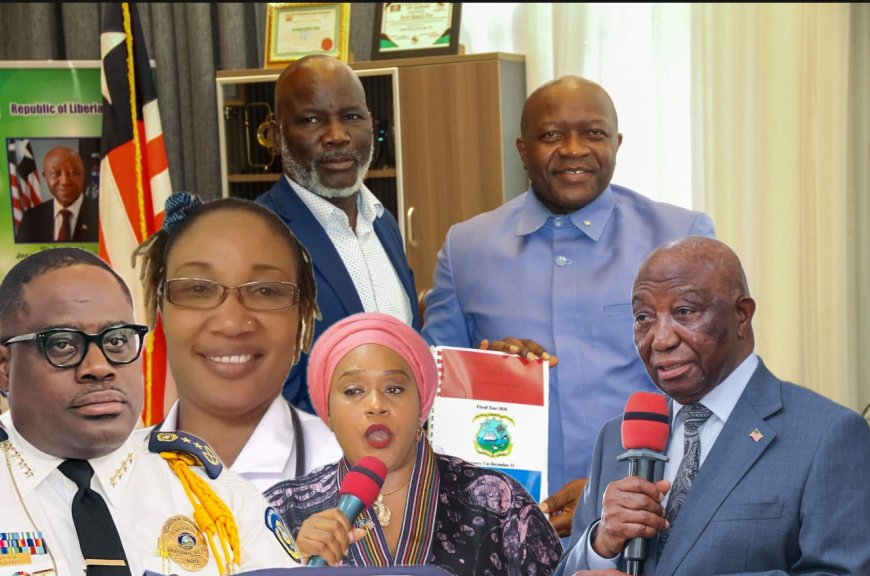
MONROVIA, LIBERIA: The Government of Liberia has unveiled its Fiscal Year 2026 Draft National Budget, outlining a comprehensive US$1.211 billion plan to strengthen the nation’s health, education, security, governance, and infrastructure sectors.
Anchored in the ARREST Agenda for Inclusive Development (AAID), the draft budget underscores the administration’s commitment to transparency, accountability, and sustainable growth ensuring that development translates into real benefits for ordinary citizens.
The FY2026 budget comes at a pivotal time as Liberia’s economy continues to expand and diversify.
According to projections, real GDP growth is expected to rise to 5.4% in 2026, up from 4.6% in 2025. This growth will be driven by agriculture, mining, services, and infrastructure development.
Inflation is forecasted to moderate to 5.1%, sustaining a single-digit trend. The budget also reflects prudent fiscal management and enhanced domestic revenue collection to support macroeconomic stability.
A key funding source is the US$200 million ArcelorMittal Liberia (AML) Signature Bonus, contingent on the ratification of the company’s mineral development agreement. These funds have been fully earmarked for public sector investment projects—including healthcare, education, roads, electricity, and community development.
Health remains a central pillar of the FY2026 budget, with a US$101.71 million allocation aimed at expanding essential services, strengthening rural health infrastructure, and improving the quality of care nationwide.
From the AML Signature Bonus, US$11.95 million will directly support hospital upgrades and facility renovations, including:
• J.F. Kennedy Medical Center upgrades and TB Ward renovation
• CH Rennie Hospital expansion
• Major facility works at Tellewoyan, Kolahun, and Redemption Hospitals
Health authorities emphasized that these investments will improve maternal and child health, expand medicine availability, and reinforce Liberia’s overall health system resilience—especially in underserved communities.
Additional funding supports mental health services and the expansion of drug revolving funds, representing a holistic approach to national healthcare delivery.
The education sector receives a substantial US$123.98 million to improve learning environments, expand school feeding programs, and strengthen tertiary and vocational education.
Of this, US$13.75 million from AML’s Signature Bonus will fund key projects such as:
• Renovation and modernization of the University of Liberia
• Expansion of school feeding and health programs by the Ministry of Education
• Support for WAEC Liberia’s national examination system
• Renovations within the Monrovia Consolidated School System (MCSS)
• Solarization and facility upgrades at Booker Washington Institute
These investments aim to promote access, quality, and equity in education, particularly for girls and vulnerable learners, while also advancing STEM and vocational training to equip young Liberians for a competitive global economy.
The FY2026 budget significantly boosts Liberia’s national security framework, with increased allocations across all key institutions:
• Liberia National Police: US$25.7 million (up from US$21.5M)
• Liberia Immigration Service: US$10.7 million (up from US$7.4M)
• Liberia Drug Enforcement Agency: US$7.6 million (more than double FY2025)
• National Security Agency: US$22.2 million (up from US$13.9M)
• Ministry of National Defense: US$20.7 million for barracks renovation, logistics, and defense operations
Additional support for the Ministry of Justice, immigration modernization, and prison rehabilitation reinforces Liberia’s commitment to maintaining peace, law, and order across the country.
Infrastructure remains a cornerstone of national development, with a Public Sector Investment Plan (PSIP) of US$281.5 million.
Major projects include:
• US$50 million for the St. Paul Bridge and Bo Waterside Road Project
• US$50 million to the Liberia Electricity Corporation (LEC) for grid expansion, metering, and power generation
• US$3.2 million for water and sanitation infrastructure
• US$4.6 million to expand modern water systems in counties
The transport sector receives US$3.856 million for terminal rehabilitation, airport runway upgrades, and urban transit improvements.
County-level support is also featured prominently, with allocations of:
• Nimba County – US$6.136 million
• Grand Bassa County – US$4.138 million
• Bong County – US$3.186 million
These funds will target local infrastructure, social programs, and community-driven initiatives.
Governance and Accountability: Strengthening Oversight
To promote good governance, the FY2026 budget allocates US$34.42 million to transparency and anti-corruption institutions.
Key highlights include:
• Liberia Anti-Corruption Commission (LACC) – US$4.4 million (up from US$2.99M)
• General Auditing Commission (GAC) – US$6.36 million
• Financial Intelligence Agency (FIA) – US$4.71 million
• Internal Audit Agency (IAA) – US$4.05 million
• Office of the Ombudsman – US$758,169 (up from US$451K)
Additional support to the Governance Commission, LEITI, and PPCC reinforces Liberia’s commitment to transparency, public integrity, and effective oversight.
A senior Ministry of Finance official described the FY2026 draft as “a national commitment to build a more inclusive economy, protect stability, and ensure tangible benefits to our people.”
“This budget is not just a financial document — it’s a roadmap for change,” the official said.
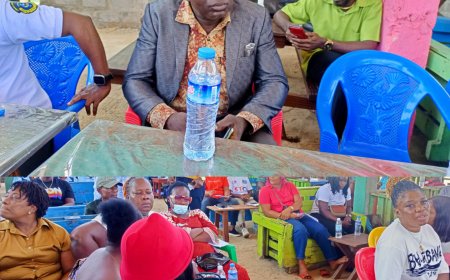
“Through consultations with more than 650 citizens across 13 counties, we’ve prioritized real community needs — from classrooms and hospitals to roads and electricity.”
What's Your Reaction?
 Like
1
Like
1
 Dislike
0
Dislike
0
 Love
0
Love
0
 Funny
0
Funny
0
 Angry
0
Angry
0
 Sad
0
Sad
0
 Wow
0
Wow
0