





























Senate Moves To End 40-Year Constitutional Gap as Dillon Proposes Claims Court Bill Targeting Gov't Liability

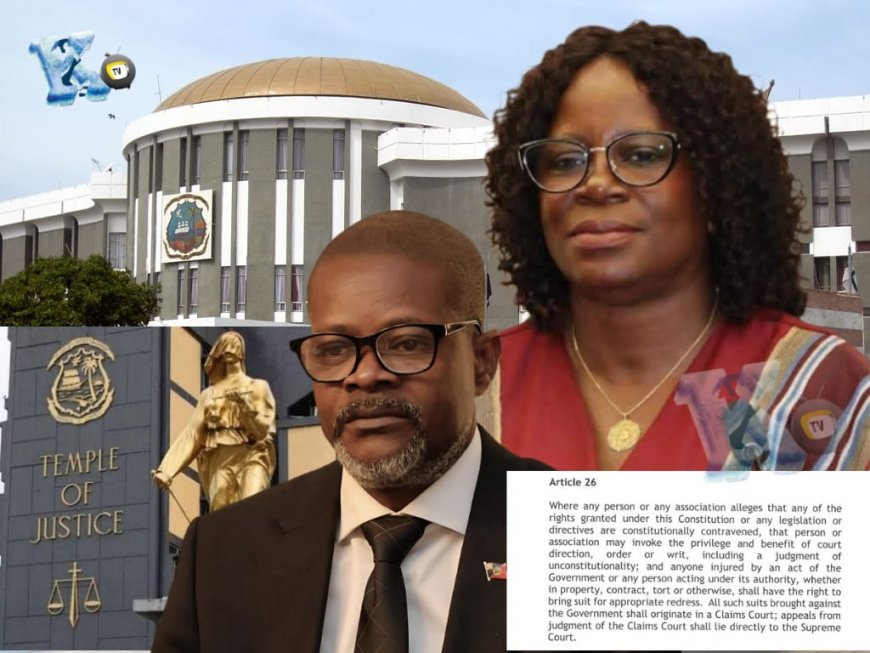
CAPITOL HILL, MONROVIA: The Plenary of the Liberian Senate has taken into account a bill seeking to establish a long-overdue Claims Court, following its submission by Montserrado County Senator Abraham Darius Dillon, in what is being framed as a decisive legislative effort to close a constitutional gap that has persisted since the adoption of the 1986 Constitution and to create a specialized judicial mechanism for suits instituted against the Government.
At the center of the proposed legislation is Article 26 of the Constitution, a provision that explicitly authorizes legal action against the state while directing that such actions must originate in a Claims Court, a judicial body that has never been established despite the clarity of the constitutional language.
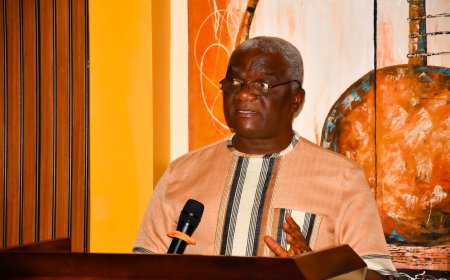
Appearing on a local talkshow in Monrovia on Wednesday, February 25, Senator Dillon cited Article 26 of the 1986 Constitution, which states: “Where any person or any association alleges that any of the rights granted under this Constitution or any other laws has been abrogated… a suit may be brought against the Government or any person acting under its authority… provided that all such suits shall be instituted in the Claims Court.”
He emphasized that the provision leaves no ambiguity regarding legislative responsibility, asserting that “the Constitution did not recommend a Claims Court; it mandated one,” and adding that the prolonged failure to enact the court represents an institutional omission that must now be corrected.
According to the Montserrado lawmaker, the absence of the Claims Court has produced a sustained “legal vacuum” in which citizens seeking redress for alleged constitutional violations by the state are compelled to file actions in general Civil Law Courts not specifically designed to adjudicate government liability claims.
He explained that the structural gap has often resulted in procedural uncertainty, prolonged litigation, and enforcement challenges, particularly in matters where monetary judgments against the Government require appropriation or payment from the national treasury.
Dillon further situated the bill within the broader historical doctrine of sovereign immunity, observing that while traditional common law insulated the state from suit absent consent, Liberia’s 1986 Constitution expressly provides that such suits may be brought under defined conditions.
“In practical terms,” he stated, “Liberians have had the right to sue their Government written in the Constitution, yet the specific court required to hear those suits has never been operationalized.”
The proposed Claims Court, he clarified, would not replace existing judicial institutions but would serve as the constitutionally mandated entry forum for claims against the state, with appeals proceeding directly to the Supreme Court of Liberia as prescribed under Article 26.
The senator pointed to recurring disputes involving eminent domain, contractual nonpayment, and alleged abuses by state agents, noting that when the Government acquires private property for public purposes, “property owners must have access to a clear judicial mechanism to challenge whether due process and fair compensation requirements were satisfied.”
Drawing comparisons with specialized tribunals such as the Commercial Court of Liberia and the Tax Court of Liberia, Dillon maintained that Liberia’s judiciary has already recognized the necessity of targeted courts to handle complex and high-stakes disputes.
“It is only fair and equitable,” he remarked, “that if we have courts structured to protect revenue collection and commercial stability, we must equally establish a court structured to adjudicate constitutional claims against the Government itself.”
As the bill advances through plenary deliberation, Senator Dillon has called on civil society organizations, legal professionals, and the broader public to engage constructively with the legislative process, underscoring that the establishment of the Claims Court represents the fulfillment of an explicit constitutional command and a structural step toward strengthening accountability, fiscal discipline, and the rule of law within Liberia’s democratic framework.
What's Your Reaction?
 Like
0
Like
0
 Dislike
0
Dislike
0
 Love
0
Love
0
 Funny
0
Funny
0
 Angry
0
Angry
0
 Sad
0
Sad
0
 Wow
0
Wow
0