












UN Blasts Liberia for Gaps in Disability Rights Despite Policy Progress
The UN Committee on the Rights of Persons with Disabilities warns Liberia of persistent gaps in protecting persons with disabilities, citing weak implementation, gender-based discrimination, and barriers to justice, education, and employment.

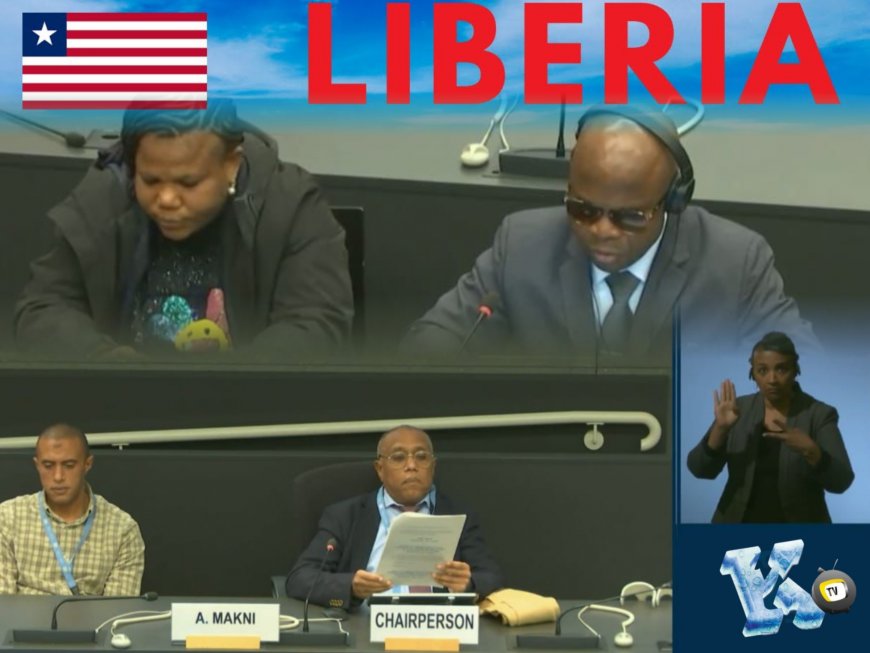
GENEVA, MARCH 18, 2026 — The United Nations Committee on the Rights of Persons with Disabilities has delivered a sharp critique of Liberia, highlighting persistent gaps in the protection of persons with disabilities despite the country’s recent policy strides.
The review, conducted on March 17, 2026, in Geneva without any Liberian government delegation present, exposed systemic weaknesses in the nation’s legal, social, and institutional frameworks.
“The absence of the delegation was noted with concern,” the Committee stated.
While the Committee acknowledged Liberia’s ratification of the Convention on the Rights of Persons with Disabilities and the adoption of the National Action Plan on Disability Inclusion (2023–2027), it warned that these measures have not translated into tangible protections on the ground.
“Stronger implementation is now required,” said Committee member Alfred Kouadio Kouassi, emphasizing that Liberia must move beyond paper commitments.
Among the most alarming concerns were ongoing harmful traditional practices disproportionately affecting women and girls with disabilities. The Committee highlighted outdated legal provisions that continue to equate disability with incapacity, the widespread use of substitute decision-making systems, and reports of physical and medical restraints, including shackling in homes and institutions.
Gertrude Oforiwa Fefoame, another Committee expert, drew attention to entrenched gender-based discrimination. She stressed the urgent need for Liberia to combat female genital mutilation, sexual violence, and other abusive practices, particularly in rural communities where oversight is limited and vulnerable populations remain invisible.
“Women and girls with disabilities must not be left behind,” she said.
The UN body also criticized Liberia for persistent barriers to justice, inadequate access to inclusive education, insufficient healthcare and rehabilitation services, and limited employment opportunities for persons with disabilities.
“Barriers across sectors continue to limit full participation,” the experts observed.
Vice Chair Abdelmajid Makni stressed that the Committee’s recommendations are designed to support Liberia in strengthening its systems and ensuring that international standards are fully implemented. He urged the government to respond constructively to the findings and maintain ongoing engagement with the Committee.
“This dialogue is meant to support progress,” he said.
The report underscored the disconnect between Liberia’s legislative and policy frameworks and the lived realities of its citizens with disabilities. Despite the government’s adoption of the Inclusive Education Policy and the National Action Plan, enforcement remains weak, monitoring is limited, and accountability mechanisms are largely absent.
Experts pointed to cases of physical restraint, neglect in medical institutions, and barriers to education and employment as evidence that Liberia’s policy progress has yet to produce meaningful change.
The UN Committee called on Liberia to immediately align its national laws with international human rights standards, expand accessibility across public services, and integrate disability inclusion into all sectors of governance and development planning.
What's Your Reaction?
 Like
0
Like
0
 Dislike
0
Dislike
0
 Love
0
Love
0
 Funny
0
Funny
0
 Angry
0
Angry
0
 Sad
0
Sad
0
 Wow
0
Wow
0