



























Apologize Now: Senator Chea Calls Out Executive Over 'Barking Dog' Statement, Cites Breach of Presidential Standard
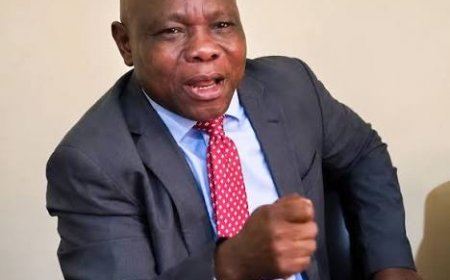
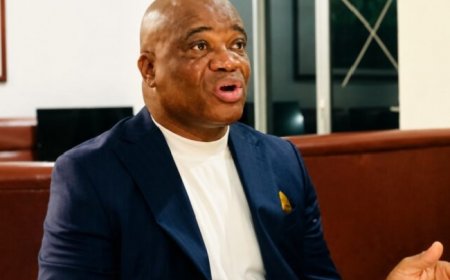
Sinoe County Senator Augustine Chea has urged President Joseph Boakai to apologize over his “barking dogs” remark, describing it as a breach of presidential communication standards amid growing national debate over leadership language and public perception.

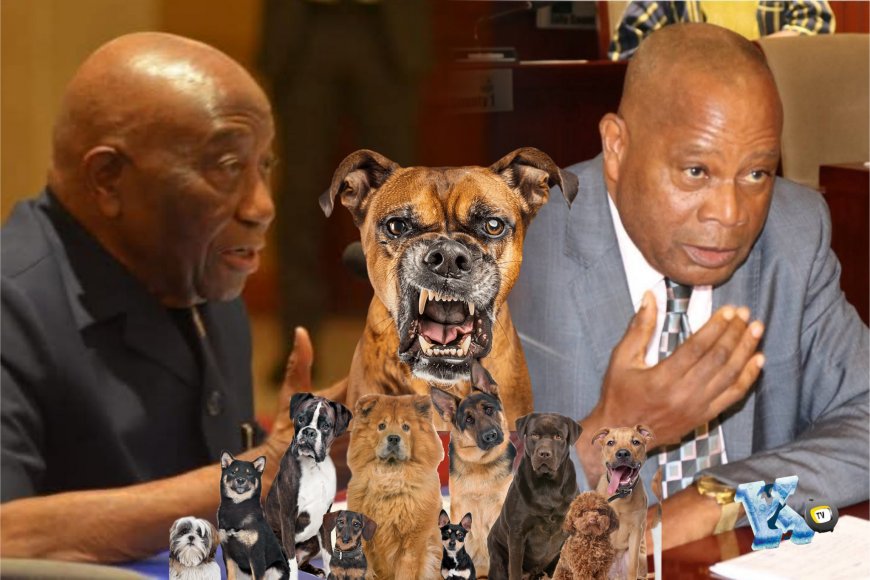
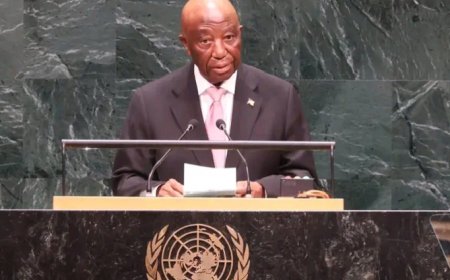
MONROVIA, LIBERIA — April 23, 2026: Sinoe County Senator and Chair of the Senate Committee on Judiciary, Human Rights, Claims and Petitions, Cllr. Augustine Chea, has strongly criticized the Executive over President Joseph Nyuma Boakai’s “barking dogs” statement, calling for an immediate apology and describing the remark as inconsistent with the expected standard of presidential communication and leadership responsibility in a democratic society.
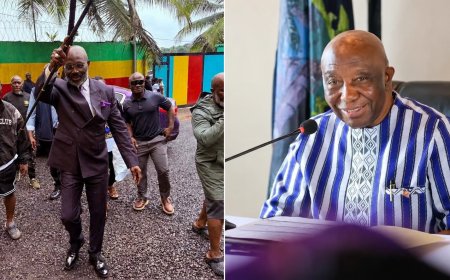
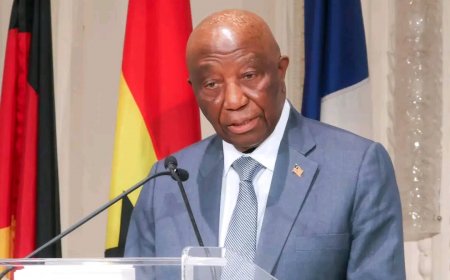
The controversy stems from recent remarks made by President Boakai during the dedication of the Ministry of Local Government’s new Decentralization Building, where he urged public officials to remain focused on national priorities, stating that “if you are going somewhere and there are dogs barking at you, if you stop to throw stone at every dog, you won’t reach where you are going,” a statement that has since triggered national debate.
The Presidency, through its official communication channel and Press Secretary Kula Fofana, defended the remark, explaining that it was intended as a metaphor to encourage government officials to stay focused amid distractions, while stressing that the expression was not directed at any group of citizens, critics, or the media in a literal or insulting sense.
However, Senator Chea maintained that the interpretation of the statement by the public cannot be ignored, noting that many Liberians perceived the language as offensive and demeaning, particularly because it appeared to compare critical voices to “dogs,” which he said raised concerns about respect in public discourse.
“Presidential speech is expected to be respectful, measured, and unifying, even when addressing disagreement or criticism,” He emphasized that leadership communication carries weight beyond intention, adding that the Office of the President must always reflect national unity and dignity in its expressions.
Senator Chea further noted that the issue is not only about metaphorical language but also about responsibility, stating that when public concern is raised over a statement, leadership is expected to respond in a way that acknowledges perception and restores trust rather than dismissing criticism.
He said the absence of an apology has deepened public concern, stating that “the lack of acknowledgment suggests a failure to recognize the impact of the words used,” and warning that silence in such moments can be interpreted as disregard for citizens’ feelings and concerns.
According to him, responsible leadership requires correction when communication causes public discomfort, stressing that acknowledging concerns is not a weakness but a demonstration of maturity and respect for democratic engagement.
Senator Chea maintained that the appropriate step would have been a clear apology to address the public reaction, adding that presidential communication must avoid comparisons that can be interpreted as dehumanizing, especially in a politically sensitive environment where trust is essential.
He further encourage the Executive to reconsider its response to the matter, reiterating that “President Boakai must apologize,” while stressing that restoring confidence in leadership communication requires careful language, accountability, and respect for all voices in national discourse.
What's Your Reaction?
 Like
0
Like
0
 Dislike
0
Dislike
0
 Love
0
Love
0
 Funny
0
Funny
0
 Angry
0
Angry
0
 Sad
0
Sad
0
 Wow
0
Wow
0