























“We Must Make TVET Work” — Youth & Sports Minister Kruah Targets Dropout Crisis at MVTC


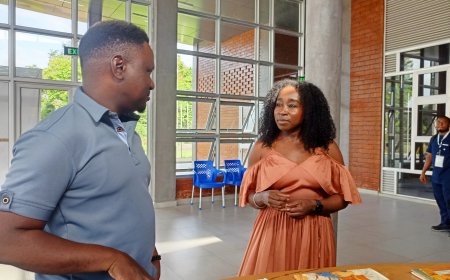
MONROVIA, LIBERIA: Liberia’s newly confirmed Youth and Sports Minister, Cornelia Kruah, has sounded a strong alarm over the troubling dropout rate at the Monrovia Vocational Training Center (MVTC), vowing to push urgent reforms to strengthen technical and vocational education across the country.
The Minister revealed that MVTC currently struggles with a 50% retention rate, with half of enrolled students failing to complete training courses. According to her, this situation not only undermines the purpose of the institution but also reflects broader systemic challenges affecting youth education and skills development in Liberia.
“This means that of every 10 students who enroll, 5 of them drop out before graduation,” Kruah emphasized, describing the statistics as unacceptable for a country seeking to empower its young population through practical skills", she underscored.
Despite offering training in 13 trade areas, MVTC remains significantly underutilized. The institution, which has the capacity to accommodate up to 3,000 students per cycle, is currently operating with an enrollment of just about 700 students, raising concerns about access, affordability, and student retention.
Kruah announced that her first official visit as Minister will be to the MVTC campus, promising to lead a team to conduct a comprehensive assessment aimed at identifying key barriers affecting enrollment and completion rates.
“My team and I will be assessing possibilities of reducing the cost of attendance for students and expanding to full capacity,” she stated. “We will place emphasis on technical and vocational skills that are in high demand within the job market", the Minister noted.
Minister Cornelia Kruah stressed that cost remains a major obstacle for many young Liberians seeking vocational education, noting that without deliberate intervention, institutions like MVTC will continue to fall short of their national mandate.
She further highlighted the need to reposition Technical and Vocational Education and Training (TVET) as a credible and attractive alternative to traditional academic pathways, especially for young people who may not thrive in conventional classroom settings.
“In order to encourage youth who may not be inclined to pursue traditional education, we must ensure our public institutions are affordable and provide quality training,” Kruah asserted, adding that improving TVET is critical to addressing unemployment and restoring hope among Liberia’s youth.
Her statement signals a policy direction focused on practical skills, inclusion, and economic relevance, as the government intensifies efforts to align education with workforce demands and national development priorities.
What's Your Reaction?
 Like
0
Like
0
 Dislike
0
Dislike
0
 Love
0
Love
0
 Funny
0
Funny
0
 Angry
0
Angry
0
 Sad
0
Sad
0
 Wow
0
Wow
0