
















Border Tension in Lofa: Armed Guinean Soldiers Accused of Crossing into Liberia, Seizing Road Construction Equipment
Guinean Soldiers Allegedly Cross into Liberia, Remove Flag and Hold Seized Equipment Despite Minister’s Intervention
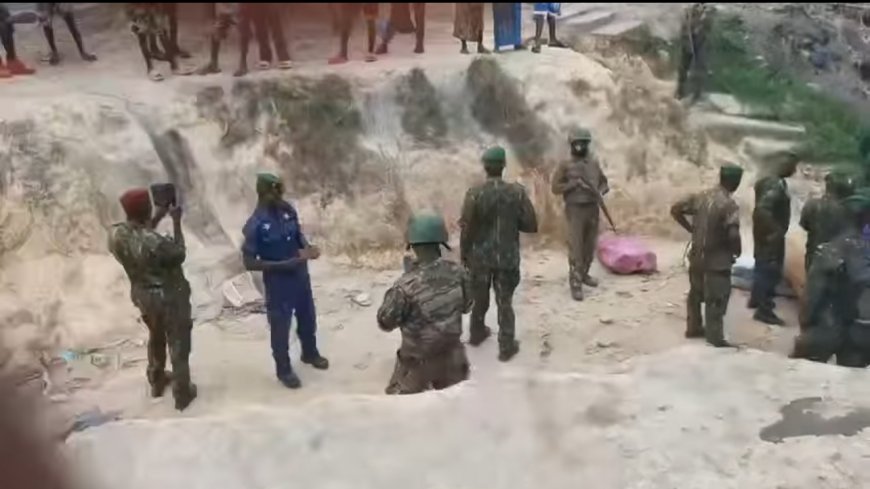
Liberia Guinea Border: Residents along the Liberia Guinea border in Lofa County are expressing growing concern after reports that armed Guinean soldiers crossed into Liberian territory, stopping a road construction project and seizing equipment.
The incident has reportedly created fear and tension in several communities, particularly in Vahun and Foya Districts, where locals say the soldiers claimed ownership of land that Liberians have used for many years.
According to community members and local officials, the situation unfolded on March 2, 2026, when workers from BK Enterprise, a company hired to pave streets and construct the Foya–Vahun road, were confronted by Guinean soldiers at the Sorlumba border area.
Workers said the soldiers arrived armed and ordered them to immediately stop their activities. Some pieces of construction equipment used in the project were also reportedly taken away during the confrontation.
Road Project Disrupted
Lofa County Superintendent J. Lavelah Massaquoi said the problem began when workers moved heavy equipment to the Makona River to collect sand needed for the road construction.
While the operation was ongoing, Guinean soldiers allegedly crossed into the area and argued that the section of the river where the sand was being taken belonged to Guinea.
Massaquoi explained that during the dispute, parts of the equipment used for the sand operation were confiscated and taken across the river by the soldiers.
The incident forced the construction work to stop, delaying progress on the important road project.
Residents Speak of Fear and Harassment
Residents in the area described the situation as disturbing, saying armed soldiers entered Liberian territory and intimidated workers at the construction site.
Speaking to Radio Wologisi in Voinjama, eyewitnesses said the soldiers insisted the land belonged to Guinea and threatened workers while seizing the equipment.
One resident said the soldiers went as far as demanding that the Liberian flag, which had been flying near the riverbank for decades, be removed.
Community members say the development has not only disrupted construction work but has also affected economic activities in the area.
Farmers and traders who depend on the road project believe the delay could have serious consequences for their livelihoods.
Several residents also said efforts by community members to peacefully resolve the situation with the soldiers and local intermediaries have not produced results.
Many are now urging the Liberian government to step in quickly to protect the country’s territorial boundaries and ensure the safety of citizens living along the border.
Liberian Government Holds Talks with Guinea
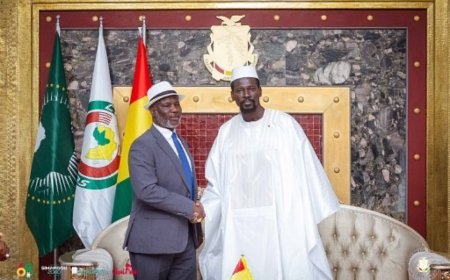
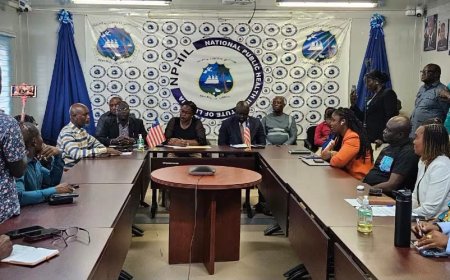
In response to the situation, Superintendent Massaquoi confirmed that a Liberian government delegation recently traveled to Guinea to discuss the matter with Guinean authorities.
The team included senior officials from the Ministry of Justice and representatives from the Office of the Assistant Minister for Correctional Rehabilitation.
According to Massaquoi, the discussions were organized after reports that Liberian workers and construction equipment had been detained at the Sorlumba crossing.
During the meeting, Guinean officials reportedly acknowledged the concerns but suggested that additional government institutions would need to participate in resolving issues related to mining activities and the exact border demarcation.
Both countries agreed to elevate the matter to their national leadership in order to find a peaceful solution and ensure the return of the confiscated equipment.
Officials also reviewed maps of the border area and discussed the historical use of the land involved in the dispute.
Local leaders, including women representatives and community stakeholders, were also present during the talks to explain how the incident has affected residents living along the border.
Calls for Peaceful Cooperation
Superintendent Massaquoi said Liberia’s delegation stressed the importance of maintaining peace between the two neighboring countries and preventing future confrontations.
He added that discussions are ongoing to create stronger communication between authorities on both sides of the border and to establish clearer guidelines that will help avoid similar disputes in the future.
Earlier Incident Raised Tension
Residents say the recent confrontation is not the first time border tensions have surfaced in the area.
Last year, reports emerged that Guinean border officers entered Sefudu, a town on the Liberian side of the border, and lowered the Liberian flag.
The incident caused outrage among residents and led to the deployment of Liberian soldiers in the area.
However, Guinean officials denied that their forces had violated Liberian territory.
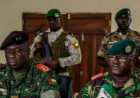
Guinean military spokesperson Toumany Sangaré rejected the accusations, stating that the Guinean army does not engage in acts of aggression.
“Our army is not a conquering force,” Sangaré said. “Its role is simply to protect the country’s borders.”
Border Disputes in West Africa
Security experts warn that disputes like this can easily escalate in areas where national boundaries are not clearly marked.
The tension between Liberia and Guinea comes at a time when Guinea has also faced disagreements with other neighboring countries.
Recently, Guinean soldiers detained 16 Sierra Leonean security officers after a dispute near the border town of Kalieyereh.
According to Sierra Leone’s Army Chief Kemoh Sesay, the conflict began when Sierra Leonean personnel attempted to build a temporary structure on land they believed belonged to their country.
Guinean forces reportedly returned with a large number of armed soldiers and arrested the officers.
The situation was later resolved after diplomatic negotiations led by Sierra Leone’s Foreign Minister Alhaji Timothy Kabba, resulting in the release of the detained officers.
Colonial Borders Still Causing Problems
Many of the border disputes seen in West Africa today can be traced back to the Berlin Conference of 1884–1885, when European colonial powers divided the region without considering the realities of local communities.
Observers say these historical boundaries continue to create tensions in regions such as the Mano River Union, which includes Liberia, Sierra Leone, Guinea, and Côte d’Ivoire.
The region experienced serious instability during the 1990s and early 2000s, when civil wars in Liberia and Sierra Leone led to cross-border violence and mass displacement.
A security analyst in Monrovia said memories of those conflicts still influence how people react to border disputes.
“When tensions appear between countries in the Mano River region, communities quickly become worried because history has shown how easily local conflicts can spread,” the analyst explained.
Political Factors May Also Play a Role
Some analysts believe Guinea’s current tensions with neighboring countries may also be connected to the country’s political situation under military leader Mamady Doumbouya, who took power after a 2021 coup.
Periods of political transition often increase security concerns along borders, especially when governments fear cross-border support for opposition groups.
Recently, Liberian authorities arrested a Guinean national identified as Khalif Cherif, who was accused of recruiting former fighters to carry out activities against Guinea’s leadership.
The arrest sparked controversy after former Associate Justice Kabineh Ja’neh claimed that Cherif is actually a Liberian citizen and accused security agencies of detaining him unlawfully.
What's Your Reaction?
 Like
0
Like
0
 Dislike
0
Dislike
0
 Love
0
Love
0
 Funny
0
Funny
0
 Angry
0
Angry
0
 Sad
0
Sad
0
 Wow
0
Wow
0