





































Health Minister Pushes Reforms to Curb Maternal and Newborn Deaths in Liberia

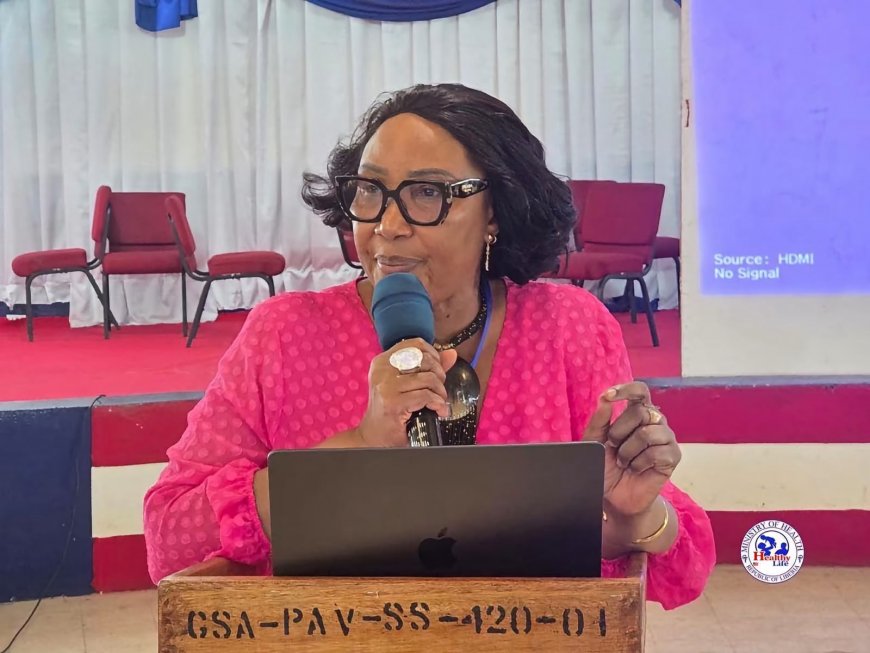
Health Minister Dr. Louise M. Kpoto is calling for stronger healthcare delivery and accountability across Liberia, with a renewed focus on preventing maternal and newborn deaths and ensuring that pregnant women and newborns receive timely and quality medical care.
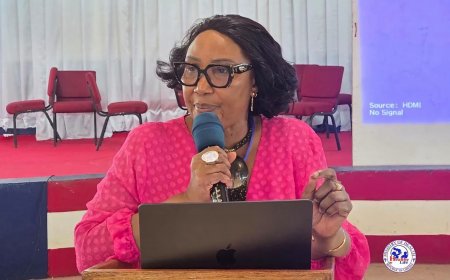
Speaking Wednesday at the Ministry of Health’s First National Government Hospitals and Health Centers Review Conference in Buchanan, Grand Bassa County, Dr. Kpoto said the country must move beyond improvements in medicines, health facility environments, and human resource capacity to achieve lasting changes in the quality of healthcare.
She acknowledged progress in these areas but stressed that more attention must be given to preventing deaths that could be avoided through better medical services.
The Minister noted that although death is inevitable, many lives could be prolonged through timely medical interventions, improved healthcare services, and effective referral systems.
For families who lose mothers or newborns to preventable complications, strengthening the health system means more than improving statistics. It means giving pregnant women safer deliveries, helping newborns survive their first days of life, and ensuring that families can access the care they need when emergencies arise.
To address these challenges, Dr. Kpoto disclosed that the Ministry is considering a new arrangement under which doctors and pharmacists already assigned to hospitals and health centers would take on additional responsibilities to strengthen clinical supervision and oversight of surrounding health facilities.
Under the proposed arrangement, selected medical professionals would work alongside County Health Teams and facility leadership to provide technical support to nurses, midwives, physician assistants, and other health workers.
Their responsibilities would include coordinating patient referrals, reviewing maternal and neonatal deaths, identifying service delivery gaps, strengthening pharmaceutical management, and recommending corrective actions.
Dr. Kpoto clarified that the initiative would not require removing existing personnel from their current duty stations or creating entirely new positions. Instead, it would maximize available human resources by assigning additional responsibilities to qualified professionals.
Using Montserrado County as an example, she explained that doctors and pharmacists stationed at major hospitals could provide technical support and oversight to several surrounding clinics, including private health facilities.
She added that pharmacists would also help improve medication management and strengthen the capacity of pharmacy technicians responsible for dispensing medicines.
According to the Minister, the proposed approach draws on experiences from Uganda, Zambia, Ghana, and Tanzania, where similar interventions have reportedly contributed to reductions in maternal and newborn deaths.
She urged health sector stakeholders to embrace innovative and evidence-informed approaches to improving healthcare delivery, particularly in rural communities where access to specialized medical services remains a challenge.
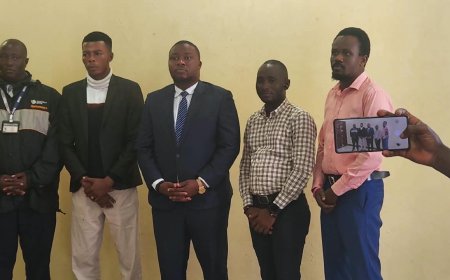
Meanwhile, Gbarpolu County Superintendent Sam K. Zinnah welcomed the Ministry’s proposed initiative, describing it as an opportunity to strengthen healthcare delivery and improve health outcomes across the counties.
Speaking on behalf of the invited superintendents, Zinnah assured the Ministry of their support, emphasizing that local authorities want to see improved health outcomes and positive reports from their respective counties.
“We are very excited. You can see the smiles on our faces. The proposal you just dropped here is intended for all of us to improve our results in our county. No superintendent wants bad news to be coming from the county every day. We want to get the highest rating of good news,” Zinnah stated.
However, he recommended that ultrasound machines be deployed to clinics outside major hospitals to help health workers detect pregnancy-related complications early and facilitate timely referrals.
He explained that some complications, including abnormal fetal positioning, are sometimes discovered only when pregnant women arrive at health facilities to deliver, potentially putting both mothers and newborns at risk.
Zinnah said expanding access to ultrasound services would allow health workers to identify complications earlier and refer pregnant women for appropriate medical attention before emergencies occur.
Responding to the recommendation, Minister Kpoto disclosed that the Ministry had already commenced training health workers in the use of ultrasound equipment.
She explained that medical doctors would also be instructed to train health workers at various facilities, with the deployment of ultrasound machines coordinated alongside the ongoing training.
The Minister welcomed the recommendation, noting that strengthening diagnostic capacity would support early detection of complications, improve referrals, and contribute to reducing preventable maternal and newborn deaths.
Earlier, Deputy Minister for Policy, Planning and Monitoring and Evaluation, Hon. Anthony Malayah Tamba Chieyoe, described the conference as an important milestone in the Ministry’s efforts to strengthen Liberia’s healthcare delivery system and advance Universal Health Coverage.
Chieyoe emphasized that the gathering must go beyond routine discussions and provide an opportunity for honest reflection, evidence-based decision-making, institutional accountability, and concrete commitments to improving healthcare outcomes.
“This conference must not be another routine gathering. It must serve as a platform for honest reflection, evidence-based decision-making, accountability, and concrete commitments,” he stressed.
He challenged participants to ensure that their presentations reflected the actual challenges confronting health facilities, emphasizing that identified service delivery gaps must receive attention and commitments must translate into meaningful action.
“Our ultimate measure of success will not be the quality of our presentations or discussions, but rather the improvements we make in healthcare services and the positive impact we have on the lives of our people,” Chieyoe stated.
A key component of the conference is the development of facility-specific 90-day improvement plans, with measurable performance indicators, implementation timelines, and clearly assigned responsibilities to address identified gaps.
The three-day conference, running from November 24–26, 2026, is being held under the theme: “Strengthening Health Facilities to Reduce Maternal and Newborn Mortality, Improve Quality of Care, and Strengthen Accountability in Liberia.”
It brings together health sector stakeholders, hospital administrators, health facility representatives, superintendents, and development partners to review the performance of government hospitals and comprehensive health centers during the 2025–2026 period.
The conference aims to strengthen the performance of government hospitals and comprehensive health centers through improved leadership, clinical supervision, accountability, and quality of care.
It is also expected to produce facility-specific 90-day improvement plans and a national monitoring roadmap to address identified gaps, improve maternal and newborn health services, and reduce preventable deaths across Liberia.
Ultimately, the Ministry wants the discussions and recommendations to translate into practical improvements at health facilities, so that a woman seeking medical attention during pregnancy, a mother experiencing complications during childbirth, or a newborn needing urgent care can receive the right attention at the right time.
The conference is expected to conclude on November 26, 2026, with participants establishing concrete commitments and actionable priorities to guide improvements across the country’s health facilities.
What's Your Reaction?
 Like
0
 Dislike
0
 Love
0
 Funny
0
 Angry
0
 Sad
0
 Wow
0