















Gongloe Warns Liberia Risks Losing Control of Gold Wealth Under US$5.7 Billion Bea Mountain Deal


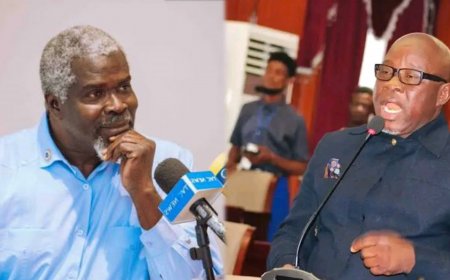
Prominent Liberian lawyer Cllr. Tiawan Saye Gongloe has raised serious concerns over the proposed US$5.7 billion infrastructure agreement between the Government of Liberia and Bea Mountain Mining Corporation, warning that the arrangement could undermine the country's control over its mineral wealth if its terms are not carefully scrutinized.
Gongloe is calling on President Joseph Nyuma Boakai to withhold his signature on the proposed Master Infrastructure Development Agreement (MIDA) until the full contract, including its annexes, financing arrangements, and financial obligations, is made public.
In a statement issued Wednesday, November 25, 2026, the former Liberia Bar Association president acknowledged the government's efforts to address the country's longstanding infrastructure deficit, particularly the need for improved electricity and road connectivity.
However, he questioned whether the proposed US$5.7 billion investment offers sufficient value to Liberia, considering the reported plan to generate 270 megawatts of electricity alongside major road construction and other infrastructure projects.
Gongloe specifically questioned the cost of the proposed investment relative to its expected electricity output, arguing that Liberians deserve a clear explanation of how the financial arrangement was calculated and whether the country stands to benefit fairly.
The proposed agreement reportedly includes four power plants with a combined generation capacity of 270 megawatts, major transmission infrastructure, reservoirs, and road projects, including a proposed 146-kilometer development road and additional road investments.
The Government has described the agreement as a major infrastructure initiative intended to address electricity shortages, improve transportation, stimulate economic growth, and create employment opportunities.
But Gongloe's concerns extend beyond the infrastructure promises to the financial implications of using Liberia's gold revenues to support the arrangement.
He questioned how much revenue from gold production Liberia could be committing, the length of the financial arrangement, and whether the country could be left with obligations that outweigh the benefits of the proposed projects.
The lawyer also warned of potential environmental consequences, particularly for communities that could be affected by reservoir construction, hydropower development, and related infrastructure activities.
He argued that development should not come at the expense of Liberia's natural resources, environmental sustainability, and the economic wellbeing of its citizens.
In a strong warning, Gongloe described the possibility of Liberia entering an agreement that could leave its people poorer as a form of “voluntary colonization,” underscoring his concern that the country could surrender significant control over its resources without receiving adequate benefits in return.
His criticism places renewed attention on transparency, accountability, and public participation in major concession and infrastructure agreements, particularly those involving the country's natural resources and future revenues.
Gongloe is urging the Legislature to conduct public hearings and independently examine the agreement before considering ratification.
He wants lawmakers to assess the project's financing structure, projected revenue commitments, implementation timeline, environmental safeguards, and the long-term implications for Liberia's economy.
The controversy comes as the Boakai administration promotes the proposed MIDA as a major development initiative capable of addressing Liberia's infrastructure challenges through revenues associated with Bea Mountain's mining operations.
According to the Government's public explanation, the proposed arrangement would utilize additional revenues payable by the mining company, including revenue linked to higher gold prices, while the company would continue its regular contributions to the Consolidated Account.
The Government says the initiative could help finance major infrastructure projects without relying heavily on conventional public borrowing.
However, questions remain about the precise financial terms, the revenue projections underpinning the agreement, the extent of government exposure, and the mechanisms that would guarantee value for money.
With the proposed agreement expected to move through the signing and legislative review process, Gongloe's intervention adds to calls for the government to make the deal available for public scrutiny before Liberia commits itself to a potentially far-reaching financial and resource arrangement.
What's Your Reaction?
 Like
0
 Dislike
0
 Love
0
 Funny
0
 Angry
0
 Sad
0
 Wow
0