
























Pres.Boakai Advances US$5.7 Billion Plan for Power, Roads and Jobs Across Liberia

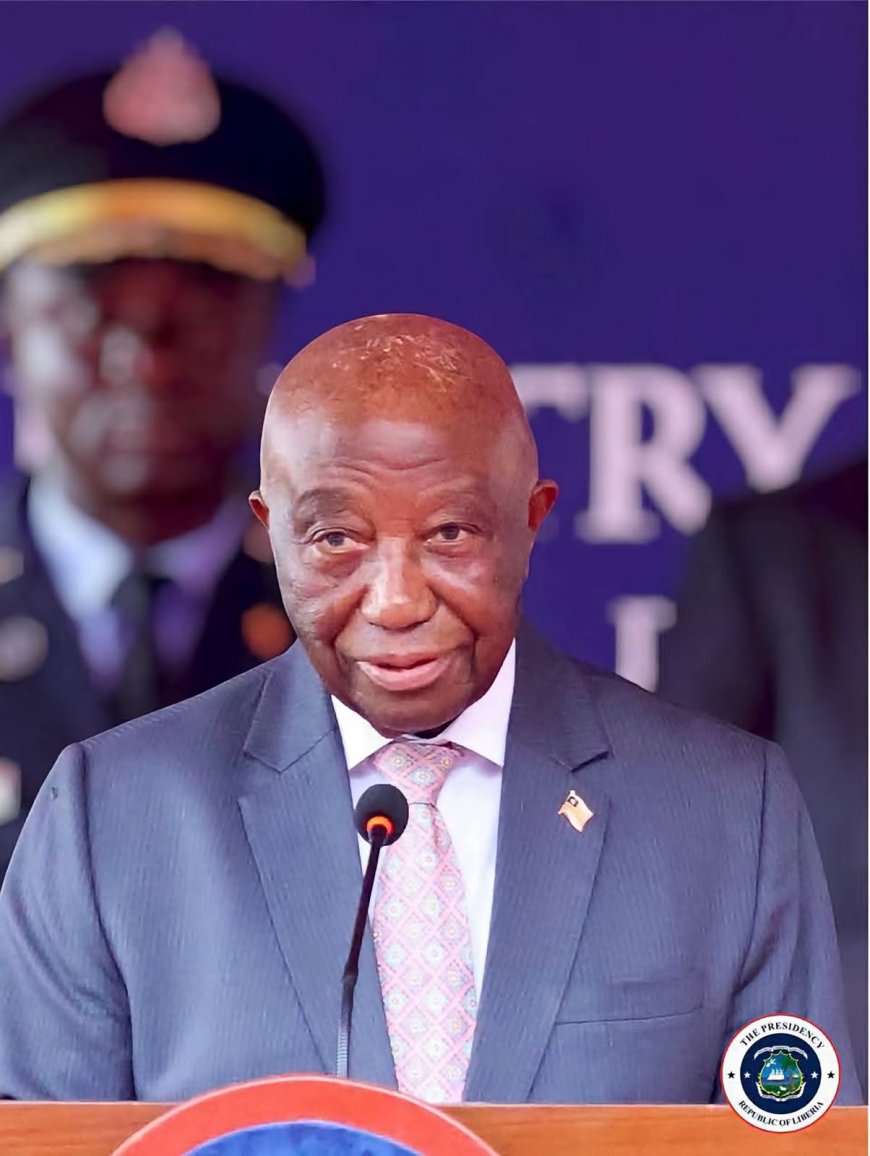
Liberia could see a major expansion of electricity generation, road connectivity and infrastructure investment under a proposed US$5.7 billion Master Infrastructure Development Agreement (MIDA) between the Government of Liberia and Bea Mountain Mining Corporation (BMMC).
The agreement, submitted to President Joseph Nyuma Boakai by the Inter-Ministerial Concession Committee, outlines plans to add 270 megawatts of electricity-generating capacity, develop major road networks and strengthen the country’s power transmission system.
The initiative is expected to address some of Liberia’s longstanding infrastructure challenges, particularly limited access to reliable electricity and roads that connect communities, businesses and agricultural areas to markets.
According to the Ministry of Information, the agreement is designed to support industrial development, create employment opportunities and improve access to essential services across the country.
Expanding Electricity Access
A central component of the proposed agreement is the development of four new power plants with a combined generating capacity of 270 megawatts.
The plan includes a 100-megawatt hydroelectric plant on the Via River, two hydropower plants on the St. Paul River with a combined capacity of 110 megawatts, and a 60-megawatt biomass plant.
The proposed hydropower facilities would account for 210 megawatts of the planned capacity, while the biomass plant would provide an additional source of electricity.
Three reservoirs, with a combined storage capacity of 10 billion cubic meters of water, are also planned to support hydropower generation.
The reservoirs are expected to help regulate water supply for electricity production, allowing operators to store water during periods of higher river flow and release it when flows decline.
The Ministry says the arrangement could help sustain power generation during drier periods, although actual output would depend on rainfall, river conditions and the operation of the facilities.
For households, hospitals and businesses, increased generation could provide a foundation for more reliable electricity, reducing interruptions that affect daily activities, service delivery and production.
Connecting Power to Communities
The agreement also proposes a major investment in the infrastructure needed to move electricity from power plants to consumers.
About US$230 million is expected to be allocated to strengthening the national electricity grid through improvements to substations, transformers and transmission lines.
A 150-kilometer transmission line would connect the power plants to the Mount Coffee substation. Another 150-kilometer line is planned to link the Via River plant to Nimba County, while a five-kilometer line would serve Bong County.
The Nimba and Bong projects are expected to include substations, while the agreement also provides for upgrades to the wider national grid.
The proposed investments are intended to ensure that electricity generated by the new facilities reaches communities and businesses beyond the immediate locations of the plants.
Improved transmission infrastructure could also help hospitals maintain essential equipment, support businesses with more dependable power and reduce the cost and inconvenience associated with electricity interruptions.
Roads to Support Trade and Development
Road infrastructure is another major component of the proposed development plan.
The agreement identifies a 146-kilometer Liberia Development Road as a flagship corridor intended to connect the power plants to key facility centers.
In addition, the government and BMMC are expected to provide US$1 billion for additional road networks across Liberia.
The proposed road investment is aimed at improving connections between regions and supporting the movement of goods, people and services.
For farmers, improved roads could make it easier to transport produce to markets. Businesses could benefit from better access to customers and supply routes, while communities could gain improved connections to schools, health facilities and other essential services.
The Ministry says the road component is intended to complement the power infrastructure and contribute to broader economic activity.
Jobs, Skills and Local Economic Opportunities
Construction and operation of the planned projects are expected to create employment opportunities for Liberians.
The agreement identifies potential jobs in engineering, construction and power operations, while also providing opportunities for workers to develop technical and professional skills.
Beyond direct employment, the projects could create demand for local services and businesses involved in transportation, construction materials, maintenance and other supporting activities.
The Ministry says the initiative is also intended to advance the government’s ARREST Agenda for Inclusive Development by directing additional mining revenue toward infrastructure that supports farmers, businesses and communities.
Financing and Implementation
The government says the agreement is designed to reduce pressure on Liberia’s debt burden through an innovative financing arrangement.
Under the proposal, additional revenue payable by BMMC, made possible by higher gold prices, would be set aside to help finance the infrastructure program.
BMMC would continue making its regular contributions to the Consolidated Account.
The agreement targets implementation over five years, with the biomass plant and transmission lines expected to be completed within two years.
After months of negotiations, the Inter-Ministerial Concession Committee submitted the agreement to President Boakai in November 2026.
The formal signing is scheduled for Wednesday, November 25, 2026, after which the agreement is expected to be submitted to the Legislature for consideration.
If approved and implemented as proposed, the infrastructure program could represent a significant step toward addressing Liberia’s electricity and road challenges, while creating opportunities for employment, trade and improved public services.
However, the benefits will ultimately depend on the completion of the required approval processes, the financing arrangements and the timely delivery of the projects outlined in the agreement.
What's Your Reaction?
 Like
0
 Dislike
0
 Love
0
 Funny
0
 Angry
0
 Sad
0
 Wow
0