




































Liberia Moves Toward Universal Health Insurance to Improve Maternal and Newborn Care

The Liberian government has announced plans to introduce Universal Health Insurance (UHI), describing the initiative as a major healthcare financing reform aimed at reducing maternal and newborn deaths while ensuring all Liberians have access to quality healthcare regardless of their ability to pay.
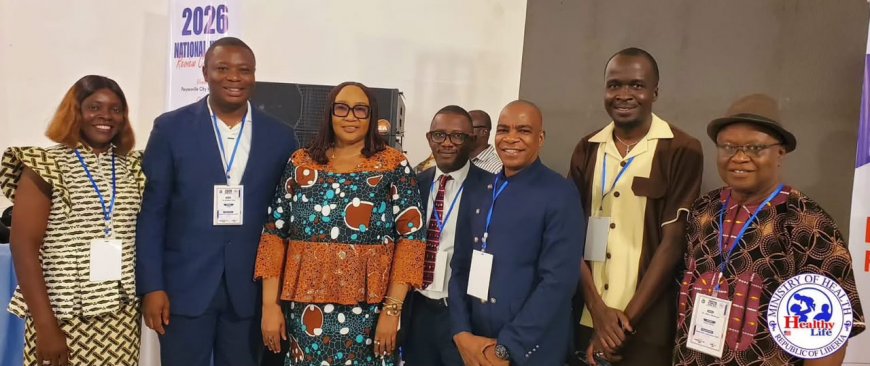
The announcement was made Tuesday as the Ministry of Health opened its Second National Health Review Conference at the Paynesville City Hall. The three-day gathering, running from August 4–6, is bringing together government officials, county health teams, development partners, healthcare professionals and civil society organizations to discuss a national roadmap for implementing the proposed insurance scheme.
Speaking at the opening ceremony, Health Minister Dr. Louise Mapleh Kpoto said Universal Health Insurance has the potential to transform Liberia’s health system by protecting vulnerable citizens from the financial burden of seeking medical care.
“The implementation of Universal Health Insurance will strengthen our health system, protect every Liberian, especially the most vulnerable, and ensure that access to quality healthcare is based on need rather than the ability to pay,” Dr. Kpoto said.
She described the annual review conference as an important platform for evaluating the country’s health sector, addressing existing challenges and identifying practical solutions to improve healthcare delivery.
“Each year, this gathering provides us with an opportunity to reflect, evaluate our progress, confront our challenges, and make informed decisions that will improve the health and well-being of the Liberian people,” she noted.
Dr. Kpoto also credited President Joseph Nyuma Boakai Sr. for placing healthcare at the center of the government’s development agenda and acknowledged the contributions of development partners, county health teams, healthcare workers, civil society organizations and the private sector.
According to her, the collaboration of these stakeholders has helped strengthen primary healthcare, expand access to essential medicines, improve disease surveillance, invest in the health workforce and advance efforts to reduce maternal and newborn mortality.
She urged participants to ensure the conference delivers practical outcomes rather than ending with recommendations that remain on paper.
“Let us identify practical solutions, strengthen accountability, and commit ourselves to actions that will make our health system stronger, more resilient, and more responsive to the needs of the Liberian people,” she urged.
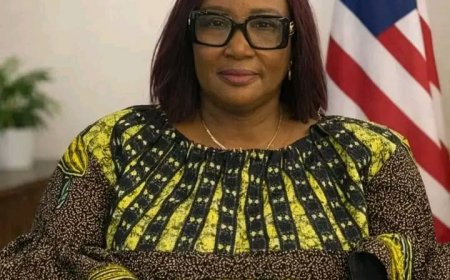
Delivering the keynote address on behalf of First Lady Kartumu Yarta Boakai, Senior Advisor Dr. Adam M. Kyne said the country cannot achieve meaningful national development while women continue to die from preventable pregnancy-related complications.
He described the conference as “a national examination of conscience,” challenging Liberia to determine whether its health system is adequately protecting mothers and newborns.
“No nation can call itself healthy while its mothers are dying in childbirth and its newborns are dying before they have been given a fair chance to live,” Dr. Kyne said.
He emphasized that access to quality maternal and newborn healthcare should never be determined by income, education or location.
“The theme before us places a vital responsibility upon the nation. It reminds us that quality care must not depend upon a mother’s income, surname, location, education, or social standing,” he said.
Quoting the First Lady, Dr. Kyne stressed that every Liberian mother deserves an equal opportunity to safely deliver a healthy child.
“A woman in a rural village carries life with the same hope as a woman in the capital. A newborn in a remote community possesses the same value as a newborn delivered in the finest medical facility,” he quoted.
He further warned that the cost of healthcare continues to place many vulnerable Liberians at risk.
“Healthcare delayed can become life denied. Healthcare unaffordable can become healthcare inaccessible. And healthcare inaccessible can become a death sentence for the poor,” he added.
The conference was attended by Deputy Minister for Administration Martha C. Morris, representatives of the World Bank, the United Kingdom, the People’s Republic of China, the United States Embassy, the United Nations family, county health teams, civil society organizations, the Superintendents’ Council, members of the House Committee on Health, development partners, healthcare professionals and other key stakeholders in Liberia’s health sector.
Held under the theme, “Introducing Universal Health Insurance in Liberia: Financing Quality Maternal and Newborn Care for All,” the conference seeks to build national consensus on implementing Universal Health Insurance while strengthening collaboration among government institutions, development partners, the private sector and civil society.
Participants are reviewing recommendations from the 2025 National Health Summit, evaluating county health sector performance, assessing financial resource mobilization and expenditure, and examining progress under the National Health Sector Strategic Plan. County health teams from across the country are also expected to present reports on achievements, lessons learned and implementation challenges as the Ministry of Health and its partners work toward developing a national roadmap for implementing Universal Health Insurance and expanding equitable access to quality maternal and newborn healthcare across Liberia.
What's Your Reaction?
 Like
0
Like
0
 Dislike
0
Dislike
0
 Love
0
Love
0
 Funny
0
Funny
0
 Angry
0
Angry
0
 Sad
0
Sad
0
 Wow
0
Wow
0