





























NAYMOTE-Liberia Flags Government Accountability Gaps in ARREST Agenda for 2025


MONROVIA, LIBERIA; NAYMOTE Partners for Democratic Development has unveiled findings and raised concerns over the government’s handling of the ARREST Agenda for Inclusive Development (AAID), revealing that Liberia made minimal progress in implementing its flagship development plan during President Joseph Nyuma Boakai Sr.’s first year in office.
According to NAYMOTE-Liberia’s President Meter Report 2025, an independent assessment covering January to December 2025, only three of 378 planned interventions were fully completed, while 165 projects were ongoing, 76 had not started, and 134 could not be verified due to insufficient data.
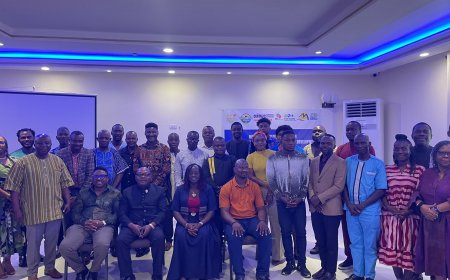
Releasing the report on Tuesday, January 13, during a press briefing, NAYMOTE-Liberia Executive Director, Eddie Jarwolo, said: “These numbers expose serious accountability gaps", adding that “Over half of the AAID interventions are either inactive or unverifiable, underscoring systemic weaknesses in coordination, reporting, and transparency.”
The report evaluated progress across six strategic pillars of the AAID: Governance and Anti-Corruption, Environmental Sustainability, Infrastructure Development, Human Capital Development, Economic Transformation, and Social Inclusion.
Strongest Pillars: Governance and Anti-Corruption led with a 56.9 percent activation rate, closely followed by Environmental Sustainability (56.7 percent) and Infrastructure Development (55.3 percent), driven by digital governance reforms, donor-backed climate initiatives, and visible infrastructure investments.
Weakest Pillars: Human Capital Development (36.7 percent) and Economic Transformation (35 percent) lagged significantly. NAYMOTE-Liberia cited chronic underfunding, fragmented inter-ministerial coordination, and limited reporting—particularly in the health and education sectors—as key barriers to progress.
Decentralization Challenges: The report also highlighted persistent weaknesses in decentralization. Reviews of County Service Centers revealed that over 60 percent of essential public services remain inaccessible outside Monrovia, leaving rural citizens disconnected from government functions.
“This confirms that decentralization remains largely theoretical, failing to deliver meaningful results to citizens,” Jarwolo explained.
Limited Achievements: Despite the overall sluggish pace, several measurable milestones were achieved in 2025:
• Establishment of the War and Economic Crimes Court office
• Rollout of biometric national identification to over 710,000 citizens
• Pilot deployment of electronic procurement systems
• Passage of the Tourism Act
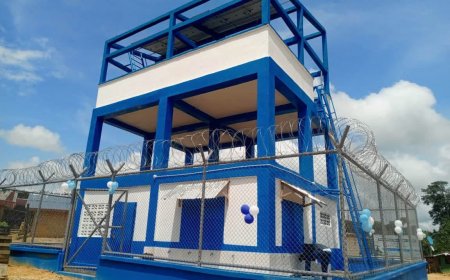
Completion of the Liberia Petroleum Refining Company’s tank and laboratory
Adoption of the National Action Plan on Business and Human Rights
“These successes demonstrate that progress is possible when political will, resources, and institutional capacity align,” Director Jarwolo said.
NAYMOTE-Liberia warned that at the current pace, Liberia risks missing the AAID’s 2029 development targets.
To reverse the trend, the organization recommended:
° Establishing a dedicated AAID coordination secretariat
Enforcing mandatory quarterly public reporting by all implementing agencies
Strengthening budget execution
° Accelerating decentralization of authority and resources to counties
The President Meter Report 2025 was produced under NAYMOTE-Liberia’s Democracy Advancement Program with support from the Embassy of Sweden and the Swedish International Development Cooperation Agency (Sida).
NAYMOTE emphasized that the findings reflect its independent analysis and do not necessarily represent the views of its partners.
What's Your Reaction?
 Like
0
Like
0
 Dislike
0
Dislike
0
 Love
0
Love
0
 Funny
0
Funny
0
 Angry
0
Angry
0
 Sad
0
Sad
0
 Wow
0
Wow
0