

















GBV Survivors Should Not Pay for Life-Saving Care — UNFPA


The United Nations Population Fund, UNFPA, is calling for the removal of service fees charged to survivors of gender-based violence at health facilities across Liberia.
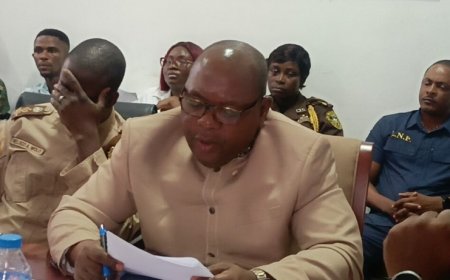
UNFPA Officer-in-Charge Leonard Kamugisha says survivors who gather the courage to report abuse or seek medical attention should receive immediate support rather than face financial barriers.
“When a survivor of gender-based violence summons the courage to break the silence, flee an abusive home, or seek medical attention at a public health facility, the first thing they encounter should not be a registration desk demanding a service fee,” Kamugisha said.
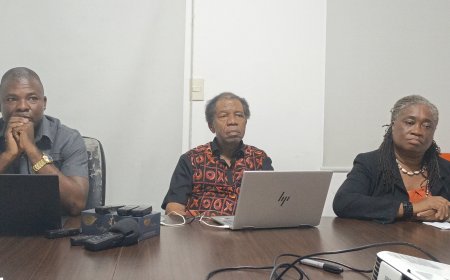
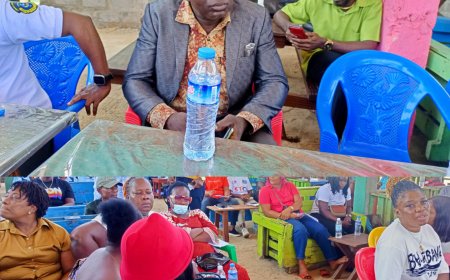
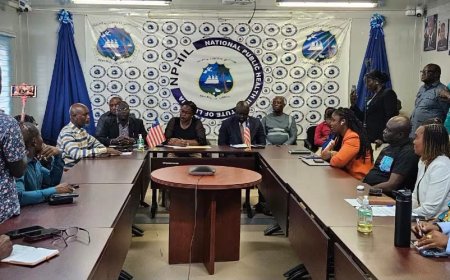
He made the statement Thursday, September 10, at a high-level policy dialogue on removing service fees for GBV survivors held in Mamba Point, Monrovia.
Kamugisha acknowledged that although national policies advocate free medical care for GBV survivors, financial gaps at public health facilities sometimes force clinics to charge patients out-of-pocket fees.
“Financial constraints translate directly into operational hurdles when a survivor cannot afford their fees at a treatment facility,” he said.
According to Kamugisha, the consequences of delayed treatment can be severe, particularly when survivors miss the critical 72-hour window for HIV post-exposure prophylaxis and emergency contraception.
“When a survivor is turned away or forced to delay treatment because they cannot afford a fee of a few hundred Liberian dollars, the consequences are many,” he said.
Data from Liberia’s health management information system presented at the dialogue shows that 91 percent of women raped over the past five years were adolescent girls between the ages of 10 and 19, while 61 percent were girls aged 10 to 14.
The data further shows that only 47 percent of rape survivors reported to a health facility within 72 hours, while 31 percent received HIV post-exposure prophylaxis within 72 hours.
Only 26 percent of those raped received emergency contraceptive pills to prevent pregnancy.
Kamugisha says the figures demonstrate the vulnerability of survivors, particularly women and girls in rural and peri-urban communities.
“User fees disproportionately punish the least privileged, most vulnerable women and girls in rural and peri-urban communities—those who need our protection the most,” he said.
He also recognized the financial challenges facing public health facilities, noting that some facilities rely on user fees to cover operational costs because of insufficient government budgetary support.
“UNFPA is fully aware that the issue of user fees is very complex and there is not a simple solution,” Kamugisha said.
Despite the challenges, he says removing fees for GBV survivors would represent an important step toward improving access to care and ensuring justice for victims.
“The removal of service fees on GBV survivors at treatment facilities is a milestone not just for the health and wellbeing of survivors but for justice as well,” Kamugisha said.
UNFPA says it remains committed to working with the Government of Liberia and other partners to support efforts aimed at reducing gender-based violence and ensuring that women and girls can access essential services with dignity.
Kamugisha says Liberia’s goal of reducing the incidence of GBV by 50 percent will require stronger collaboration and practical measures that remove barriers preventing survivors from receiving timely care.
What's Your Reaction?
 Like
0
Like
0
 Dislike
0
Dislike
0
 Love
0
Love
0
 Funny
0
Funny
0
 Angry
0
Angry
0
 Sad
0
Sad
0
 Wow
0
Wow
0