




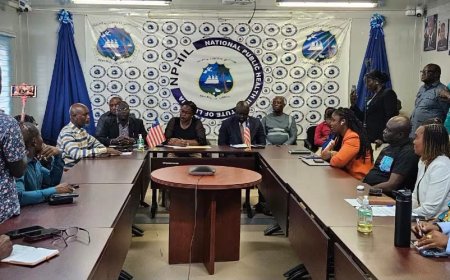





INCHR Launches 2025 Human Rights Report, Flags Prolonged Pre-Trial Detention and Other Rights Violations

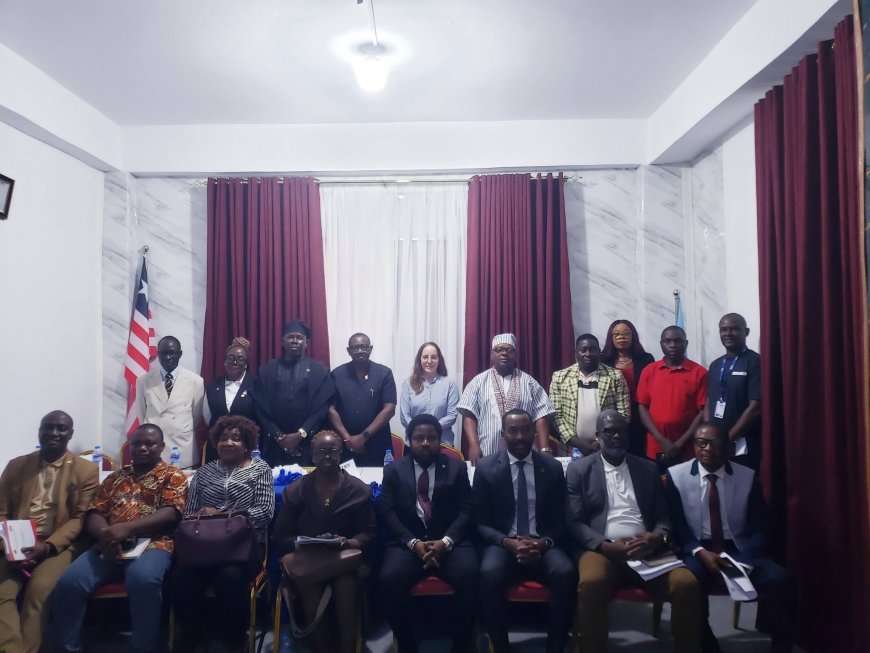
MONROVIA — The Independent National Commission on Human Rights (INCHR) has launched its 2025 Human Rights Report, identifying prolonged pre-trial detention, violence against women and children, domestic violence, mob violence and other rights violations among major human-rights concerns confronting Liberia.
The report was launched under the theme, “From Monitoring to Meaningful Mitigation: Strengthening Human Rights Protection in Liberia.”
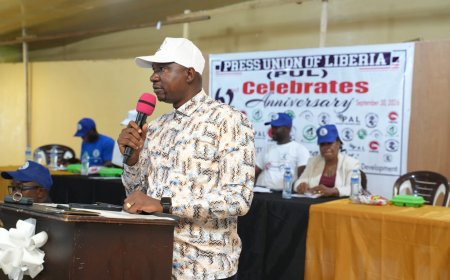
Presenting the report’s key findings, recommendations and priority human-rights concerns, INCHR Commissioner for Planning, Internal Monitoring and Evaluation, Education, Training and Information, Atty. Patmillia Doe Paivey, said the Commission’s findings show a continued increase in pre-trial detention over recent years.
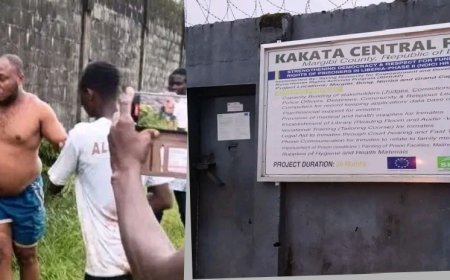
She said 66.7 percent of inmates were in pre-trial detention in 2025, while 3,697 people were in prolonged pre-trial detention across 16 prison facilities, with some detainees held for between two and six years.
According to Atty. Doe Paivey, 980 people were in pre-trial detention at the Monrovia Central Prison alone, with some reportedly spending up to five years awaiting trial.
She said the situation requires a holistic response, noting that delays in the litigation process and inadequate access to legal counsel are among the factors contributing to prolonged detention.
The Commissioner called for greater involvement of the judiciary, government and rights-based organizations in reducing the number of people held before trial.
She recalled the role previously played by civil-society organizations in providing legal assistance to detainees and suggested renewed collaboration with rights-based partners to help people who cannot afford legal representation.
Atty. Doe Paivey also highlighted several other concerns contained in the report, including killings involving children, deaths resulting from domestic violence, failures in handling domestic-violence cases, and prolonged pre-trial detention involving women and children.
The report also contains recommendations addressing sexual and gender-based violence and harmful traditional practices, including the need to increase access to justice for victims.
The Commissioner further raised concern over the incidence of mob violence, warning that people are sometimes attacked based on allegations without proper investigation or consideration for their right to life and the presumption of innocence.
She called for stronger public education, increased security and behavioral-change interventions, particularly in densely populated commercial areas where mob violence has been repeatedly reported.
Meanwhile, Acting Chairperson of the INCHR, Cllr. Mohammed E. Fahnbulleh, said the Commission’s 2025 report was released late, noting that it should have been published in December 2025.
Cllr. Fahnbulleh said completing the report became one of his priorities after assuming the acting leadership of the Commission, stressing the need for the institution to meet its national and international obligations.
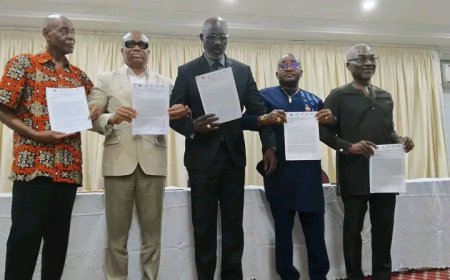
He also disclosed that the Commission has completed proposed amendments to the INCHR Act and has shared a copy with the Office of the President ahead of its formal submission to the Legislature.
According to the Acting Chairperson, the proposed amendments are intended to address provisions of the existing law that have created challenges for the Commission and affected its institutional effectiveness.
He further announced ongoing reforms within the Commission, including efforts to strengthen human resources, improve staff capacity and provide employees with the necessary tools and working conditions to effectively perform their duties.
Cllr. Fahnbulleh also called on lawmakers to support the development of a new Human Rights Act and adopt a rights-based budget that adequately prioritizes areas such as health and issues affecting women.
He argued that the Commission cannot effectively fulfill its mandate if it receives inadequate financial support, saying its current allocation of about US$30,000 is insufficient for an institution with such a broad national responsibility.
For his part, Justice Minister Cllr. Oswald Tweh assured the INCHR of the Liberian Government’s commitment to strengthening human-rights protection.
Minister Tweh said the annual human-rights report is important because it helps government identify areas where corrective measures are needed to ensure that the rights of citizens and residents are protected.
He acknowledged that government has not achieved perfection in human-rights protection but said the administration remains committed to improving its performance and meeting its domestic and international obligations.
The Justice Minister pledged government’s continued collaboration with the Commission in addressing human-rights concerns and promoting peace, dignity and respect for fundamental rights.
Meanwhile, speaking on behalf of civil society organizations (CSOs), Anderson Miamen, Executive Director of the Center for Transparency and Accountability in Liberia (CENTAL), welcomed the Commission’s call for a rights-based budget and increased institutional support.
Miamen said corruption and development are directly linked to human rights, arguing that government should intentionally finance education, healthcare and other essential public services so citizens can benefit from national resources.
He, however, expressed cautious optimism about the Commission’s renewed direction, saying the improved setting of the report-launching ceremony does not reflect the wider human-rights situation across Liberia.
Miamen pointed to prolonged pre-trial detention, violations against women and girls, corruption and concerns within the security sector as issues that require urgent attention.
He said CSOs support increased resources for the INCHR going forward, particularly if the Commission is now positioned to effectively carry out its mandate.
Miamen also pledged continued civil-society engagement with the Commission, saying CSOs will commend the institution when it performs well but will also criticize it when necessary.
He said a properly functioning human-rights commission is important to civil society because it provides a credible institution to which citizens can turn when their rights are violated.
Miamen called for collective efforts to ensure that the findings and recommendations contained in the 2025 Human Rights Report move beyond documentation and are implemented to produce meaningful improvements in Liberia’s human-rights situation.
The INCHR says the report is intended to strengthen monitoring, accountability and human-rights protection and to guide stakeholders toward concrete measures for addressing violations across the country.
What's Your Reaction?
 Like
0
Like
0
 Dislike
0
Dislike
0
 Love
0
Love
0
 Funny
0
Funny
0
 Angry
0
Angry
0
 Sad
0
Sad
0
 Wow
0
Wow
0