













Liberia Launches Third National Action Plan On Women, Peace And Security

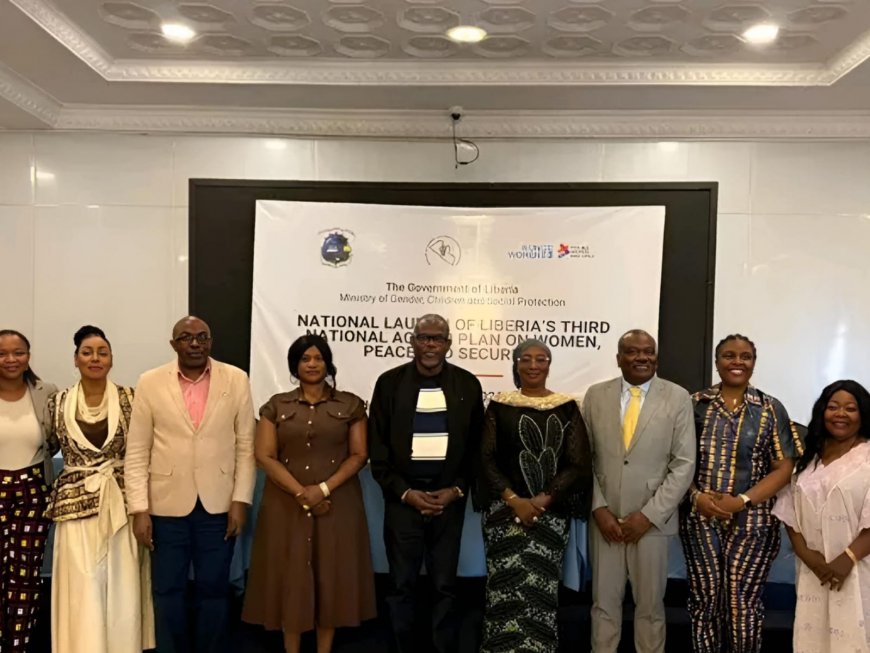
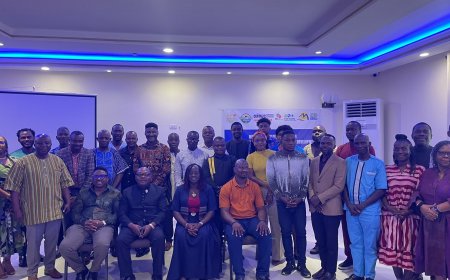
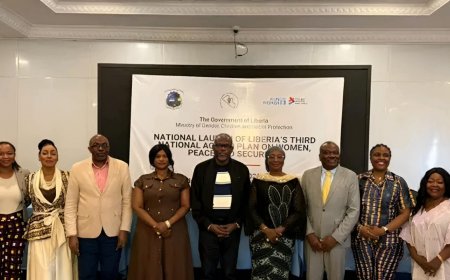
The Ministry of Gender, Children and Social Protection, with support from UN Women, has launched Liberia’s Third National Action Plan on Women, Peace and Security for 2026–2031, with calls for stronger government coordination, adequate funding and grassroots participation in its implementation.
The plan is intended to strengthen women’s participation in peacebuilding, security, governance and decision-making.
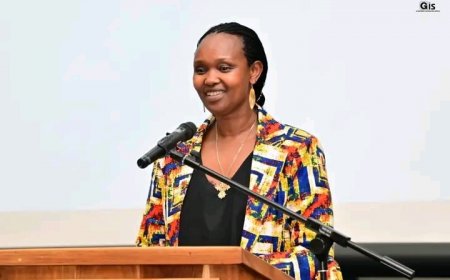
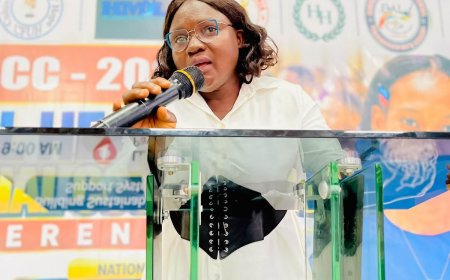
Speaking at the launch, Gender Minister Gbeme Horace-Kollie said the government must integrate the plan into its development processes rather than allow it to become another policy document that is left unimplemented.
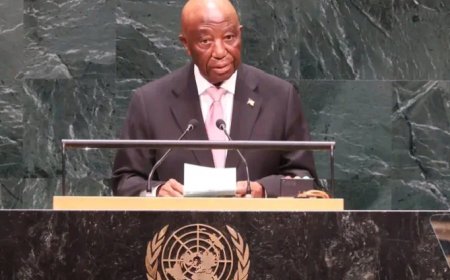
She said President Joseph Nyuma Boakai had expressed strong commitment to the plan ahead of its launch in New York, adding that she was confident the government would support its implementation.
“I am confident that the government does not see this as another paper that we've developed, that we're going to put down. It's going to be integrated into our development processes,” Horace-Kollie said.
The Gender Minister also pointed to the importance of government support during budget discussions, recalling that she raised the plan with the former Minister of Foreign Affairs and said his response demonstrated a commitment to defending the gender budget.
She emphasized that coordination among government institutions and other stakeholders would be critical to achieving the plan’s objectives.
“Coordination is critical. How we are able to connect the dots in a more tangible way is important,” she said.
Horace-Kollie warned that institutions sometimes duplicate efforts or lose sight of their common objectives, urging stakeholders to carry out their respective responsibilities in a way that supports the plan’s implementation.
She also stressed that the plan must reach women at the grassroots level, rather than limiting participation to national institutions such as the Ministries of Foreign Affairs and National Defense and the National Security Agency.
“Women in this plan should not be someone who lies under the name of foreign affairs, defense, and the NSA,” she said.
The Minister called for inclusive consultations and timely involvement of relevant stakeholders, stressing that communities and the people expected to benefit from the plan must be part of the process from the beginning.
“Because when we're talking about implementation, we're talking about the kind of results you want. So if you implement wrong, then you don't get the results you want,” Horace-Kollie said.
She further called for a practical implementation plan that identifies priorities and provides a basis for government and other stakeholders to guide the process.
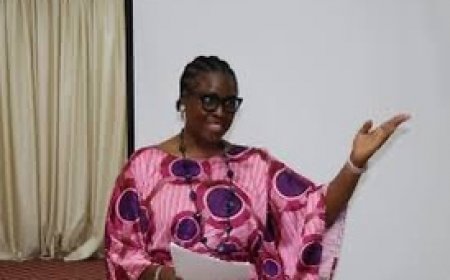
Meanwhile, Information Minister Jerolinmek Matthew Piah said the new action plan provides an opportunity to address persistent challenges and strengthen women’s participation in decision-making at all levels.
Piah, who said he began his public service career at the Ministry of Gender and later served as Assistant Minister for Planning and Administration, recalled being part of the coordination team that formulated and launched Liberia’s first National Action Plan in March 2010.
He said the new plan must move beyond policy commitments and focus on concrete actions, adequate resources, stronger institutional capacity and inclusive partnerships involving government, civil society organizations, women’s groups, development partners and local communities.
“The true success of the action plan will not be measured by its adoption alone, but by its effective implementation and the positive changes it brings to the lives of women and girls across Liberia,” Piah said.
The Information Minister also called on journalists and media organizations to make women’s contributions to peace and security a sustained part of their reporting.
“Let us move beyond occasional recognition and show the achievements of women peacebuilders through responsible coverage,” he said.
Piah urged the media to provide platforms for rural women, grassroots peace advocates, young women and community leaders to share their experiences and recommendations.
He also called for responsible reporting that challenges stereotypes portraying leadership and security as exclusively male responsibilities, while recognizing women’s contributions to peacebuilding across the country.
Liberia’s Third National Action Plan covers the period 2026–2031 and builds on two previous plans developed under United Nations Security Council Resolution 1325 on Women, Peace and Security, which recognizes the importance of women’s participation in conflict prevention, resolution and peacebuilding.
The first national action plan covered 2009–2013, while the second covered 2019–2025.
The launch comes as Liberia serves as a non-permanent member of the United Nations Security Council for the 2026–2027 term.
With the third plan now launched, attention turns to how the government will coordinate its institutions, provide the necessary resources and ensure that women’s participation in peace and security translates into practical results, particularly at the community level.
What's Your Reaction?
 Like
0
 Dislike
0
 Love
0
 Funny
0
 Angry
0
 Sad
0
 Wow
0