






























LRA Announces Customs Reforms to Reduce Port Delays and Support Businesses

The Liberia Revenue Authority (LRA) has announced plans to introduce customs and tax administration reforms aimed at reducing cargo clearance delays at the Freeport of Monrovia and improving conditions for importers and small businesses.
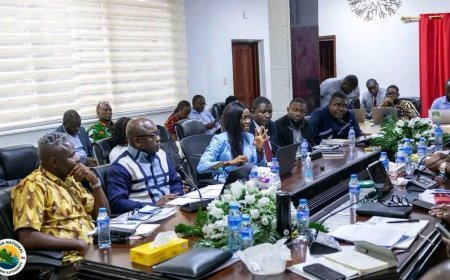
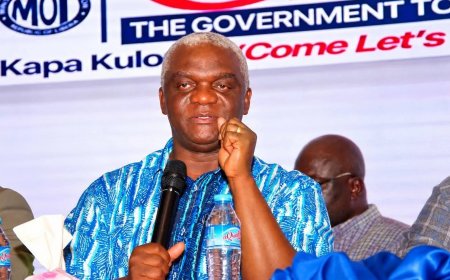
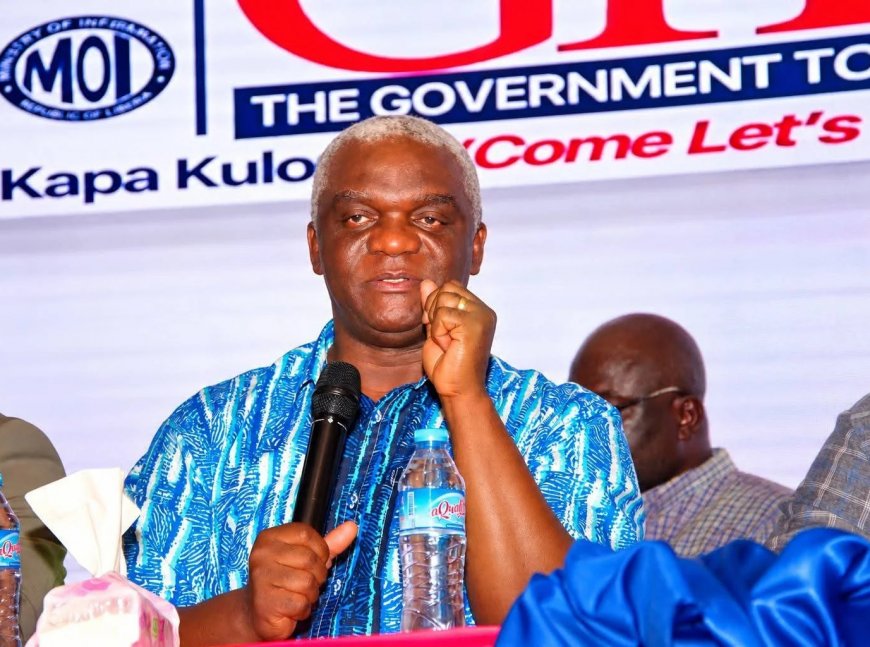
LRA Commissioner General James Dorbor Jallah disclosed the plans during the Government of Liberia and Port Stakeholders Meeting held at the Freeport of Monrovia on November 16, 2026.
Jallah said the Authority is working to establish a destination inspection facility at the port, which will help address delays involving goods imported by several businesses in shared containers.
“We actually have a lot of bays, I think about eight bays, where we'll be able to de-stuff those kind of containers,” Jallah said.
He explained that the facility will allow cargo belonging to different importers to be separated, so each business can clear its goods without waiting for others to make payments.
The facility will also introduce non-intrusive scanning technology, allowing customs officials to inspect containers without physically opening them.
“We will have scanners so that once your container is loaded on a flatbed, the truck will drive through the scanner. Our people will be able to see what's in the container without having to open a container,” he said.
Jallah said the scanning system is designed to handle up to 60 containers per hour, with an estimated operational capacity of 40 to 50 containers hourly.
The facility, initially expected to be dedicated in December 2026, has experienced supply-chain delays and is now expected to be dedicated in the first quarter of 2027.
Jallah also disclosed that the LRA is preparing to extend customs operations to 24 hours, supported by electronic payment options being developed in collaboration with the Central Bank of Liberia.
“You can pay directly from your bank account. You can pay with your debit card. You can pay with your credit card. You can pay through mobile money. All these payment options will be available to you,” he said.
He said the Authority hopes the payment systems will be fully functional by the end of 2026, allowing importers to settle customs bills beyond regular banking hours.
On tax administration, Jallah said the LRA plans to roll out Value Added Tax (VAT) in 2027, beginning with large and medium-sized taxpayers.
He said eligible small businesses could voluntarily enroll and receive support from the Authority, including devices with accounting and inventory management systems.
Addressing traders' concerns about the four percent tax, Jallah said the LRA is willing to meet with affected businesses to understand the challenges and explore possible solutions.
“We can sit down together so that we can understand all the nuances of the challenges that you're facing with this 4% tax,” he said.
He added that any agreed changes could be taken through the Ministry of Finance and the Legislature for possible amendments.
Jallah also urged importers to declare the actual value of their goods, warning that under-declaration could lead to additional assessments, penalties and interest.
“Let's have continuous engagement. We advise you,” he told traders, encouraging businesses to consult LRA technicians on the taxes and duties applicable to their imports.
He emphasized that improving cargo clearance and customs operations would require cooperation between the LRA, importers, customs brokers and other port stakeholders.
What's Your Reaction?
 Like
0
 Dislike
0
 Love
0
 Funny
0
 Angry
0
 Sad
0
 Wow
0