































Liberia Steps Up Efforts to Address Eye-Care Specialist Shortage

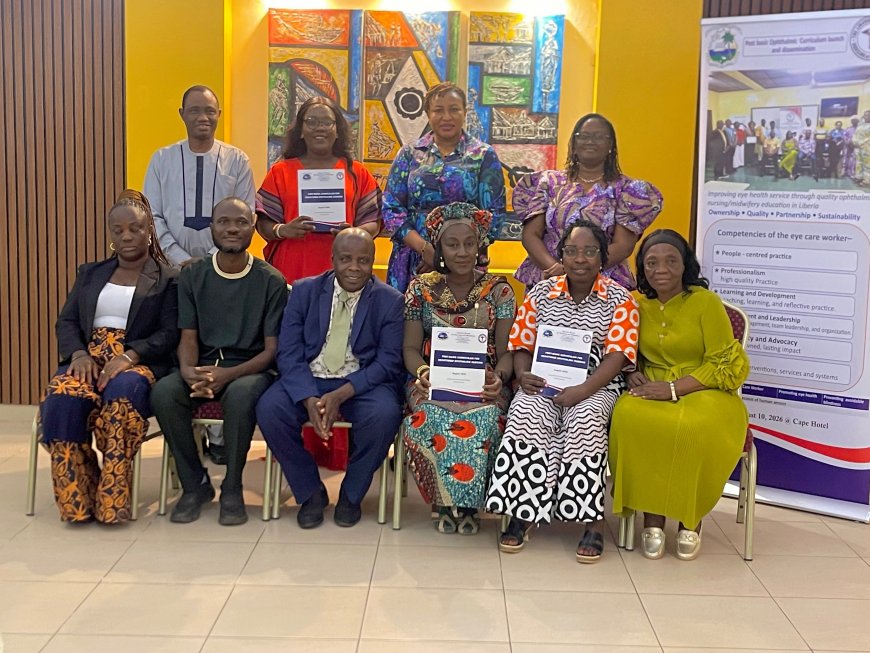
MONROVIA, LIBERIA— The Liberian Board for Nursing and Midwifery (LBNM) has launched a revised ophthalmic nursing curriculum aimed at expanding specialized eye-care training and increasing the number of qualified nurses providing vision services across Liberia.
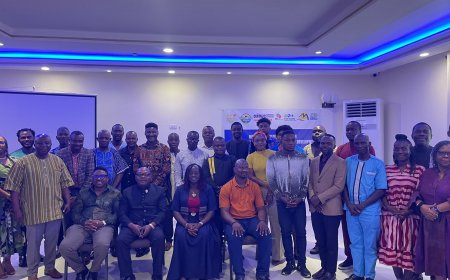
The curriculum was unveiled in Monrovia during a launch, dissemination and commissioning ceremony attended by health professionals, training institutions and other stakeholders in the health sector.
The initiative comes amid concerns over Liberia’s limited opportunities for specialized nursing education and a shortage of professionals trained to provide specialized eye-care services.
LBNM Registrar and Executive Secretary Cecelia C. Kpangbala-Flomo said expanding specialist training is essential to developing a health workforce capable of responding to both longstanding and emerging healthcare needs.
She said the West African Health Organization (WAHO) has validated and harmonized about 58 specialized health curricula across the region, but Liberia currently implements only four.
According to Kpangbala-Flomo, the limited number of specialized programs has constrained opportunities for nurses and midwives seeking advanced professional training.
She said the revised ophthalmic nursing curriculum provides a standardized pathway for nurses to acquire the knowledge, skills and clinical competencies needed to deliver specialized eye-care services.
The program is designed to support different levels of professional development, including accredited post-basic, bachelor’s and advanced specialist qualifications in ophthalmic nursing.
The LBNM said the curriculum was developed through an eight-stage regulatory process and aligned with the World Health Organization’s 2022 Global Competency Framework.
The revised program also combines classroom-based instruction with practical clinical training, allowing students to develop the skills needed to apply their knowledge in real healthcare settings.
Shortage of Eye-Care Specialists
The launch highlighted the broader shortage of professionals specializing in eye health in Liberia.
Dr. Molly Goes, Director of the National Eye Health Program, described the shortage of ophthalmologists and ophthalmic nurses as a major challenge in the country’s efforts to prevent avoidable vision loss.
She called for the establishment of dedicated vision centers while urging the integration of eye-health services into community-level healthcare.
Dr. Goes said bringing eye-care services closer to communities would improve early detection and treatment and help reduce cases of preventable blindness.
She stressed that increasing the number of trained eye-care professionals is critical to ensuring that people, particularly those in underserved communities, have timely access to specialized services.
Building Local Training Capacity
The revised curriculum forms part of wider efforts by the LBNM and its health-sector partners to strengthen specialized training for Liberian health professionals.
The Board has also collaborated with the Ministry of Health to identify licensed nurses and midwives for specialized training outside Liberia.
Under the World Bank-funded Institutional Foundations to Improve Services for Health project, selected nurses and midwives were sent to Kenya to pursue specialized training in areas related to their professional licenses.
The LBNM clarified, however, that the overseas training initiative is separate from the newly launched ophthalmic nursing curriculum.
The Board said both initiatives are intended to address shortages in specialized health personnel and contribute to strengthening Liberia’s healthcare system.
Robert F. Dolo, Founder and Executive Director of the New Eyesight and Medical Center of Liberia, described the revised curriculum as an important step toward developing sustainable local capacity in ophthalmic education.
Dolo recalled that ophthalmic training in Liberia once depended heavily on foreign assistance, with Liberians traveling to countries including Ghana and The Gambia for specialized education.
He said the expansion of local training has gradually created opportunities for Liberian professionals to return and contribute directly to the country’s health system.
According to Dolo, graduates of local ophthalmic programs are already supporting healthcare delivery and participating in outreach activities, particularly in underserved rural communities.
Representatives from hospitals and other health institutions welcomed the revised curriculum, saying local training of ophthalmic nurses could improve the quality, availability and efficiency of eye-care services.
They cautioned, however, that the success of the program will depend on effective implementation, adequate resources, qualified instructors, appropriate clinical facilities and adherence to the standards established under the curriculum.
Stakeholders from the West African Postgraduate College of Nurses and Midwives, National Commission on Higher Education, Liberia Pharmacy Board, General Ophthalmic Association of Liberia, Liberia Nurses Association, Last Mile Health and Clinton Health Access Initiative (CHAI) were among those who commended the LBNM for introducing the revised program.
They said expanding specialized health education would help Liberia develop a stronger and more resilient health workforce.
The revised ophthalmic nursing curriculum is expected to provide more Liberian nurses with a local pathway to specialized eye-care training while helping address gaps in the country’s ophthalmic workforce.
Health authorities and stakeholders hope effective implementation of the program will increase the availability of qualified ophthalmic nurses and improve access to services aimed at preventing, detecting and treating avoidable vision problems across Liberia.
What's Your Reaction?
 Like
0
Like
0
 Dislike
0
Dislike
0
 Love
0
Love
0
 Funny
0
Funny
0
 Angry
0
Angry
0
 Sad
0
Sad
0
 Wow
0
Wow
0