



























Who Pays for Freeport’s Failures? Businesswomen Say Delays Are Destroying Their Livelihoods

Monrovia,Liberia: Liberian businesswomen say they are paying the price for a port system that keeps their goods waiting while loans, shipping charges and household bills continue to pile up.
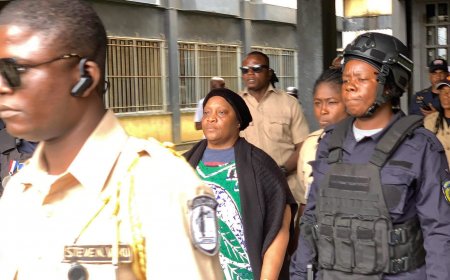
Their protest at the Capitol on Tuesday, November 3, puts a hard question before the Boakai administration: how long must struggling traders finance the consequences of delays they cannot control?
Operating under the banner of China Business Women United with One Voice and the Consortium of Liberia Importers, the women demanded government intervention over prolonged shipping delays and charges they say threaten their businesses. Some alleged that shipments from Asia take six to seven months to reach Liberia. That claim concerns the overall shipping journey and should not be confused with time spent waiting specifically at the Freeport.
For these traders, the crisis reaches beyond containers. Money committed to unavailable goods cannot restock shops, repay lenders or support families.
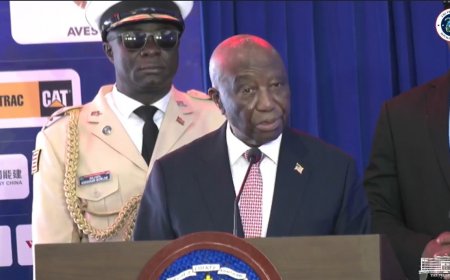
Against those immediate pressures, National Port Authority Managing Director Sekou Dukuly’s announcement of a US$280 million investment raises a critical question: what relief will reach affected businesses, and when?
According to the briefing account provided for this report, Dukuly acknowledged that about 700 containers had remained at the port for more than 30 days. He outlined additional handling equipment, expanded yard space and automation among the measures intended to improve operations.
Those measures could help. But an investment announcement does not establish when an importer will receive her goods, what charges she will face or whether her business can survive the wait.
The central accountability issue is who carries the financial burden while improvements are pending.
The protesters accuse shipping companies and port operators of imposing costs that are squeezing locally owned businesses. Their complaints deserve a documented response explaining each charge, who collects it and whether it applies when delays arise outside an importer’s control.
Gbarpolu County Senator Amara Konneh has also raised concerns about port delays. In an October 25 communication, he cited reports from importers and shipping agents that Liberia-bound containers spend an average of more than 30 days at sea before berthing, with some vessels held in neighboring countries.
He linked the difficulties to inadequate yard space and delayed dredging, while questioning transaction costs across the supply chain. These are concerns raised in his communication, rather than findings from a completed investigation. (frontpageafricaonline.com)
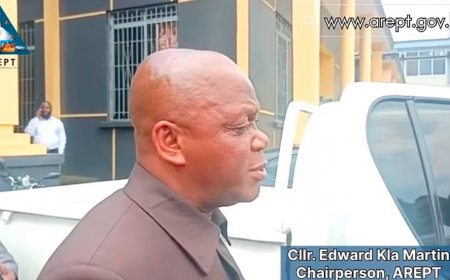
The NPA’s own explanation points to a problem requiring more than a single operational adjustment. Harbor Master Captain Samuel Lynch told FrontPageAfrica that inadequate infrastructure, larger vessels, limited berths, weather and operational constraints contribute to congestion.
Lynch said a comprehensive dredging contract was expected to be signed this week, with yard and berth expansion to follow within three to eight months. Those are projected steps, not completed works. For traders already facing losses, they leave the immediate question of relief unresolved. (frontpageafricaonline.com)
Responsibility also extends across the clearance system.
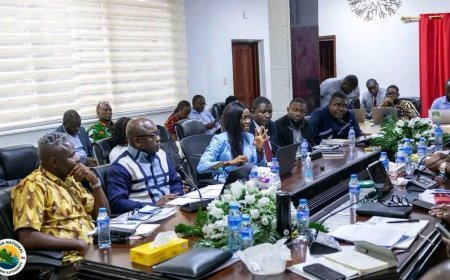
At a September stakeholders’ meeting, APM Terminals said its cranes could offload roughly 600 to 800 containers within 24 hours, while customers typically removed only 100 to 150 containers from the yard. That account points to a serious gap between unloading cargo and getting it through the gate. It does not, by itself, establish who is responsible for each delay.
That distinction matters to the women protesting. Moving containers from ships into a congested yard will offer limited relief if documentation, inspections, payments and release procedures continue to hold them there.
The new investment announcement also comes a year after the NPA launched its US$550 million strategic plan for 2025–2030, which included modernization and measures to reduce congestion. The five-year plan is still underway, but the present crisis makes a public progress report necessary: what has been funded, what has been completed and what remains delayed?
For the US$280 million announcement, the same scrutiny should apply. The briefing account supplied for this story does not identify the investor, financing terms, spending breakdown or a firm construction timetable.
Those details are essential to establish whether the announcement represents a signed commitment, proposed financing or money already available for work.
Lawmakers now have an opportunity to move the dispute toward public accountability. The House of Representatives has reportedly scheduled a hearing for November 6 involving port-sector stakeholders following the businesswomen’s protest.
That hearing should establish the causes of delays, identify responsibility for charges and secure measurable deadlines for clearing the backlog. It should also examine whether affected importers qualify for fee waivers or other relief, based on evidence showing where their delays occurred.
The women’s protest exposes the immediate test of the government’s response: whether goods move and businesses survive.
Until that happens, the cost of waiting remains with the traders who took their grievances to the Capitol.
What's Your Reaction?
 Like
0
 Dislike
0
 Love
0
 Funny
0
 Angry
0
 Sad
0
 Wow
0