
















Liberian Advocate Calls for Legalization and Regulation of Prostitution
A Liberian advocate, Amb. Tarka R. Golegio, has called for the legalization and regulation of prostitution, arguing it could boost government revenue, strengthen public health monitoring, and address underage exploitation and rising STI cases.

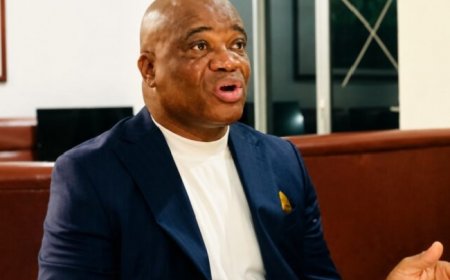
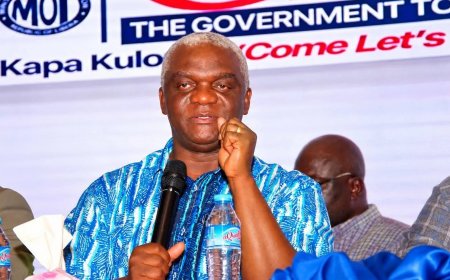
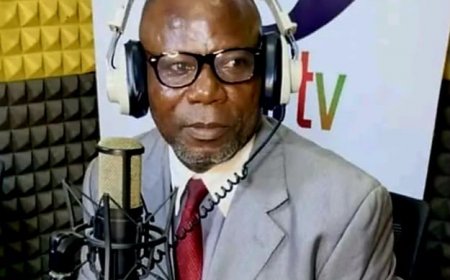
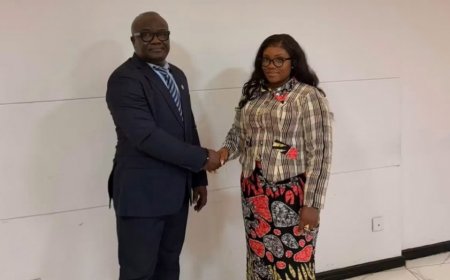
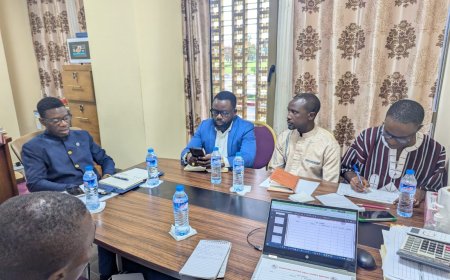
Monrovia, Liberia: A Liberian advocate and the Public Relations Officer (PRO) of the Board of Tax Appeals (BoTA)Amb. Tarka R. Golegio, is calling for prostitution to be legalized and strictly regulated in Liberia, arguing that such a move could help government raise revenue while addressing serious public health and social protection concerns.
Golegio, who described himself as an emerging social worker and current public administrator, said prostitution should not be ignored or treated loosely, but rather brought under a proper legal and regulatory framework before any discussion of linking it to tourism or other state structures.
According to him, legalizing prostitution could create room for stronger government control over the practice, while also opening the door for public health monitoring, protection of vulnerable persons, and stricter penalties for abuse and non-compliance.
He said one of the strongest reasons for legalization is the need to confront the spread of HIV/AIDS and other sexually transmitted infections. Golegio believes a regulated system would require registered sex workers to undergo routine medical screening and obtain valid health certification showing their medical status.
He proposed that the process should include periodic health checks, possibly every three months, with sanctions for sex workers who operate outside the law and for clients who knowingly seek services from unregistered individuals.
Golegio said such a system could help Liberia reduce infection risks and create more accountability in a sector that largely operates in the shadows.
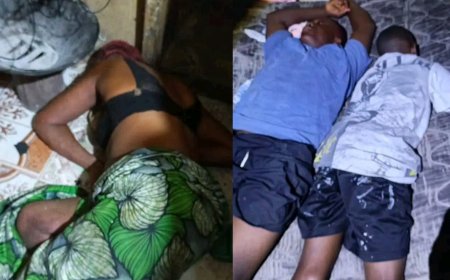
He also raised alarm over the issue of underage prostitution, which he described as one of the most troubling realities connected to the practice. Recalling an investigative report he conducted in 2021 while serving as a talk show host at Queen’s FM Radio, Golegio said many of the individuals involved in sex work around the New Georgia Junction area along the Japan Freeway appeared to be between the ages of 15 and 18.
He said that situation exposed the urgent need for a stronger legal framework to protect minors and punish exploitation.
According to him, legalization must go hand in hand with strict age verification measures and tough penalties for anyone involved in underage prostitution, whether as an operator, trafficker, or client. He argued that both the exploitation of minors and the patronage of underage sex work should carry legal consequences, including fines or imprisonment.
Golegio stressed that law enforcement agencies and other relevant stakeholders would have to play a major role in ensuring that any law on prostitution is properly enforced and that vulnerable groups are protected.
He maintained that his position is not an endorsement of prostitution, but a policy argument aimed at improving public health, safety, and social protection in Liberia.
“This perspective is informed by research and professional observation,” he noted, adding that the goal is to contribute to national policy discussions rather than promote the act itself.
The statement is likely to spark debate across Liberia, where issues surrounding morality, public health, child protection, and law enforcement continue to shape national conversations on sex work and social regulation.
What's Your Reaction?
 Like
0
Like
0
 Dislike
0
Dislike
0
 Love
2
Love
2
 Funny
2
Funny
2
 Angry
0
Angry
0
 Sad
1
Sad
1
 Wow
0
Wow
0