



































UNFPA Flags Gaps In Timely Medical Care For Rape Survivors In Liberia
UN officials say upgraded GBV data system must translate into faster medical care, stronger coordination and better protection


Monrovia, Liberia — The United Nations Population Fund (UNFPA) has highlighted gaps in access to urgent medical care for rape survivors in Liberia, saying stronger data management and coordination among service providers are needed to improve the country’s response to gender-based violence.
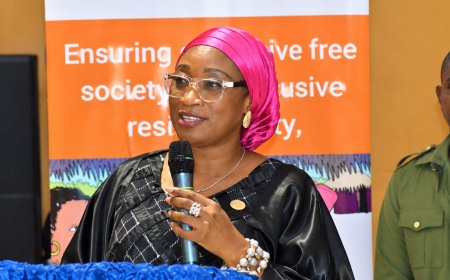
Speaking Tuesday at the launch of Liberia’s upgraded Gender-Based Violence Information Management System (GBVIMS), UNFPA Country Representative Dr. Mady Baiye said an average of four women and girls are raped daily in the country, three of whom are adolescent girls.
Baiye also cited figures indicating that only 47 percent of women and girls raped over the previous five years reported within 72 hours, while 31 percent of those raped received post-exposure prophylaxis (PEP) within the same period.
PEP is medication used to reduce the risk of HIV infection following possible exposure and must be started within 72 hours to be effective.
The figures highlight the challenge of ensuring that survivors report violence promptly and receive timely medical attention, including treatment that can reduce the risk of HIV infection.
Baiye said the lack of safe, standardized and reliable information management systems has limited the ability of authorities and service providers to identify service gaps, direct resources effectively and assess the impact of interventions.
He described the upgraded GBVIMS as more than a database, saying it is intended to improve incident reporting, strengthen referrals and support survivor-centered services through safer data management and evidence-based action.
“When the service providers speak the common data language, referral pathway becomes stronger, response time reduced and service gaps are highlighted and addressed,” Baiye said.
He emphasized that reliable information should help institutions identify where services are lacking and respond more effectively to the needs of survivors.
UN Warns Against a System That Exists Only on Paper
United Nations Resident Coordinator Christine Umotoni said the system’s impact would depend on whether institutions consistently use, maintain and update it.
She cautioned that launching the technology would not be enough if service providers failed to enter information, monitor its operation and address technical problems.
“Systems like this work when they are fed with information, when they are maintained,” Umotoni said.
She explained that accurate data could help authorities identify patterns of violence, determine which groups are most vulnerable and direct resources and prevention campaigns to communities where they are needed.
Umotoni also described gender-based violence as a security concern, arguing that reliable information should help institutions understand where violence occurs and strengthen their response.
She said the system could improve coordination among health professionals, social workers, legal institutions and security agencies, reducing the difficulties survivors face when seeking medical care, psychological support and justice.
“When a survivor steps forward, our collective response must be immediate, comprehensive, coordinated and compassionate,” she said.
From Information to Action
Both UN officials stressed that the value of the system would ultimately depend on whether the information collected leads to practical improvements in services and protection.
Baiye said UNFPA would continue supporting the government and civil society through technical assistance, stronger data-protection practices and efforts to improve survivor-centered services across Liberia.
Umotoni, meanwhile, called on law enforcement officers, health workers, social workers, judicial officers and civil society organizations to uphold data integrity, confidentiality and survivor care.
The upgraded GBVIMS is expected to help institutions develop a clearer picture of gender-based violence and improve coordination among service providers. However, its effectiveness will depend on consistent reporting, adequate resources and the ability of institutions to turn information into timely care and stronger prevention efforts.
For survivors, the central test will be whether improved information management leads to faster access to medical services, better protection and a more coordinated response when they seek help.
What's Your Reaction?
 Like
0
Like
0
 Dislike
0
Dislike
0
 Love
0
Love
0
 Funny
0
Funny
0
 Angry
0
Angry
0
 Sad
0
Sad
0
 Wow
0
Wow
0