


















Youth Demand A Bigger Voice In Liberia’s Land Decisions

MONROVIA, LIBERIA — Young Liberians are demanding a stronger voice in decisions over community land, warning that the country’s land laws will mean little if young people remain on the sidelines of the institutions responsible for managing those lands.
Youth Land Rights activists are calling on government agencies, traditional authorities, private-sector actors and development partners to fully implement Articles 35 and 36 of the 2018 Land Rights Act, particularly provisions requiring communities to establish Community Land Development and Management Committees.
The activists say those committees must not only exist on paper, but must give youth, women and persons with disabilities meaningful and equal representation in decisions affecting community land.
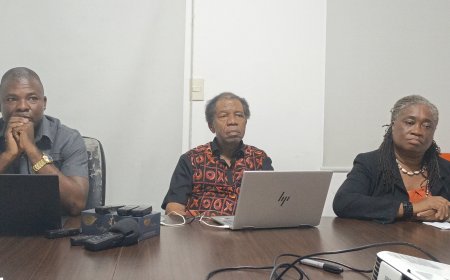
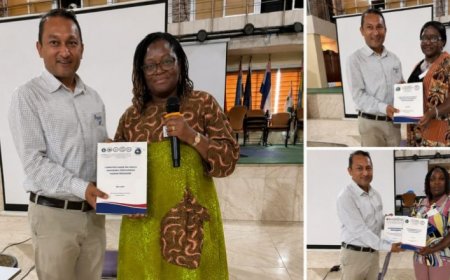
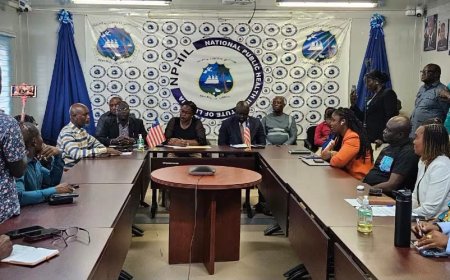
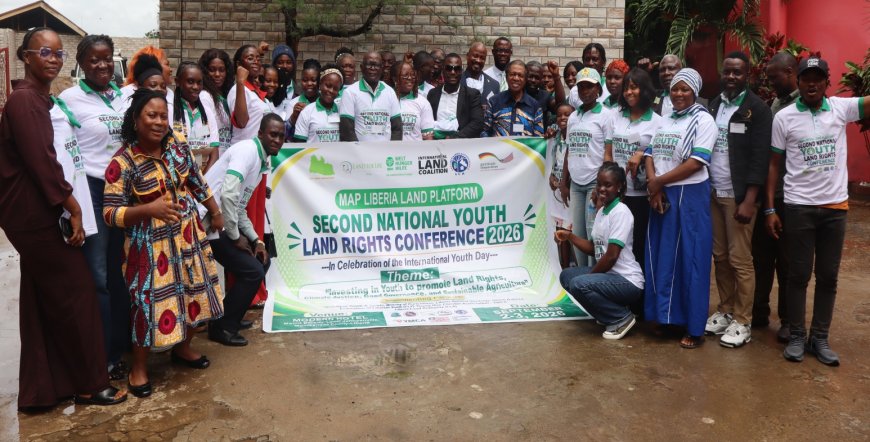
The call came out of a two-day National Youth Land Rights Conference held in Monrovia from September 2 to 3, bringing together more than 50 youth representatives from nine counties.
The conference, organized by the Multi-Actor Platform on Land Governance and Responsible Agriculture Investment in Liberia, or MAP Liberia Land Platform, focused on the gap between Liberia’s progressive land laws and the actual participation of young people in land governance.
Under the theme, “Investing in Youth to Promote Land Rights, Climate Justice, Good Governance, and Sustainable Agriculture,” participants argued that access to land must be viewed not simply as ownership, but as a pathway to farming, business, employment, housing and long-term economic security.
The youth are therefore calling on traditional authorities and Community Land Development and Management Committees to set aside agricultural land specifically for youth-led green cooperatives, young smallholder farmers and graduates of technical and vocational training programs.
They also want stronger safeguards against the premature or predatory sale of customary land.
For the activists, the issue is bigger than who holds a piece of land today. They say it is about whether young Liberians will have the opportunity to build livelihoods from the country’s most important natural asset.
Speaking on behalf of the Minister of Youth and Sports, the Ministry’s Assistant Youth Development Officer, Samuel Loboe, described land as more than property, saying it is closely connected to food production, housing, family security, community identity, investment and peace.
Loboe pointed to several government-supported agricultural and vocational initiatives, including the Klay Agriculture and Vocational Training Center and the Julijuah Vocational Training Center in Bomi County, the Youth Agriculture Training Center in Bensonville and the Tumutu Agriculture Center in Bong County.
He said such programs should help young people move beyond training and into actual production, processing, marketing, entrepreneurship and employment.
The conference also placed emphasis on legal awareness.
Nimba County District #2 Representative Nyan Flomo described the 2018 Land Rights Act as one of Liberia’s most progressive laws, but stressed that its benefits depend on citizens understanding the rights it provides.
Flomo particularly highlighted the need for greater awareness of land and inheritance laws, noting that young people, especially women in customary communities, can be vulnerable when they lack knowledge of their legal rights.
Meanwhile, Gospel Matondi, Head of Programme at Welthungerhilfe, argued that the youth land rights conversation should go beyond simply acquiring a deed.
Matondi described Liberia’s land reform as an “agrarian revolution,” urging young people to understand their rights to access, use, inherit and manage land and the benefits derived from it.
He also reminded participants that customary land is legally owned by the community and encouraged young people to become active participants in decisions concerning its management.
Beyond representation, the youth are demanding practical economic support.
They want the Ministry of Agriculture, the Ministry of Youth and Sports and climate-finance mechanisms under the Environmental Protection Agency’s Nationally Determined Contribution framework to operationalize the National Youth Entrepreneurship Fund.
According to the communiqué, the proposed fund should provide young agro-entrepreneurs with technical assistance, long-term financing, start-up support, agro-processing equipment and resources to help them adapt to climate change.
The youth are also calling for stronger legal-literacy campaigns led by the Liberia Land Authority, Ministry of Youth and Sports and civil society organizations.
They want those campaigns simplified and tailored to young people and local leaders, with particular attention to customary land formalization, protection against illegal land conveyances and the rights guaranteed under the Land Rights Act.
The message coming from the conference is clear: young Liberians do not only want to be beneficiaries of land policies; they want to be part of making the decisions.
For the activists, meaningful youth participation in land governance could help turn Liberia’s land resources into opportunities for agriculture, entrepreneurship, climate resilience and jobs, while also protecting customary land for future generations.
What's Your Reaction?
 Like
0
Like
0
 Dislike
0
Dislike
0
 Love
0
Love
0
 Funny
0
Funny
0
 Angry
0
Angry
0
 Sad
0
Sad
0
 Wow
0
Wow
0