


























Brooks: Only Legislature Can Dissolve Cities Established by Law


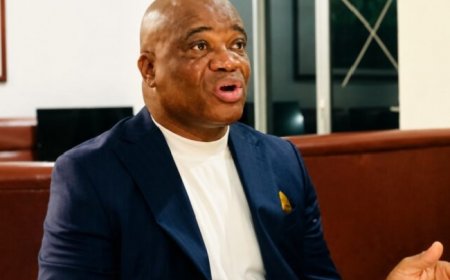
Former political adviser to the Liberian Senate, James Brooks, has challenged the authority of the Ministry of Local Government to dissolve cities and townships across Liberia, insisting that cities established by acts of the National Legislature cannot be abolished without following the appropriate legal procedures.
Brooks, a former commissioner of Gardnersville, made the assertion while speaking to reporters in Margibi County on Wednesday, warning that the ministry’s actions could create confusion among citizens and undermine respect for the rule of law.
“The Ministry of Local Government, through its authorities, does not have the legitimate rights to dissolve cities within the length and breadth of the Republic of Liberia,” Brooks said.
The controversy surrounding the legal status of cities intensified in early October 2026 after the Ministry of Local Government announced that 108 of Liberia’s 141 cities failed to meet the requirements for city status under the Local Government Act of 2018. According to the ministry’s assessment, only 33 cities met the prescribed criteria to retain their status.
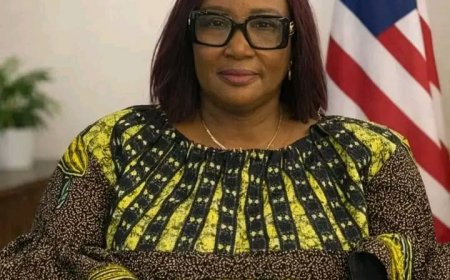
Deputy Minister for Urban Affairs Fatima Bintu Sirleaf reportedly explained that the assessment considered statutory requirements, including population thresholds, infrastructure, access to essential public services, and economic activity.
The announcement prompted concerns among lawmakers, particularly representatives from southeastern Liberia, where the proposed reclassification could affect numerous communities and existing local governance structures.
At the center of the dispute is Section 2.16(c) of the Local Government Act of 2018, which addresses the continued legal status of existing cities, townships, and boroughs and requires the minister responsible for local government to report to the Legislature on their status seven years after the law’s passage for reaffirmation.
The same provision states that cities failing to meet the prescribed criteria “shall be relegated to a town status.” However, the subsection does not expressly specify whether the ministry can implement that change independently or whether legislative action must precede it. That question has become central to the ongoing dispute.
Representative Alex Noah is among the lawmakers who have questioned the ministry’s approach, insisting that the process must comply with the law and respect the Legislature’s role.
Against this backdrop, Brooks argues that the ministry’s responsibility to assess cities against statutory criteria does not automatically give it the power to repeal the legislative acts under which some cities were established.
“Cities and other townships were created by the legislature, and only the legislature can dissolve them by repealing the acts that created those cities, not the Ministry of Internal Affairs,” he stated.
Brooks maintained that the affected cities should not be considered dissolved solely on the basis of the ministry’s assessment.
“The cities still remain, and the citizens still enjoy the cities as they go on,” he said.
He also referenced the transition from the Ministry of Internal Affairs to the Ministry of Local Government, arguing that government institutions must follow established legal procedures when making changes that affect communities.
Brooks urged ministry officials to reconsider their approach, warning against actions he believes exceed their legal mandate.
“What they are not capable of doing, they should not do it and embarrass the government,” he said.
“They have no right, no authority. They should stop it. Do not confuse our people,” he added.
Brooks welcomed the House of Representatives’ decision to summon officials of the Ministry of Local Government to explain the legal basis for the assessment and the proposed changes to the status of the affected cities and districts.
The officials are scheduled to appear before the House on October 20, 2026, to address lawmakers’ concerns about the ministry’s authority and the legal basis for its decision.
Brooks said the inquiry could help clarify whether the ministry has complied with the Local Government Act and whether further legislative action is required before the affected cities’ legal status can be changed.
He also addressed the role of the executive branch, arguing that decisions involving the repeal of legislative acts must follow the applicable legal procedures.
“What is done by the first branch of government should be repealed and sanctioned by the executive, which is the president, before you see those cities being dissolved,” he said.
Beyond the legal dispute, Brooks warned that changes to city status could affect local administrative structures, employment opportunities, and other benefits associated with official recognition.
The dispute also raises questions about the legal instruments under which individual cities were established and whether the same procedures apply to all affected communities.
As the House prepares to hear from ministry officials, lawmakers will have an opportunity to examine the ministry’s interpretation of the law, its assessment findings, and the process required to implement any changes to city status.
The outcome could help clarify the respective responsibilities of the Ministry of Local Government and the National Legislature in determining the legal status of cities across Liberia.
What's Your Reaction?
 Like
0
Like
0
 Dislike
0
Dislike
0
 Love
0
Love
0
 Funny
0
Funny
0
 Angry
0
Angry
0
 Sad
0
Sad
0
 Wow
0
Wow
0