
















Protecting Liberia or Promoting Discrimination? Scholar Challenges Lawmakers Over 'Negro Clause'

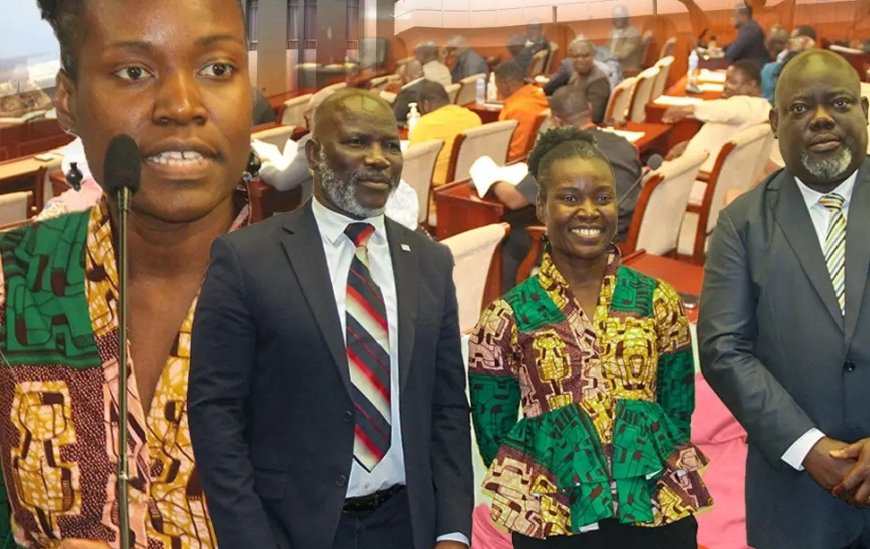
Monrovia, Liberia:One of Liberia's most sensitive constitutional issues was thrust back into the national spotlight on Tuesday after lawmakers engaged in a legislative dialogue questioning whether the country's citizenship law protects Liberians or unfairly discriminates against non-Black residents, a debate that could once again divide public opinion over identity, land ownership and economic control.
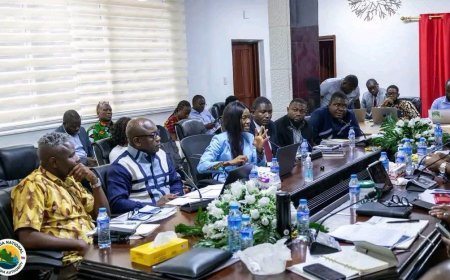
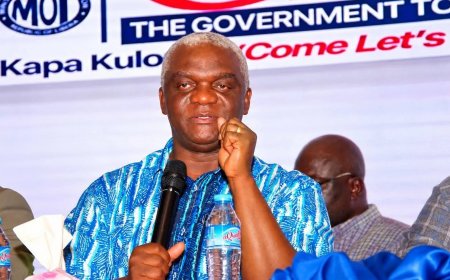
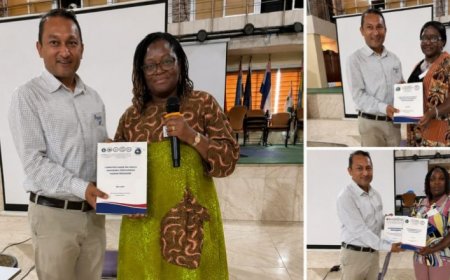
The discussion was led by Dr. Robtel Neajai Pailey, an Assistant Professor at the London School of Economics and Political Science (LSE), who presented research examining how race, citizenship and migration have shaped development in Liberia and neighboring Sierra Leone. Her study revisited Liberia's constitutional provision restricting citizenship to people of Negro descent and challenged lawmakers to confront whether the law remains relevant in modern Liberia.
"The question is no longer only why the provision exists, but whether it continues to serve Liberia's development goals or has become a barrier to inclusion and economic growth," Dr. Pailey told members of the House of Representatives.
During her presentation, she traced the origins of the citizenship provision to Liberia's 1847 Constitution, explaining that it was later reinforced in the 1973 Aliens and Nationality Law, maintained in the 1986 Constitution and retained under the 2022 Dual Citizenship Law. She argued that the issue continues to generate difficult questions about race, migration, governance and national identity.
Her research, based on more than 250 interviews conducted across Liberia, Sierra Leone and several other countries, found that many Liberians view the citizenship restriction less as a racial issue and more as a safeguard against foreign control of land and key sectors of the economy. Others, however, see the provision as discriminatory and inconsistent with modern democratic principles.
"Should non-Black residents, including members of the Lebanese, Indian and Chinese communities, ever become eligible for Liberian citizenship?" Dr. Pailey asked lawmakers, while also questioning whether the so-called "Negro clause" should remain a legislative priority or be reconsidered through constitutional reform.
The discussion comes at a time when foreign-owned businesses dominate significant portions of Liberia's commercial sector, fueling long-standing public concerns over who should control the country's natural resources, land and economy. Supporters of the existing law argue that removing the restriction could weaken indigenous ownership, while critics believe it discourages investment and reinforces exclusion based on race.
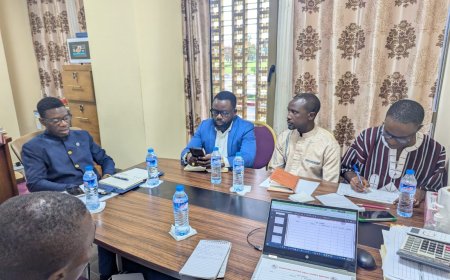
Following the presentation, Speaker Richard Nagbe Koon praised Dr. Pailey for bringing what he described as an important national issue before lawmakers. "Research such as this helps inform legislative decision-making on matters that affect the future of our country," the Speaker said.
While no proposal to amend the Constitution was introduced during the dialogue, the discussion is expected to revive public debate over whether Liberia should preserve one of Africa's most unique citizenship provisions or revisit it in light of changing economic realities, globalization and constitutional reform. As the conversation grows, many Liberians are likely to remain divided over a fundamental question: Is the 'Negro clause' a necessary shield for national sovereignty, or has it become a constitutional barrier to a more inclusive Liberia?
What's Your Reaction?
 Like
0
Like
0
 Dislike
0
Dislike
0
 Love
0
Love
0
 Funny
0
Funny
0
 Angry
0
Angry
0
 Sad
0
Sad
0
 Wow
0
Wow
0